Unlock the Secret Formula to Mastering Your Brand’s Visibility in AI Search by 2026!

Ever wonder why your brand seems to vanish into thin air when people ask AI-powered chatbots for advice? Well, welcome to the new era of search, where AI-generated answers leapfrog traditional listings and plant themselves right at the start of a user’s discovery journey. It’s not just a trend—by 2025, a staggering 31% of Gen Z turned to AI or chatbots first for info online. Fast forward to 2026, and Google’s AI Mode boasts over a billion active monthly users with query volumes doubling every quarter. If you think your brand’s visibility in this whirlwind is optional, think again. Missing out on appearing in AI Overviews or being cited by platforms like ChatGPT or Perplexity is like being invisible to your next buyer—no rankings, no impressions, just digital ghosting. In this piece, I’m pulling back the curtain on what brand visibility in AI search really means, how to track it without losing your mind, the must-watch KPIs, and the tools that help you stay ahead in this fast-evolving game. Ready to get your brand seen and heard in the AI arena? LEARN MORE.
Marketers need to know how to track brand visibility in AI search because search has changed. AI-generated answers now show up earlier in the discovery journey, often before a traditional search result. In 2025, nearly a third of Gen Z consumers (31%) defaulted to chatbots or AI to find information online, according to HubSpot’s 2025 AI Trends for Marketers report, and it’s clear that AI search is growing — rapidly. In 2026, Google reported that AI Mode has over one billion monthly users, and queries have doubled every quarter since launch.

Failure to place brands in AI Overviews (AIO) or within AI search tools like ChatGPT, Perplexity, or Claude is a failure to meet prospective buyers where they’re searching. That’s harmful to audience connection, conversion, and ultimately, revenue. Brands that show up in AI search are the ones that audiences consider. The ones that don’t simply disappear from the conversation, with no ranking position, no impression count, and no obvious way to tell.
This article breaks down what brand visibility is, how to track brand visibility in AI search, the Key Performance Indicators (KPIs) that marketers need to pay attention to, and the best tools to support AI visibility tracking.
Table of Contents
What is AI search and brand visibility?
AI search refers to search that takes place on AI platforms, like ChatGPT, Perplexity, Google Gemini, Microsoft Copilot, and Google’s AI Overviews. There are many more, and AI search platforms are growing. Unlike Google or other search engines, which return a list of links to click through, AI search engines answer questions directly. Those answers are lifted or paraphrased from trusted sources.
Brand visibility in AI search relates to the impressions that brands get within AI platforms. A brand mentioned or cited in AI in an answer has visibility. Brand visibility in AI search includes mentions, citations, sentiment, and accuracy. The goal is for brands to increase their visibility. They want to be cited and mentioned often, accurately, and favorably.
How to Track Brand Visibility in AI Search Right Now
The most basic way to check AI brand visibility is manually: Open ChatGPT, Perplexity, Gemini, and Copilot. Ask the same set of questions across each one. Then, record whether the brand appears, how it’s described, and whether competitors show up instead. This is an easy starting point. But, it breaks down quickly.
A single spot check only captures one moment in time. That result reflects one user’s search history and personalization, not any broader trend. When multiplied across several platforms and hundreds to thousands of prompt variations, manual tracking becomes a task that nobody has time to maintain.
HubSpot ran an experiment testing hundreds of queries across AI chatbots, search engines, and social platforms. The experiment found that AI tools were noticeably weaker at handling specific, niche information, like details about a particular local business, than they were at answering broad or general questions. This is why prompts need to be tracked consistently — and ideally automatically. No one can infer how a platform or brand performs across the board just because it performs well in one prompt, particularly if that prompt is broad and general.
This is where dedicated tools come in.
Rather than replaying the same prompts by hand, tools built for AI brand tracking run them automatically, on a schedule, across multiple engines at once, then organize the results into a usable format, such as:
- Which prompts triggered a mention.
- Which sources got cited.
- How sentiment trended over time.
Different tools approach brand visibility measurement in different ways; some focus narrowly on mention frequency, others build out fuller scoring models across multiple dimensions.
HubSpot’s free AI Search Grader is one example. The grader gives marketers a baseline read on AI visibility, and what it provides for free is pretty amazing. Here’s what the start of the report looks like.

While tools like AI Search Grader are excellent, there are limitations.
AI Search Grader captures a baseline read; it doesn’t track improvements or declines in trends. Ideally, most marketing teams will move from a one-time snapshot to ongoing tracking, so that they can adapt marketing strategy based on data.
Tools like HubSpot AEO provide ongoing tracking and data related to performance in AI search tools. It monitors brand mentions, citations, and sentiment across AI platforms continuously. With continuous tracking, marketing teams can see how efforts and campaigns have impacted visibility.
Here’s a look at a citations report, showing a brand’s domain performance versus competitors:

How to Track Brand Visibility in AI Search with the Right KPIs and Cadence
Switching between tools or KPIs will only provide inconsistent and confusing results. No two tools report the same numbers. All a tool can provide is a third-party overview of what’s happening with a brand’s visibility, and none of them are completely accurate.
Feedback from a tool should be treated as a directive, not absolute truth. What marketers are looking for are trends in the data, and that comes from consistent tracking using the same tool and the same metrics.
Now that caveat is out there, let’s look at KPIs:
Brand Mention Rate
Brand mention rate measures how often a brand appears in AI-generated answers. It’s a foundational metric; it’s calculated by dividing the number of AI answers that mention the brand by the total number of answers analyzed across a set of tracked prompts. A low mention rate indicates that AI platforms rarely surface the brand at all.
Here’s an example of a brand mention in ChatGPT. The mention of the brand is there, but there’s no clickable link:

Mentions and citations are not the same thing: an AI platform might mention a brand by name without linking to anything it owns, or it might cite a third-party review site instead of the brand’s own content.
Citation Rate
Citation rate measures how often AI answers link to or reference brand-owned sources. Tracking citation rates separately shows which domains and pages are actually earning a reference inside AI answers, which points directly to the content that needs to be built or strengthened.
Here’s an example of a brand citation in AIO. There’s an actual link, and if clicked, the user will visit the website of the cited source (in this case, HubSpot):

Pro tip: To support citation rates, marketers can track actual clicks to the website from AI sources. I include this metric on all of my client reports. It reports to stakeholders that we’re getting cited, but also that these citations are turning into valuable actions for the business. Kyle Rushton-McGregor has a guide on how to track AI visits in GA4.
Sentiment and Accuracy
Sentiment measures how AI platforms describe a brand. It’s typically scored on a scale from negative to positive.
Accuracy is related to sentiment.
Marketers want their brands to appear accurately in AI.
A negative sentiment might not be a bad thing if it’s accurate. For example, if an AI platform describes a brand as ‘expensive compared to competitors’ and that brand has a premium price point, the sentiment reads as negative, but the description is accurate, and the brand probably wants to defer searchers looking for a cheap solution.
That said, marketers must manage brand sentiment and ensure that sentiment is overall positive. Brand sentiment can teach marketers about things customers are unhappy about. If marketing comes across a repeated negative sentiment, then they can share information with customer success or product development to try to change that narrative.
Share of Voice
Share of voice measures how often AI search platforms mention a brand compared to competitors across the same set of prompts. It’s important because if marketers look at their brand in isolation, the mention rate might look great, but comparing share of voice against competitors reveals the wider opportunities and potential.
A low share of voice relative to competitors shows where the gaps are and what brands need to do to close the gap.
How to Track Brand Visibility in AI Search with a Repeatable System
A repeatable system turns AI brand tracking from ad hoc checks into a data-driven marketing approach. With this approach, marketing teams can make strategic decisions based on data and trends, leading them to meaningful solutions that improve a brand’s visibility in AI search.
The following five steps give marketing and AEO (also called GEO) teams a framework to set up once and run on an ongoing basis.
1. Run a baseline visibility check.
Before setting up ongoing tracking, it helps to research and establish a starting point. Otherwise, marketing is creating a tracking system based mostly on feeling.
AI Search Grader helps measure brand visibility in AI search, scoring how ChatGPT, Gemini, and Perplexity currently describe a brand across sentiment, presence quality, brand recognition, share of voice, and market position.
Marketers can use tools like AI Search Grader to get a big-picture overview of how their brand performs. They’ll start to build a picture of how the brand sentiment looks and where there might be opportunities.
And it’s free. So, marketing can run AI Search Grader for competitors to build a mental map of the wider AI search landscape. The beauty of AI Search Grader is that there are no limits, so marketing teams can use this free tool as much as they like. Every search in AI Search Grader builds research, curiosity, and insights that can be carried into the final plan.
2. Write consistent, structured prompts.
AI search tracking requires consistent prompts across multiple AI platforms. Like switching tools or KPIs, switching prompt wording between checks makes it impossible to tell whether a shift in results reflects a change in visibility or just a different question.
Marketing teams should write out the exact prompt list in advance, document it, and reuse the same wording every time a check runs. This is a lot easier when working with a tool, because the tools will categorize prompts and maintain the exact prompt over time, but if working manually, marketers need to manage it.
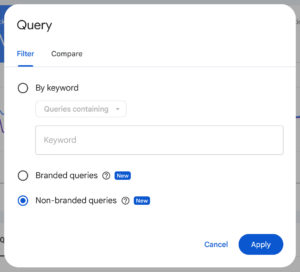
Tools like AI Search Grader can inspire prompt selection, but marketers don’t have to stop there. Existing keyword research is a great starting point, especially long-tail keywords in Google Search Console (GSC). Specifically, keywords that include problems and solutions for certain audiences, for example, “How do I solve [problem] in my [company]” or “how to fix [problem] in your forties.” Many keywords are already phrased as questions, or close enough that it’s not a leap to see how they’d translate into a query on an AI platform.
Talking directly to customers helps, too. Sales and customer success teams often have a good sense of the exact language prospects use when researching a purchase. If sales or customer support have a good relationship, they could even ask customers if they’d share their own AI chat history, which will surface real prompts marketing teams would not have thought to write themselves.

Important note: Asking for chat history could be invasive. This ask can only work if there’s a customer relationship that’s already been built.
Once marketing has the prompts locked down, it’s time to decide where to track them and how to manage them.
3. Map the core AI platforms and build a prompt taxonomy.
Core AI platforms include ChatGPT, Perplexity, Gemini, Copilot, and Google AI Overviews. However, most brands don’t need to track every single platform, which is good news for brands working with tighter budgets. Some tools charge a base fee for ChatGPT tracking, with add-on costs for each additional AI platform.
How to Decide Which Platforms to Track
For one of my clients, who had a limited budget, we focused solely on ChatGPT. We used a marketing report to decide which platforms to pay the most attention to. I tracked clicks from all the core platforms, as well as a few others. Clicks from ChatGPT far exceeded all other core AI platforms, with over 87.18% of total AI visits coming from ChatGPT. Claude and Gemini were next with 4.49% each, then Copilot at 2.56% and Perplexity at 1.28%.
Important note: Some AEO tools don’t charge to track data from additional AI tools, so check what the tools allow users to track as part of a free or paid package, and what costs extra.
HubSpot’s AEO tracks brand visibility across ChatGPT, Gemini, and Perplexity as part of the same $50-a-month package, with no extra charge to add the second or third platform once a prompt allowance is purchased. Other tools, like Profound.ai, charge $99/month to track ChatGPT, then $399/month to track three platforms.
For my client, HubSpot AEO is ideal because it’s affordable and tracks the major AI platform they need — ChatGPT.
Once marketing has the platforms to track, marketers need a prompt taxonomy (a way of organizing prompts). The prompt taxonomy should include brand, competitor, category, task-based, and comparison prompts.
Check out the example below.
4. Set a tracking cadence and automate ongoing monitoring.
With prompts written, categorized, and platforms selected, the last piece is deciding how often to check them.
Cadence matters as much as the metrics themselves. Weekly reviews support baseline AI brand monitoring, giving marketing and SEO teams a steady read on trends without demanding daily attention. Daily checks make sense during active optimization sprints — testing content changes, responding to a citation gap, or catching a sentiment issue that needs a fast fix.
Tools like HubSpot AEO automate this cadence, running the same prompt set across engines on a schedule and organizing the results so nobody has to manually replay the same questions week after week.
5. Route visibility data into CRM and content workflows.
If marketing can route visibility data into CRM and content workflows, AI visibility can turn from a vanity metric into a revenue input. With this, AI reporting becomes highly engaging to stakeholders, who ultimately care about revenue because it shows how AI search performance and pipeline are integrated.
This routing is where most standalone AEO tools fall short entirely. The fact that HubSpot AEO is built on a CRM gives it an incredible advantage.
With an integrated CRM and AI tool, visibility data becomes a system where it gets routed to the people and workflows that can respond to it.
Here’s how:
- HubSpot Smart CRM stores AI visibility properties, prompt clusters, and dashboard data, keeping visibility metrics in the same system as the rest of a brand’s customer and campaign data instead of siloed in a separate tool.
- HubSpot Content Hub turns visibility gaps into content briefs and refreshes, so a low mention rate on a topic becomes an assignment rather than a stat that nobody acts on.
- HubSpot Marketing Hub connects AI visibility efforts to campaign reporting and attribution, closing the loop between AI search visibility and the pipeline and revenue outcomes leadership actually cares about.
How to Improve AI Search Visibility and Fix Inaccurate Answers
Once marketing tracks prompts and performance, it will reveal gaps, and once gaps are identified, marketing can construct a data-driven plan to close them.
The next section details some best practices to address common visibility and accuracy issues.
Strengthen entity consistency across the web.
AI platforms build their understanding of a brand from many sources at once, such as:
- The company website.
- Review sites.
- Social profiles.
- Directories.
- Press mentions.
AI platforms pull information from across the web to create one synthesized answer. The best thing marketing can do is control the controllable, and, where possible, ensure that information is consistent and accurate.
For example, be consistent with the brand’s name, description, location, and core offering. Naturally, marketing can’t control everything, like a bad or incorrect review, but marketing combats negative sentiments with the truth. Plus, marketing can work with product teams or customer success to identify issues and prompt resolution.
Ultimately, AI platforms have a hard time confirming what’s correct if multiple versions of a narrative exist. That increases the odds of an inaccurate or inconsistent mention.
Build content that earns citations.
Page structure has been a topic in the world of search for many years. We all know that structuring pages well, with titles, headings, and body text, is good, but it’s possible to take things a step further for AI search.
For example, marketing can get super-specific about audiences and problems, creating pages around the exact problems buyers are having.
Answering questions directly, providing solutions, and backing them with claims with concrete details and data all make a page easier for AI platforms to lift from and cite.
For more information about writing for AI engines, read: How to Write Content that Generative AI Search Engines Will Cite, According to Experts
Correct inaccurate AI answers.
Inaccurate AI answers should trigger content updates, correction requests, and follow-up monitoring, especially if the inaccuracy is on owned media, like the brand’s website or Google Business Profile.
Tip: If you’re not sure where a piece of information has come from, because AI hasn’t cited anything, try searching for the information in Google and see what ranks. Look at your own website for inaccuracies. Let’s say an AI platform has cited your brand’s package as costing $69, but this price is over two years old, search in Google “site:yourwebsite.com $69.” This search would look for mentions of “$69” on your website. It’s possible the price is listed somewhere, like an old blog.

Expand presence across multiple channels.
AI platforms draw on a wide mix of sources, so a brand’s visibility is rarely built from its website alone. Active participation in industry discussions, consistent responses to reviews and feedback, and a presence across the platforms where a brand’s category gets discussed all contribute to how AI models perceive and describe a brand. The broader and more consistent that footprint, the more material AI platforms have to draw an accurate, favorable picture from.
Monitor for recurring issues.
A single inaccurate answer might be a one-off. The same issue appearing across multiple prompts or platforms is a pattern worth escalating. When negative sentiment or a factual error keeps showing up, it is worth routing that finding beyond marketing — into product, customer success, or support — since the underlying cause is often something those teams are better positioned to fix.
Best Tools to Track Brand Visibility In AI Search
The four tools below cover the full range of what a marketing team needs, from foundational SEO work to dedicated AEO tracking.
Marketing Hub SEO Marketing Software
This article focuses a lot on AEO and AI visibility, but AEO is not separate from SEO. Regardless of how many people search in AI, traditional SEO is still critical, more popular than AI search tools, and impactful on the sources that are mentioned and cited in AI tools.
Therefore, SEO tools are still a must.
Marketing Hub’s SEO tools lay the groundwork on which AI visibility depends.

HubSpot’s SEO tools include an audit that surfaces prioritized fixes for on-site issues like broken links, missing meta descriptions, and thin content, then groups related content into topic clusters designed to build topical authority around core subjects rather than isolated keywords. It also pulls keyword data directly from Google Search Console, so marketing teams can see which queries are already driving organic traffic and which ones represent gaps worth closing.
What I like: Having data in one place is efficient. HubSpot allows integrations with Google Search Console, so data can be managed and checked from one place. The SEO recommendations are easy to use, written in plain English, and even have impact scores (high, medium, and low). The system names the person responsible for the fix, meaning tasks that keep SEO flowing are easily delegated.
HubSpot AEO

HubSpot AEO is undoubtedly the core tool for ongoing AI visibility tracking. It provides marketers with four key capabilities:
- A brand visibility score that tracks how often a brand appears across a set of tracked prompts.
- Prompt-level tracking that shows the exact response each engine gave for each question.
- Citation analysis that breaks down which domains and content types are earning references.
- Competitor share of voice that shows how a brand’s mention rate stacks up against named competitors on the same prompts.
HubSpot AEO suggests a starting prompt set based on a brand’s industry, competitors, and business context, which can then be edited or expanded by the marketing humans in the team. Everything is trackable across major AI platforms like ChatGPT, Gemini, and Perplexity, and results roll up into a dashboard that tracks visibility over time rather than showing a single static score.
Finally, recommendations turn the data into specific next actions:
- Create a new page or update an existing one
- Publish a LinkedIn post
- Reach out to a third-party site for a mention.
One limitation worth flagging: Claude and Copilot are not currently tracked. For brands where either platform sends a meaningful share of AI referral traffic, that’s a real coverage gap to weigh before committing.
What I like: The recommendations and AI visibility tracking within HubSpot are absolutely useful and critical to marketing, but the real differentiator, in my opinion, is the CRM. Most AEO tools operate as a standalone dashboard, disconnected from what actually happens after a brand shows up in an AI answer.
HubSpot AEO doesn’t have that problem because it’s built on top of HubSpot CRM. The connection between marketing performance and sales matters more than ever. A visibility score sitting in isolation is just a vanity metric. What pays bills is knowing whether a mention, a citation, or a jump in share of voice actually turned into a contact, a deal, or revenue.
HubSpot AI Search Grader (free)
AI Search Grader is the place to start if marketing is new to AI brand visibility or tracking AI in any form.
AI Search Grader runs a one-time scored assessment of how ChatGPT, Gemini, and Perplexity currently characterize a brand, scoring five dimensions out of a 100-point total:
- Sentiment (40 points): The overall tone AI models use when describing a brand, evaluated across three layers: general tone, how that tone shifts across different topics and use cases, and the credibility of the sources shaping that characterization.
- Presence Quality (20 points): How substantively AI platforms discuss the brand (“mention depth”), the quality of the sources feeding that understanding, and the overall richness of data available about the brand.
- Brand Recognition (20 points): How widely the brand is recognized within AI training data itself.
- Share of Voice (10 points): How often the brand is mentioned relative to competitors within the same set of responses.
- Market Position (10 points): How the brand is positioned competitively compared to others in its category, based on how AI platforms describe its standing in the market.
The scoring is weighted toward sentiment because how a brand is described tends to matter more to buyers (and therefore marketing and sales) than simply whether it’s mentioned at all.
AI Search Grader runs against pre-set queries automatically, without requiring the marketer to write any prompts. ChatGPT and Gemini responses draw on model training data, while Perplexity’s results come from live web search, since Perplexity works differently under the hood. The tool also benchmarks a brand’s score against competitors, so the output reads more like a competitive snapshot than an isolated report card.
The trade-off is exactly what its name suggests: it’s a grader, not a tracker.
AI Search Grader captures one moment and doesn’t retain history or show trend lines, so running it repeatedly over time won’t build the kind of longitudinal data a brand needs to prove whether a strategy is working.
What I like: I always start with AI Search Grader for a benchmark, and I use it in pitches to show a brand exactly where it stands before any investment is made. It’s also my go-to when I want a read on competitors, but I can’t justify paying to track brand mentions in AI, like a secondary competitor that I’m curious about but don’t need tracked with full accuracy over time.
HubSpot AI Search Sensor

HubSpot AI Search Sensor takes a different angle from the other three tools on this list.
It doesn’t track a specific brand at all.
It’s a free public dashboard built from anonymized HubSpot customer data, tracking industry-wide shifts in AI search behavior through three views:
- AI-Referred Traffic Trends shows aggregate weekly traffic from ChatGPT, Gemini, and Perplexity, useful for checking whether a brand’s own traffic dip reflects something brand-specific or a broader industry pattern.
- AI Visibility Benchmarks by Industry shows visibility and citation share for a handful of representative brands across ten industries, giving a sense of what a “good” score looks like in a given category.
- Citation Share Trends breaks down which content types (blog posts, product pages, listicles, and more) and which source channels (owned, earned, review sites, affiliate, and more) are earning citations, and how that mix is shifting week over week.
There’s also a daily Answer Engine Volatility Tracker, scoring how much answer engine behavior is shifting on a given day, from Calm through Extreme.
What I like: Marketing teams can use this broad data alongside their own AEO data: if a brand’s visibility score drops on a day when the volatility tracker also spikes, that points to a model update or algorithm shift rather than a brand-specific problem.
How to Connect AI Visibility to Content And Pipeline
AI visibility data should shape the content calendar directly. A low mention rate on a category prompt signals a content gap worth filling. A low citation rate on an existing page suggests the page needs restructuring, not replacing. A competitor winning share of voice on a comparison prompt means there’s a comparison page worth building.
This shifts content strategy from “what ranks” to “what gets cited and recommended.” The two overlap but aren’t identical — a page can rank well in Google and still get ignored by an AI platform if it doesn’t answer the question directly enough to lift and cite.
Connecting that data to pipeline is what makes the work defensible.
When visibility metrics sit in HubSpot’s CRM and marketing tools rather than a standalone dashboard, a content brief generated from a visibility gap can be tracked through to the campaign it supported and the deals that followed. That’s the difference between reporting a visibility score and reporting what the score was worth.
Frequently Asked Questions About Tracking AI Search Visibility
Which AI platforms should I prioritize first?
The AI platforms that any brand should prioritize should be decided based on data. Pull AI referral traffic from internal analytics. It will show which platform is dominating over the others and sending the most traffic. That platform is the one worth prioritizing first. However, from experience, the platforms to prioritize will probably be ChatGPT, Perplexity, Claude, or Copilot, plus AI Overviews within Google Search.
What’s the best way to organize prompts for consistent tracking?
Prompts hold up best when organized into a taxonomy covering brand, competitor, category, task-based, and comparison types, with the exact wording documented and reused every time a check runs.
How do I correct outdated or wrong information about my company in AI answers?
If an AI platform is describing a brand based on outdated pricing, an old feature list, or an incorrect description, the fix usually starts with the brand’s own website or Google Business Profile, since that’s the material marketing teams have the most control over.
How can I attribute AI search visibility to revenue?
Attribution starts with routing visibility data into the same system as customer and campaign data, rather than leaving it in a standalone dashboard. When AI visibility properties, prompt clusters, and citation data sit inside a CRM, marketing teams can connect a visibility gap to the content brief it produced, and that content to the campaign, contact, or deal that followed.
How often should we review and refresh our prompt library?
The prompt library itself needs a slower refresh cycle, revisited quarterly or whenever a brand launches a new product, enters a new category, or notices its keyword research and customer language shifting. Prompts that no longer reflect how buyers actually ask questions stop producing useful data, even if the tracking cadence around them stays consistent.
Tracking AI visibility isn’t optional anymore — search changed.
Failing to track AI visibility in 2026 and beyond is a failure to keep up with search, serve clients, and keep your brand at the top of prospective buyers’ minds.
For anyone starting from zero, HubSpot’s free AI Search Grader remains the fastest way to get a baseline read on where a brand currently stands, and HubSpot AEO is the natural next step once that baseline is set and marketing are ready to track mentions, citations, and sentiment across ChatGPT, Gemini, and Perplexity, all while feeding directly into the same CRM already running a brand’s marketing and sales data.
In my own client work, I’ve been tracking AI visibility for a year or two, and things are trending up for every single client, even those in niche B2B. For me, the major benefit of starting now is that brands have a benchmark and can see clearly how the search landscape is changing and how it’s impacting brand and visibility.









Post Comment