Shocking Cyber Heist: Malware Secretly Drains Credit Cards and Crypto on 178 Top Websites—Are You Next?

Ever wonder how some of the biggest names on the web—think Ledger, Salesforce, and even the BBC—ended up serving malware right under their users’ noses? Yeah, me too. On Monday, these giants, along with about 175 other organizations, got caught up in what’s being called the “Optimjack” campaign—a crafty cyberattack slipping malicious code through trusted website scripts hosted on Optimizely. Imagine copying a cryptocurrency wallet address only to have it swapped for one controlled by hackers, or typing in your credit card info and having it swiped before you even blink. It’s the digital equivalent of a Trojan horse crashing a party where you least expect it. How exactly did attackers infiltrate one of the most reputable website optimization platforms and turn it into a malware distribution machine? Despite swift moves by Optimizely to patch and block the vulnerable pathways, questions remain—just how deep does this rabbit hole go? Buckle up, because this story is not just about malware—it’s a wake-up call for anyone who’s ever trusted big brands with their sensitive info. LEARN MORE.
Major global brands including Ledger, Salesforce and BBC served cryptocurrency and credit card-stealing malware to website visitors on Monday, according to security researchers, the latest in a wave of wide-reaching cyberattacks.
Dubbed “Optimjack” by researcher Amirul Iman, the campaign delivered malicious code through website scripts, including those hosted by Optimizely, a website optimization platform. The malware can replace legitimate cryptocurrency wallet addresses with attacker-controlled alternatives when visitors copy addresses. It also captured credit card details entered into website forms, according to a separate analysis by cybersecurity firm StepSecurity.
The campaign affected website scripts belonging to 178 organizations, including hardware wallet Ledger, OANDA / Coinpass and trading platforms IG, Interactive Investor and TMS Brokers, according to Report URI’s investigation.
Other affected brands included IKEA, Salesforce, Zoom, the BBC and CNN — websites that collectively attract millions of visitors a day.
A spokesperson for Optimizely confirmed to Cointelegraph on Monday that an unauthorized party exploited a vulnerability in its Experimentation account signup flow to add malicious JavaScript to some customer projects.
“We have blocked access to the vulnerable path and deployed a fix,” they said. “We have removed the injected code from affected projects. We have also ended active sessions, revoked tokens, and reset access for affected user accounts. Finally, we have blocked any code from being delivered in Cloudflare,” they said, adding that they’re continuing to investigate and have notified all affected customers.
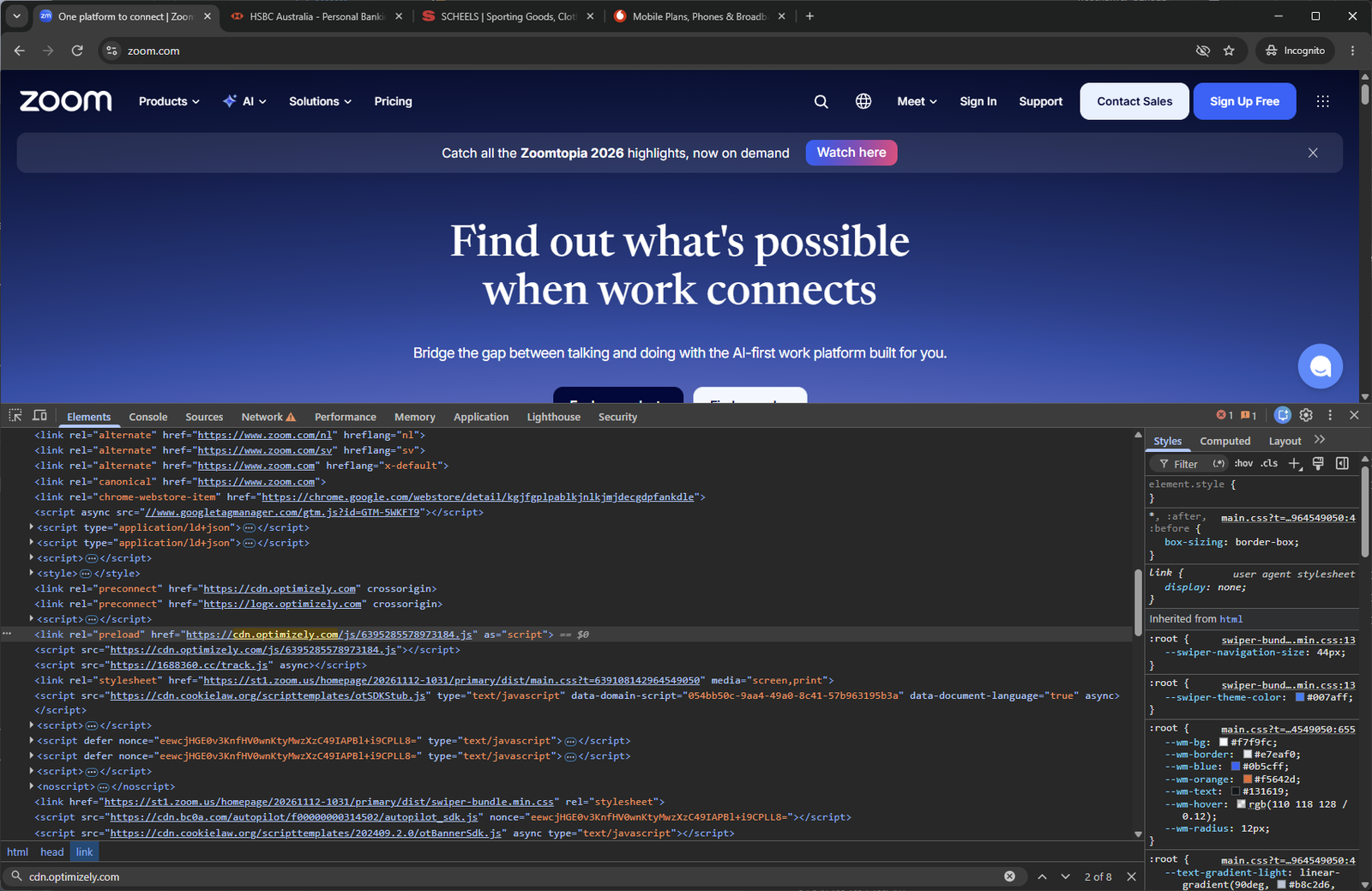
BBC was among the first websites seen serving the Optimizely injection at 4:21 am UTC on Monday, according to Report URI CEO Scott Helme. By 9:52 pm UTC, most of the malicious code had been removed, with Ledger’s snippet cleaned at about 8:41 pm UTC.
Cointelegraph reached out to Ledger, Coinpass, and a number of other major businesses reported as impacted by the malicious injection.
How trusted websites served a theft tool
Optimizely lets businesses run experiments and custom code on their websites through JavaScript snippets. Attackers inserted malicious code into those customer projects, causing otherwise legitimate scripts to load the malware when visitors opened affected pages.
Once loaded, the malware could replace legitimate cryptocurrency wallet addresses with attacker-controlled alternatives, including addresses copied to a visitor’s clipboard. A user could then unknowingly paste the attacker’s address when making a transfer.
Related: PHP flaw draws millions of exploit attempts, Cloudflare CEO warns
The script also watched for credit card numbers, expiry dates and security codes entered into website forms and sent captured details to an attacker-controlled server. However, it could not read payment fields isolated inside third-party payment providers’ cross-origin frames,StepSecurity said.
Visitors using iPhones and iPads also faced an additional threat: the malicious script loaded code linked to the Coruna and DarkSword iOS exploit kits, according to Helme.
Researchers have yet to establish how attackers obtained access to modify the Optimizely projects.
Crypto losses remain unconfirmed
Addresses identified by researchers as linked to the malware received approximately $7,100 in cryptocurrency on Monday, according to blockchain records checked by Cointelegraph.

StepSecurity’s separate analysis put funds received or held across the wallets at roughly $6,600, while noting that some addresses had activity predating the attack.
Helme said it could not determine how many payment card details or cookies had reached the attackers’ server.
The campaign follows a string of recent threats to website security. In October, government agencies and other organizations took websites offline as a precaution over critical PHP vulnerabilities that could allow attackers to take control of servers. Polymarket also temporarily suspended trading on Oct. 29 after a third-party provider was compromised, amid reports of users’ accounts being drained.
Magazine: Banks are banning AI agents over security… and competition concerns









Post Comment