The Hidden Signal Behind AI Citation Drops: When Should Researchers Sound the Alarm?
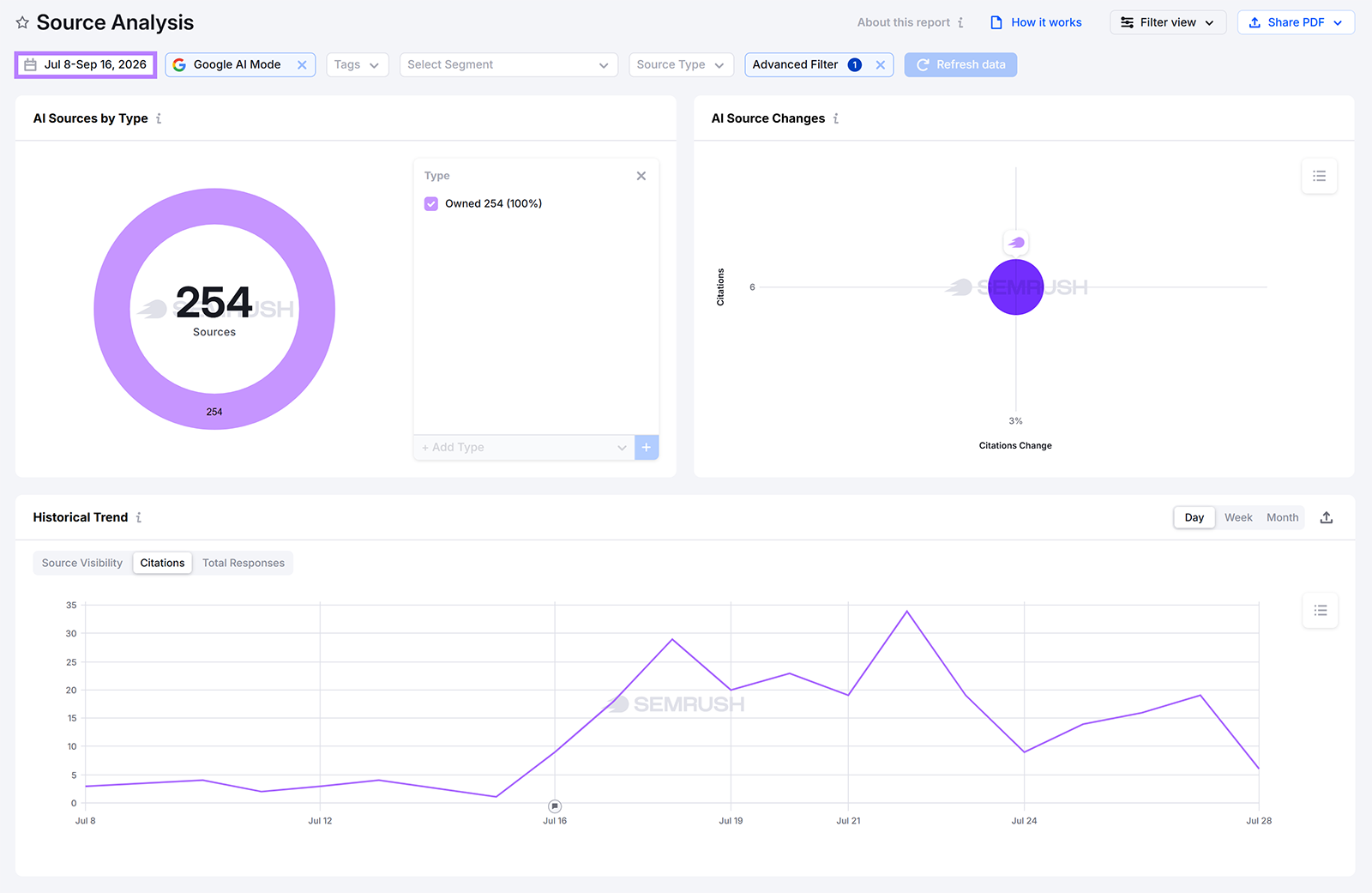
Ever noticed how sometimes an AI tool like ChatGPT or Google AI Mode just stops giving your page the shout-out it once did? Welcome to the curious world of AI citation decay — that pesky, sustained dip in how often AI systems cite your URL. But hold up, before you dive into panic mode and start reshuffling your entire content, realize this: a drop in citation frequency doesn’t necessarily spell doom for your content or brand visibility. Take Semrush, for example. Between July 8 and 28, 2026, their Enterprise AIO data showed a solid 254 citations to one of their articles — and then, nada, no more citations through mid-September. Yet, Semrush’s name still popped up in the answers checked. Weird, right? It’s like being invited to the party but not spotted in the group photo. So what gives? Does a lost visible link mean your brand’s vanished into thin digital air? Not quite. This piece will take you on a journey through the ups and downs of AI citations, the sneaky nuances behind them, and why sometimes, the numbers only tell half the story. Ready to unravel the mystery and discover if your brand is truly fading or just playing hide and seek? Let’s dive in. LEARN MORE.
AI citation decay is a sustained decline in how often AI systems like ChatGPT and Google AI Mode cite your page. But a drop doesn’t automatically mean your content has a problem or your brand has lost visibility.
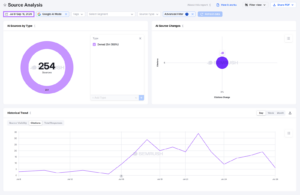
Geertrui Laleman at Semrush shared an example from our Enterprise AIO data. It recorded 254 citations to one of our articles in Google AI Mode between July 8 and 28, 2026, with no further citations recorded through September 16. Yet Semrush remained mentioned in the answers she checked.

When a citation disappears, refreshing the page feels like the obvious fix. Citation dashboards look like rank trackers, and each citation looks like a backlink.
But the count alone can’t tell you what needs fixing. Before you update the page, establish whether the decline is real, what changed, and whether it affected how your brand appears.
What is AI citation decay?
AI citation decay is a sustained decline in how often a URL is cited when you track comparable prompts over time. One low reading isn’t enough to establish it.
An AI citation is a visible source link attached to a generated answer. It tells you which URL got credit for that response.
But a citation is only one of four signals that are often treated as the same thing:
Signal | What it tells you |
Retrieval | The system found the page and included it among the sources available for the answer. |
Influence | The answer used information from the page. You usually cannot verify this from outside the system. |
Brand mention | The answer named the brand, whether or not it linked to the brand’s website. |
Citation | The answer displayed a link or other visible attribution to the source. |
In our example, the article lost its citations, but Semrush still appeared in later answers. A missing link doesn’t necessarily mean a missing brand.
Did the cited page actually help produce the answer?
In Correctness is not Faithfulness in RAG Attributions, researchers took statements a model had cited in its answer and inserted them into other documents it had retrieved. When the altered document was one the model had retrieved but not cited the first time, the model cited the altered version 57% of the time.

So a plausible citation isn’t proof of where an answer came from. (The experiment doesn’t show how often this happens on commercial AI search platforms.)
In short, a falling citation count tells you about citations. To show that retrieval, influence, brand mentions, or business outcomes also declined, you need separate evidence.
How long do AI citations last?
There’s no fixed lifespan. Studies show that citation activity can fall quickly, but the pace depends on the platform and on what each study measures.
Scrunch and Stacker’s citation half-life study analyzed 3.5 million citation events over 26 weeks across five platforms: ChatGPT, Perplexity, Google AI Overviews, Google AI Mode, and Gemini.
The researchers grouped sources by the week they first appeared, then tracked how much citation activity each group retained. Across all sources, that activity fell by half after about 4.5 weeks on average. The estimates differed by platform:
- ChatGPT: 3.4 weeks
- Perplexity: 5.8 weeks
- Google platforms: 4.3-4.8 weeks
The study reported citation half-lives of roughly 10-12 weeks or more for sources in Stacker’s publisher network. But the study compared different groups of websites. It wasn’t an experiment that isolated the effect of syndication.
Our citation-speed experiment followed the same 81 new FAQ-style pages on one domain for 30 days. Google AI Mode cited 48 of those pages at its day-six peak, compared with 21 on day 30. ChatGPT’s daily count grew from eight cited pages on day one to 34 on day 30.
These are daily counts of cited pages. They don’t show how many citations each page received or give a half-life for any one URL.
You don’t need to refresh a page because it’s 4.5 weeks old. First, check whether its citation rate is actually declining.
Is the decline real? Look for a trend
A baseline is the citation rate a URL typically receives when you track the same prompts under comparable conditions. Volatility is the movement around that typical level. Decay is when repeated measurements settle into a lower level.
Suppose a URL appears in four out of 10 responses one week, two out of 10 the next, and five out of 10 the week after. The middle measurement shows a 50% drop. The full sequence doesn’t show a sustained decline.

A dashboard may show a single percentage without showing how much the answers vary between runs.
The preprint, Quantifying Uncertainty in AI Visibility, illustrates the problem with a sample of 200 running-gear queries on SearchGPT. Tom’s Guide received about 9.5% of citations, and Runner’s World about 6%.
But the 95% confidence intervals (the ranges consistent with each estimate) overlapped:
- 5.5% – 12.5% for Tom’s Guide
- 4% – 8% for Runner’s World.
Those ranges show uncertainty around both estimates. One sample isn’t enough to establish a stable lead.
Why this matters: A dashboard can make 9.5% versus 6% look like a clear lead. Repeated measurements help you judge how much to trust the gap.
To avoid reacting to noise, keep your comparisons consistent:
- Track the same set of commercially relevant prompts
- Run each prompt several times within the period you’re measuring
- Keep the platform, location, personalization settings, and tracking method as consistent as possible
- Log any changes to prompts, settings, or the platform before comparing periods
- Compare each reading with the URL’s normal range as well as the previous one
In our case, the listicle went from 254 citations in three weeks to none for the next seven, across every tracked prompt. That’s far outside normal variation.
One caveat: the prompt set changed partway through. Geertrui added 70 prompts on July 16, so this wasn’t a fixed-prompt comparison. But those prompts produced only 16 of the 254 citations, about 6%, so they don’t explain the July peak.
There’s no universal number of runs or weeks that proves decay. But start investigating sooner if an important recommendation disappears or the page becomes inaccessible. If only the citation count has dropped, check whether the drop persists across scheduled measurements and shows up in more than one response.
What changed? How we investigated a real citation drop
Let’s return to our AI visibility tools listicle. Our tracking recorded no further AI Mode citations to it after July 28.
We opened the saved responses to see how the answers and their source lists changed.
There’s one limitation. The July 27 screenshot names seven tools, but the later page title names eight. We haven’t verified when the page changed, so we can’t rule out that changes to the page played a part in the decline.
Start with the replacement sources
Take one prompt that asked Google AI Mode to compare tools for analyzing a website’s AI visibility. On July 27, our listicle was the fourth source. On July 29, it no longer appeared.


The source list also shrank from 24 URLs to 12. Of the first 10 visible URLs, about half stayed, and the rest were replaced. Trustmary moved from tenth to fourth. Most of the visible pages were still listicles about AI visibility tools.
So this was more than a one-for-one replacement. But two responses couldn’t tell us why it happened. The page might have lost relevance, the answer might have changed, or AI Mode might simply have been varying its sources.
Check whether the change extends beyond one page
On August 28, the answer took a different approach. It separated specialized GEO trackers from a group it labeled “Traditional SEO Giants with AI Toolkits.” That label came from the AI answer. It isn’t how Semrush describes itself.
Semrush still appeared in the answer, fourth among six brands. But the visible source list had just three entries. Two were YouTube videos, and one was a product page.


On September 9, another response linked to two other pages of ours instead of the listicle. One was a knowledge-base article, and the other was the blog guide “How to Track AI Overviews with Semrush.”

A second prompt showed a similar shift. On July 26, listicles dominated its source list. By August 28, the visible list showed three YouTube videos, including a YouTube Short about Semrush One.


Across these two prompts, AI Mode changed the types of sources it cited. In the first, it also changed how it grouped the tools. That gave us a reason to investigate beyond the original page.
Citation patterns can change across many prompts. Our most-cited-domains study recorded a sharp drop in Reddit and Wikipedia citations on ChatGPT in September 2025. But that was a different platform, so it can’t explain this AI Mode case.
None of this proves AI Mode changed how it picks sources, and it doesn’t rule out a problem with the listicle. But with three other platforms still citing the page and Semrush still in the AI Mode answer, a rewrite wasn’t justified. Geertrui’s team didn’t investigate the AI Mode loss further.
How to investigate your own drop
Use the same sequence when a URL’s citation rate declines:
- Verify eligibility: Check that the page loads, the relevant crawler isn’t blocked, and the page meets the platform’s requirements. For Google AI Mode and AI Overviews, Google says a supporting page must be indexed and eligible to appear with a snippet. Google’s AI features guidance explains the requirements, and our technical SEO study looks at how technical issues relate to AI visibility.
- Compare the responses: Did the answer, recommendation, or framing change?
- Inspect the replacement source: Compare the cited passage, evidence, format, and owner with your page. Check your own page’s revision history too.
- Widen the scope: Check whether the shift affects one URL, several pages, competitors, or an entire content format.
You won’t see every step in how an AI search platform selects sources. But these checks can help you avoid treating every lost link as a content problem.
Did your brand lose visibility, or only the URL?
In the August 28 answer, the original listicle wasn’t cited, but Semrush still appeared in the answer, fourth among six brands. The brand was present, even though the answer’s framing had changed.
That doesn’t prove we held the same position, or that the business impact was zero. But it does show why you need to check the answer itself, along with the links.
Visible citations still have value. They can send referral traffic, credit your content, and help people check the evidence. So judge a lost citation alongside any changes to the answer and your brand.
To check traffic, open GA4’s Traffic acquisition report. Look at session source/medium, landing pages, and key events for referrals you can trace to AI platforms. Compare equivalent periods, and check whether the loss affects just the page or the whole site.
Google AI Mode is harder to isolate, because Google includes its traffic in Search Console’s Web reporting. So a change in Google organic traffic alone won’t tell you what a single lost citation did.
Prioritize an investigation if your brand disappears, a competitor takes the recommendation, the answer becomes less accurate or less favorable, or relevant referral traffic falls.
A traffic drop is a reason to check, but it doesn’t prove the citation loss caused it.
How to respond to lost AI citations
Geertrui’s team didn’t investigate the AI Mode loss further. The article was still being cited by ChatGPT, Gemini, and Google AI Overviews when she checked. That doesn’t rule out an AI Mode problem, but it puts the loss on one platform in context.
Match your response to the problem your evidence supports. These actions address possible causes, but none guarantees an AI search platform will restore a particular link.
What you find | What to do next |
Not enough evidence yet | Keep measuring the same prompts under comparable conditions. Save the responses so you can check whether the decline persists. |
An access or eligibility problem | Fix unintended crawl blocks, loading errors, or indexing and snippet restrictions. Recheck the platform’s requirements before changing the copy. |
Outdated facts or evidence | Update the facts, examples, and supporting sources. Use our LLM content optimization guide to plan substantive changes. A new date alone isn’t enough. |
A stronger replacement passage | Improve the specific evidence, explanation, or comparison your page lacks. Our content optimization study offers ideas worth testing, though none are guaranteed ranking factors. |
Mostly third-party sources | Check how those sources describe your brand. Correct errors and pursue relevant, earned coverage where you have something useful to contribute. Our first- vs. third-party citations study explains the distinction. |
A shift toward another format | Check whether the pattern repeats across prompts. Consider a useful video, product explanation, or help page where it serves the audience. Don’t assume that publishing in that format will restore the lost link. |
Log what you changed and when. Then measure again using the same prompts, platform, and settings. Look for an improvement that lasts across repeated observations. One favorable answer doesn’t prove recovery.
Use Semrush Prompt Tracking to follow your priority prompts and review the sources appearing in answers over time. It gives you a record to investigate, but it won’t diagnose the problem on its own.
A lost citation is a reason to investigate. Update the content only when the evidence points to a problem the update can fix.





Post Comment