Inside the Battle: Why Hong Kong’s Top Securities Group Is Fighting Tougher Crypto Licensing for Asset Managers
Imagine having to get a full virtual asset management license just because your portfolio flirts with a tiny 1% slice of Bitcoin. Sounds like an overkill, right? Well, that’s exactly the curveball Hong Kong’s securities industry is grappling with as new regulations threaten to scrap the comfy 10% crypto threshold. This change would mean any crypto dabbling, no matter how minimal, demands a full-on license — a move that’s stirring up a storm of pushback from traditional asset managers who warn it could stifle innovation rather than foster it. With the consultation deadline fast approaching on January 23, the industry is caught between embracing rapid digital asset integration and bracing for a compliance avalanche that might just scare off the very pioneers the government hopes to attract. Curious about what this means for the future of crypto in Hong Kong’s financial landscape? LEARN MORE.
Key Notes
- The proposal eliminates the existing 10% threshold.
- Any crypto allocation would require a full virtual asset management license.
- The consultation deadline is January 23.
Hong Kong’s securities industry is pushing back against proposed regulatory changes that would require traditional asset managers to obtain full virtual asset licenses even for minimal cryptocurrency exposure.
The Hong Kong Securities and Futures Professionals Association objected on Jan. 20. The group said removal of the existing 10% threshold, a minimum level below which extra licensing isn’t required, creates a disproportionate compliance burden, according to its submission to regulators. Under the proposed rules, a portfolio manager with just 1% allocated to Bitcoin
BTC
$90 987
24h volatility:
2.2%
Market cap:
$1.82 T
Vol. 24h:
$39.92 B
would need a complete virtual asset management license.
The industry group described the approach as an “all or nothing” and warned it would discourage traditional managers from exploring an asset class. This contradicts the government’s stated goal of integrating Web3 with traditional finance, according to the organization.
Current Framework Faces Overhaul
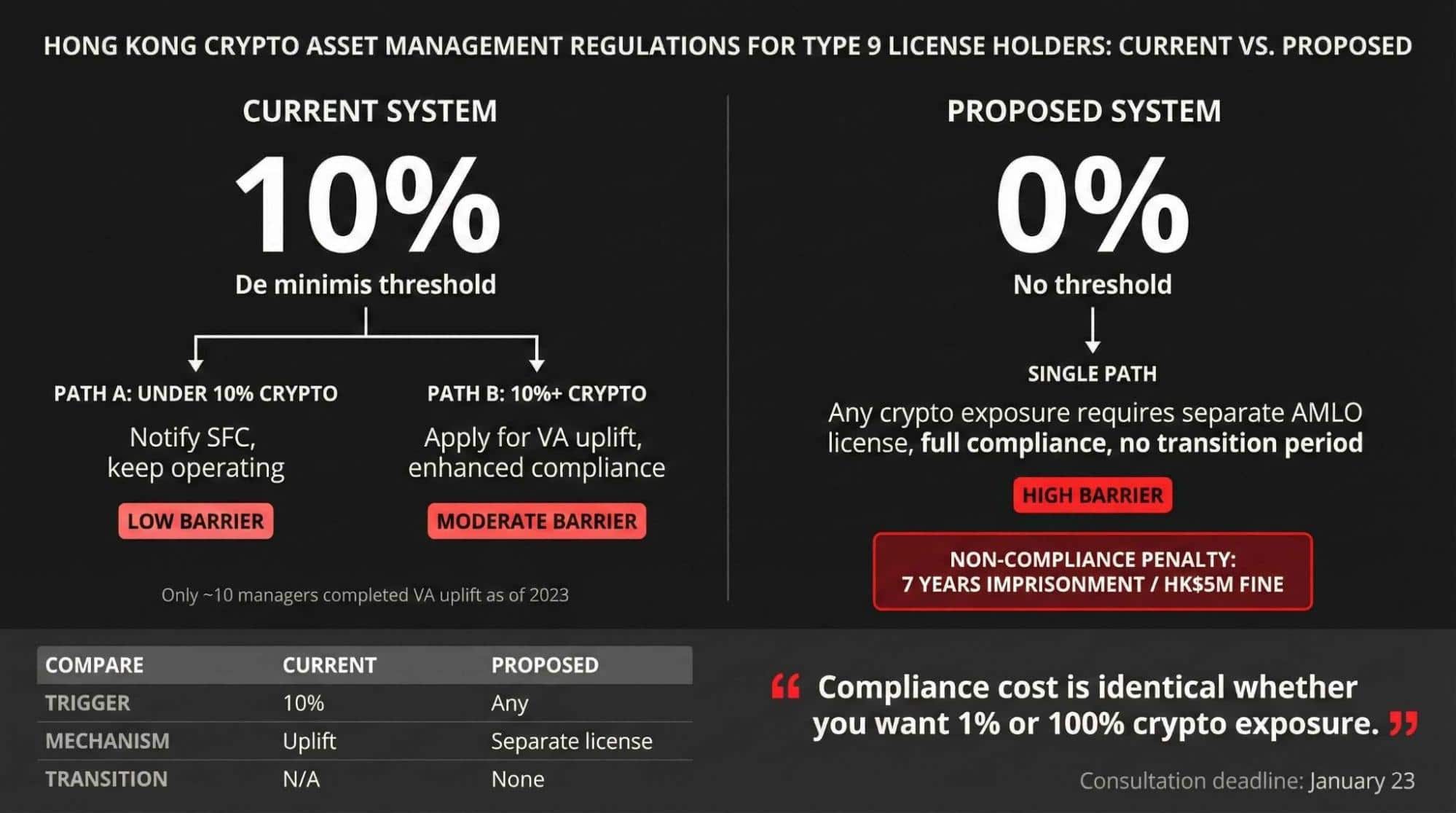
Under existing rules established in November 2018, firms with a Type 9 Asset Management License can invest up to 10% of a fund’s total value in crypto without seeking additional licensing. They must notify the Securities and Futures Commission, but face no extra compliance requirements. The license is Hong Kong’s standard authorization for hedge funds, private equity firms, and asset managers, and it enables them to make investment decisions on behalf of clients.
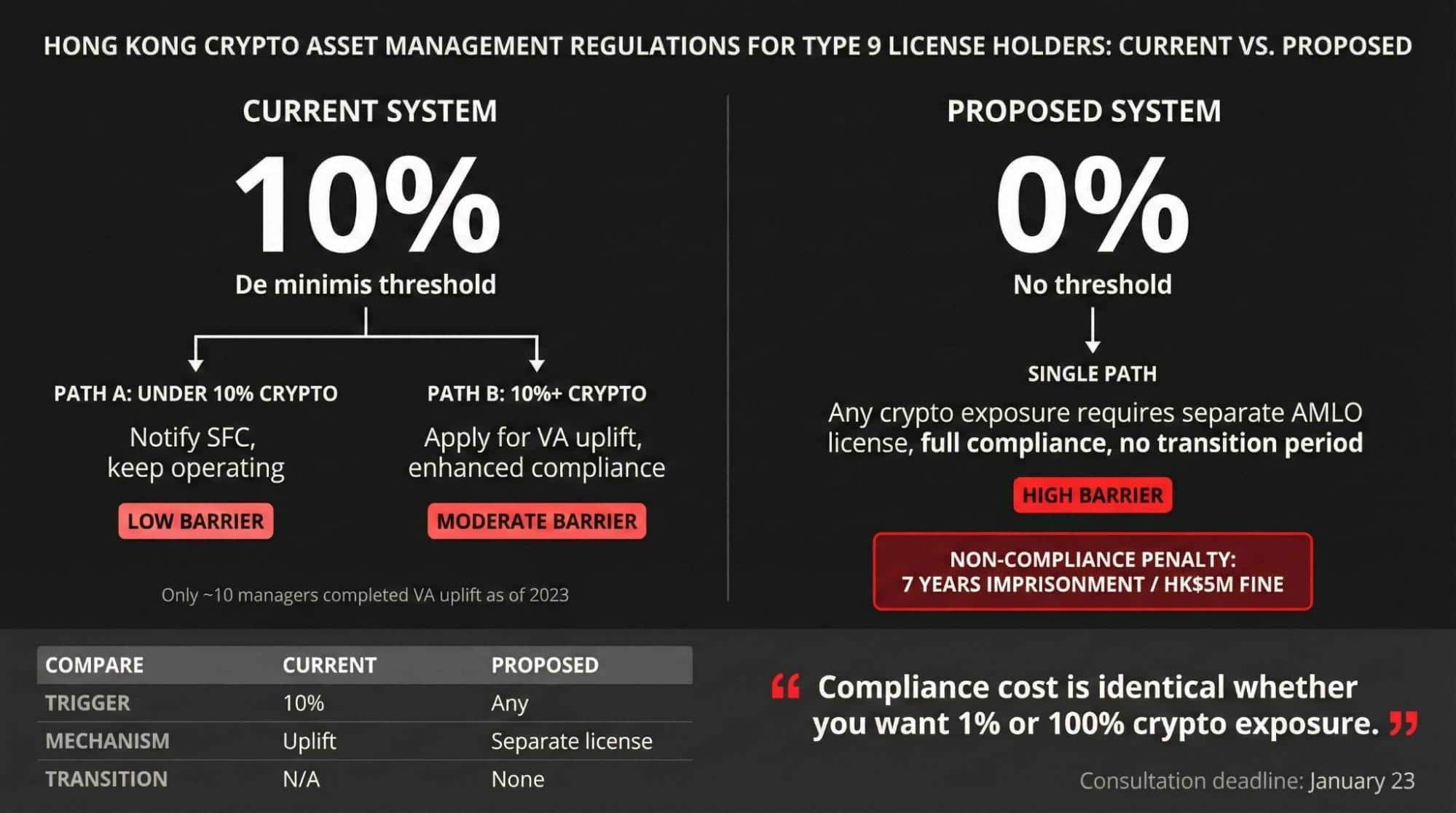
Hong Kong’s proposed crypto licensing changes | Source: FSTB/SFC Consultation Conclusions, December 2025.
The newly proposed system would replace this notification-based approach with a separate licensing regime under the AML (Anti-Money Laundering) and CTF (Counter-Terrorist Financing) Ordinance. Managers without the new license could face up to 7 years of imprisonment and a HK$5 million fine.
The SFC defended the threshold removal in its December 2025 consultation conclusions. The commission cited the need to prevent firms from structuring investments to avoid oversight and maintain consistent investor protection standards. The SFC received 101 submissions during the consultation period, according to the document published at the time.
The HKSFPA also criticized the proposed custody rules that would mandate only SFC-licensed firms can hold fund assets. The group said this would be impractical for private equity and venture capital funds that invest in early-stage tokens that local providers do not yet support.
Broader Regulatory Push
The proposals form part of Hong Kong’s strategy to position itself as a global digital asset hub. The Secretary for Financial Services and the Treasury, Christopher Hui called the licensing regimes a significant step in enhancing our legal framework for digital assets. The city has been accelerating its crypto licensing efforts since introducing its trading platform regime in June 2023.
The consultation closes on Jan. 23. Authorities target a legislative bill for the Legislative Council in 2026. As of right now, regulators have proposed no transitional arrangements. Managers would need to obtain the new license before the commencement date or cease all crypto-related activities until they do so. The HKSFPA is urging regulators to reinstate the threshold exemption and implement a transitional grace period for existing practitioners. Hong Kong’s broader regulatory roadmap includes 12 initiatives that cover custody services and staking rules.
Disclaimer: Coinspeaker is committed to providing unbiased and transparent reporting. This article aims to deliver accurate and timely information but should not be taken as financial or investment advice. Since market conditions can change rapidly, we encourage you to verify information on your own and consult with a professional before making any decisions based on this content.

As a Web3 marketing strategist and former CMO of DuckDAO, Zoran Spirkovski translates complex crypto concepts into compelling narratives that drive growth. With a background in crypto journalism, he excels in developing go-to-market strategies for DeFi, L2, and GameFi projects.