Bitcoin Defies Japan’s Historic Rate Hike—Is a Storm Brewing Beneath the Surface?
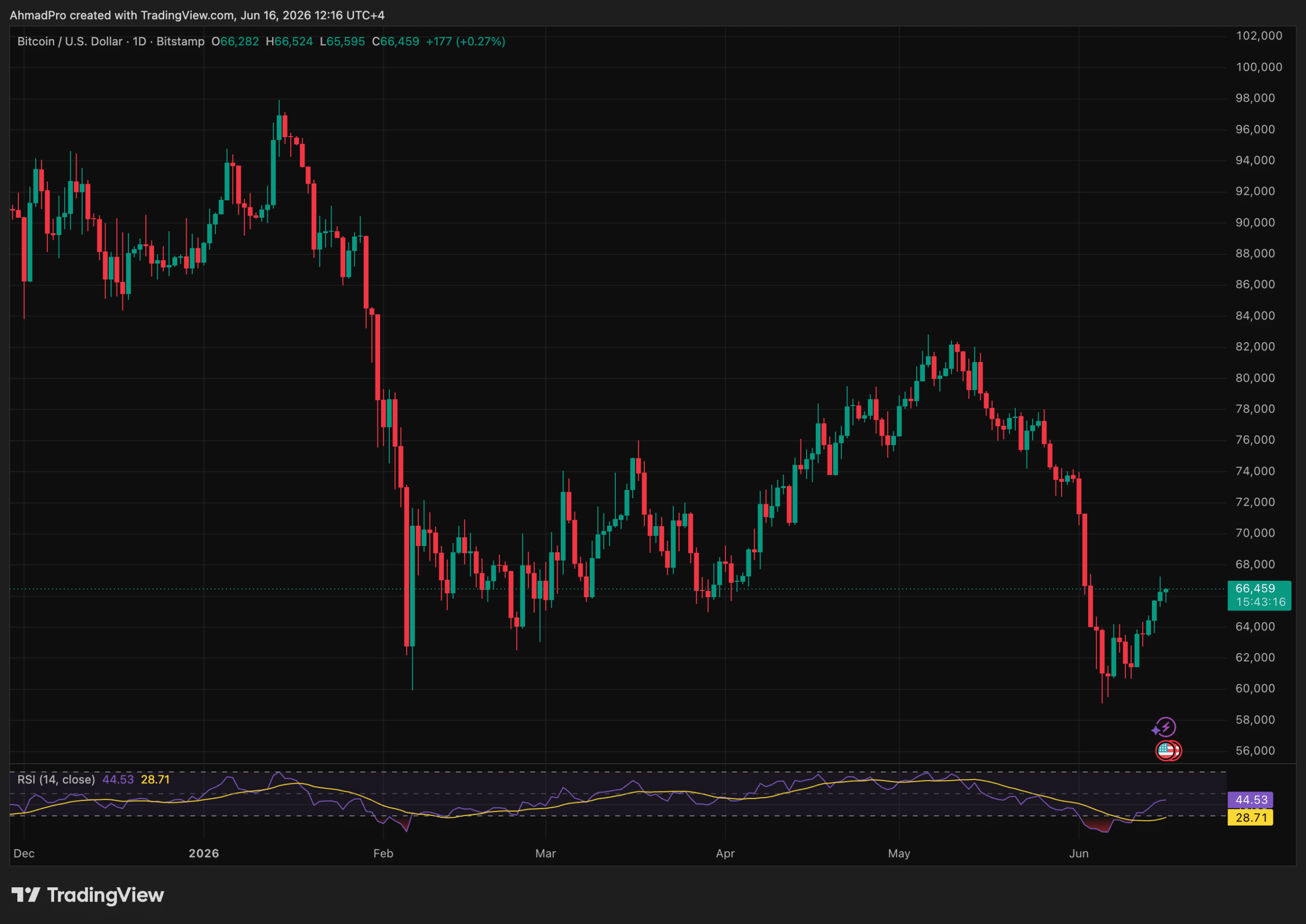
Bitcoin took a little tumble to around $65,600 during the Asian session on June 16th, only to bounce back near $66,000 right after the Bank of Japan raised its policy rate to 1.0%—a peak not seen since ’95. Sounds like a plot twist worthy of a suspense thriller, right? But here’s the kicker: instead of sparking panic or celebration, the market played it cool, thanks largely to the BOJ hitting pause on its bond-tapering plan while pumping steady bond purchases into the fray. So, is Bitcoin shrugging off Japan’s moves for good, or just holding its breath before the next act? The interplay between these subtle signals and Bitcoin’s response is a saga that’s far from over—and one that keeps me glued to my screen, wondering if the yen’s carry trade is quietly plotting another surprise. Curious to see what unfolds next? LEARN MORE.
Bitcoin News Today: BTC dipped to roughly $65,600 in the Asian session on June 16 before reversing to approximately $66,000 after the Bank of Japan (BOJ) raised its policy rate by 25 basis points to 1.0%, the highest level since 1995 and the fourth hike in a normalization cycle that began with the BOJ’s exit from negative rates in March 2024.
The move was met with neither a sustained sell-off nor a meaningful rally, a response that looks orderly on the surface but carries structural ambiguity underneath. Alongside the rate decision, the BOJ announced it would hold Japanese government bond (JGB) purchases at roughly ¥2 trillion per month from April 2027, effectively pausing its earlier bond-tapering plan and injecting a dovish counterweight that likely helped stabilize risk assets through the announcement window.
The analytical question is no longer whether the BOJ hike constitutes a genuine rate shock for crypto; it is whether the yen carry trade overhang that has driven four documented BTC corrections since early 2024 is dormant or permanently defused, and the derivatives data, historical pattern, and yen behavior after the decision do not yet answer that cleanly.
Why Bitcoin Didn’t Sell Off: The Pricing-In Dynamic and the BOJ’s Dovish Side-Signal
Polymarket data point to 98–99% pre-meeting probability assigned to the hike, meaning no meaningful surprise premium existed to unwind at the moment of confirmation.
When a macro event is priced to near-certainty, the directional impulse at announcement collapses, positioning had already rotated, and short-side pressure was absorbed before the decision landed. That mechanism explains the absence of a sharp sell-off more precisely than any narrative about Bitcoin decoupling from Japanese monetary policy.
#Bitcoin bounced after the #BOJ rate hike because markets looked beyond the headline. 🧐
A 31-year high rate sounds hawkish, but the bond taper pause gave risk assets room to breathe.
Higher rates were expected.
The bond taper pause was the real signal.
Smart traders don’t…
— PropW (@PropWGlobal) June 16, 2026
The bond-taper pause compounded the dovish tilt. By committing to maintain JGB purchases rather than continuing to shrink its balance sheet, the BOJ signaled that financial conditions tightening would remain gradual, a distinction that matters for yen-funded carry positions, which depend less on the rate level itself than on the pace of balance-sheet normalization and yen appreciation velocity.
With the yen holding above 156 per USD after the decision, the interest rate differential with the Federal Reserve remained wide enough to keep carry trades largely intact. The crypto derivatives market registered $488 million in total liquidations on June 16, of which $365 million were short liquidations, according to TradingPedia – suggesting the post-announcement move squeezed shorts rather than triggering long-side forced selling.
DISCOVER: Best Meme Coins to Buy in 2026
Bitcoin News Today: Four BOJ-Linked BTC Corrections Since 2024: What the Historical Record Shows
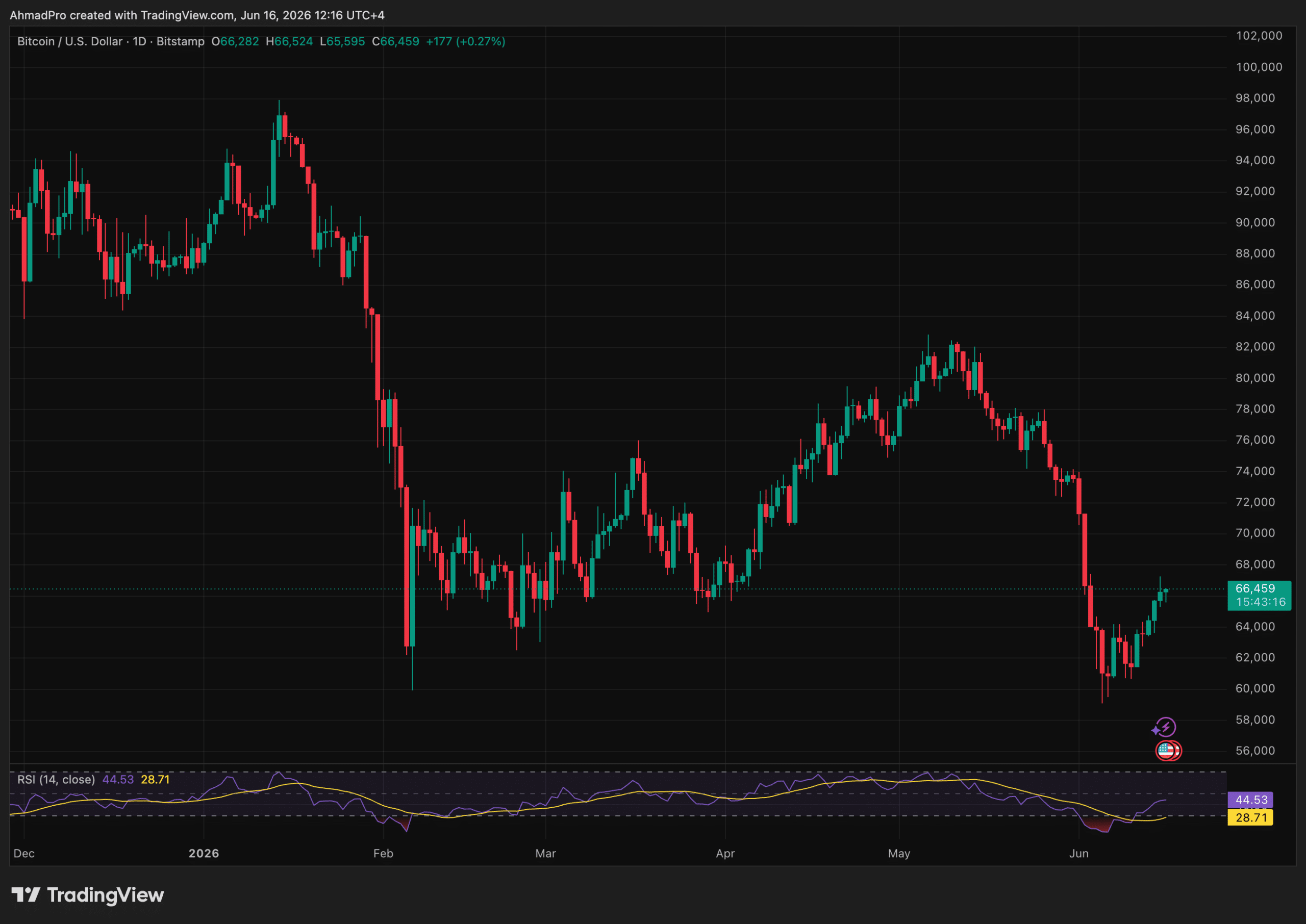
The calm reading of today’s price action sits in direct tension with a pattern that has now repeated across four distinct episodes. Following the BOJ’s March 2024 hike – its first rate increase in 17 years, Bitcoin fell approximately 23%.
The July 2024 hike preceded a roughly 25% drawdown. The January 2025 hike was followed by a decline exceeding 30%. Bitget’s research desk documents the range across these episodes at 18–28%, consistent with the pattern SignalPlus describes as BOJ tightening cycles that historically precede yen rallies and sharp Bitcoin drawdowns as yen-funded carry trades unwind.
The transmission mechanism is mechanical, not speculative. Institutions borrow yen at low interest rates and deploy that capital into higher-yielding assets – global equities, bonds, and crypto among them.
Source: BTCUSD / Tradingview
When the yen appreciates rapidly, the cost of servicing those yen-denominated loans rises in local-currency terms, forcing deleveraging: risk assets are sold to repay the debt. Bitcoin, as one of the most liquid 24-hour markets globally, absorbs a disproportionate share of that forced selling relative to less liquid carry-trade destinations.
The complication in applying this history to the current episode is that each prior correction followed a period in which the hike itself carried some element of surprise or hawkish communication beyond what markets had priced, conditions that are less clearly present today.
That distinction is important, but it does not neutralize the tail risk. As Blockonomi notes, Bitcoin’s resilience in the immediate post-hike window depends on continued yen weakness and gradual BOJ policy adjustments, two conditions that are subject to revision without notice. The prior episodes where Bitcoin sold off sharply also began with brief periods of apparent stability before the yen move accelerated and carry unwinds cascaded.
EXPLORE: Next Crypto to Explode in Q2
Disclaimer: Coinspeaker is committed to providing unbiased and transparent reporting. This article aims to deliver accurate and timely information but should not be taken as financial or investment advice. Since market conditions can change rapidly, we encourage you to verify information on your own and consult with a professional before making any decisions based on this content.

Daniel Frances is a technical writer and Web3 educator specializing in macroeconomics and DeFi mechanics. A crypto native since 2017, Daniel leverages his background in on-chain analytics to author evidence-based reports and deep-dive guides. He holds certifications from The Blockchain Council, and is dedicated to providing “information gain” that cuts through market hype to find real-world blockchain utility.