Unlock the Hidden Rules: What Every Organization Must Know About Social Media Policy Now
Ever wonder why your brand’s social media presence sometimes feels like trying to juggle flaming torches while riding a unicycle? Well, you’re not alone. Over the past decade, social media has morphed into a wild ecosystem powered by cutting-edge tech, AI wizardry, and an ever-growing community of passionate content creators. It’s not just about posting updates anymore—these platforms have become your brand’s PR megaphone, customer service hotline, and the heartbeat of your community all rolled into one. And here’s the kicker: your audience expects authenticity that hits home, not just slick marketing copy. But here’s a twist—40% of consumers find your employees’ content way more genuine than what’s plastered on your official pages. This goldmine of employee-generated content (EGC) can be a double-edged sword—brilliant for brand building but risky without the right guardrails. That’s where a solid social media policy comes in, acting as your brand’s shield and guide through the AI jungle, privacy puzzles, and the empowering yet tricky world of employee advocacy. Ready to turn that social media chaos into a well-oiled brand symphony? LEARN MORE.
Over the last decade, social media has rapidly evolved alongside new technologies, AI and the content creator landscape. Social media networks now function as brand PR channels, customer service platforms and community building tools simultaneously. And while you balance all those pieces, consumers expect you to create an active, authentic online presence that resonates with them.
Complicating matters, your brand presence extends beyond your main account pages. In a Sprout Social Q2 2026 Pulse Survey, 40% of respondents said they found employee-generated content (EGC) to be more authentic than posts on the brand’s page. EGC (and all influencer content) is powerful but needs the right safeguards in place to maintain the reputation of your brand and its values.
Implementing a social media policy will help protect your company, navigate AI, prioritize consumer privacy and give employees the space to advocate for themselves.
Please note: The information provided in this article does not, and is not intended to, constitute formal legal advice. Please review our full disclaimer before reading any further.
What is a company social media policy?
A social media policy is part of a company’s business code of conduct that tells employees how they should represent themselves and the brand on social media. Policy differs from social media guidelines, which are best practices for using specific social channels. Policy includes protocols to protect the brand’s security, privacy and legal interests.
Social media platforms provide avenues for brand promotion, but they also present opportunities to misrepresent your brand, which is why a good social media policy is so necessary. Many policies also now include guidelines around whether AI-generated content is okay to use on social, how to label it and how the policy ties to broader company AI guardrails.
If you’d like to see how a social media policy is structured, download our free template.
Why do you need a social media policy for employees?
Here are several reasons organizations should adopt a social media policy:
Safely amplify employee voices
Employees, both intentionally and unintentionally, have become a new type of social media influencer. As they share about their work experiences, brand promotions and company behind-the-scenes, their content is getting in front of customers. According to the Sprout Social Influencer Marketing Report, more than half of consumers are seeing content from brand employees at least once a week, and 15% are seeing it daily.
Consumers are excited about EGC, with 46% saying they want to hear from frontline employees specifically. When your employees post about the organization online, it can increase brand awareness, establish thought leadership and drive qualified leads. Along with helping social selling, employee posts can support social recruiting efforts, attracting top talent to your company.
Yet, EGC does come with inherent risks; an unhappy employee with a following can quickly create a brand crisis. Team members not trained in brand voice may misrepresent the company. Social media policies allow you to unlock all the benefits of employee advocacy, without putting your brand credibility at risk. Your social media policy is a critical advocacy tool, giving your employees the guidance they need to represent your brand accurately within social networks. This is a key component of social media governance, ensuring consistent and responsible online behavior across your organization.
Having sensible guidelines in place ensures employees can post in their unique voices while still maintaining brand safety.
Promote DEI
Brand diversity in social media is more important than ever. Consumers want to interact with and purchase from brands that share their values.
Amplifying diverse voices via social media is an actionable step brands can take to prioritize representation and attract top talent from marginalized communities. An inclusive social media policy will empower and encourage voices from all backgrounds to advocate for the brand.
Maintain a consistent brand identity
A social media policy ensures that whenever someone interacts with your company online, either through a brand channel or an employee, they get the same consistent experience. This develops a more reliable, trustworthy identity for your company, turning customers into loyal fans and ambassadors.
Minimize legal action against your brand
Social media presents complicated considerations such as privacy law and copyright law. A well made social media policy will protect the company from potential lawsuits.
Consult with your legal counsel and outline a list of do’s and don’ts for the company to follow. These rules of thumb will help ensure the organization and contractors are compliant with laws, reducing the risk of legal action against the company.
Protect your brand from privacy and security risks
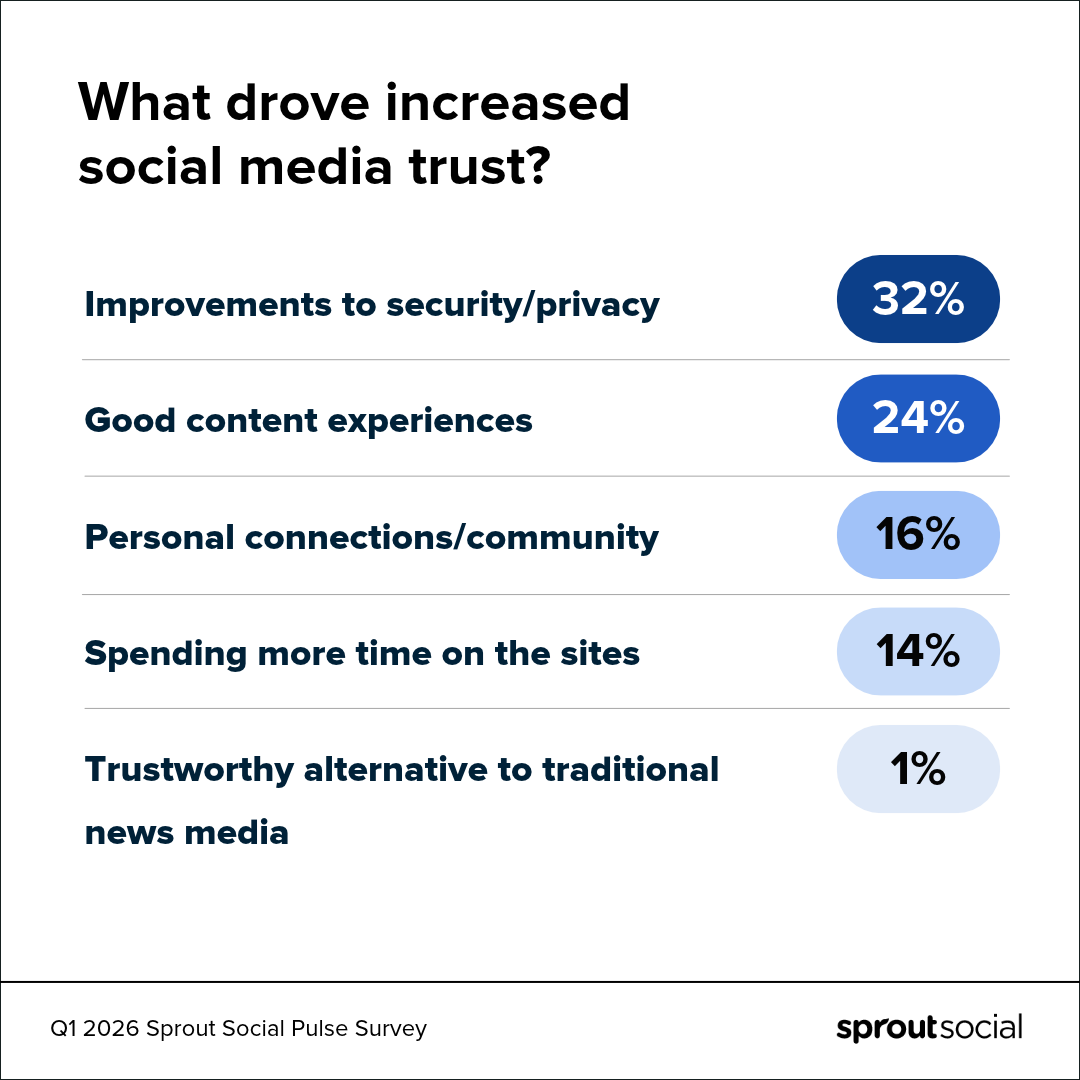
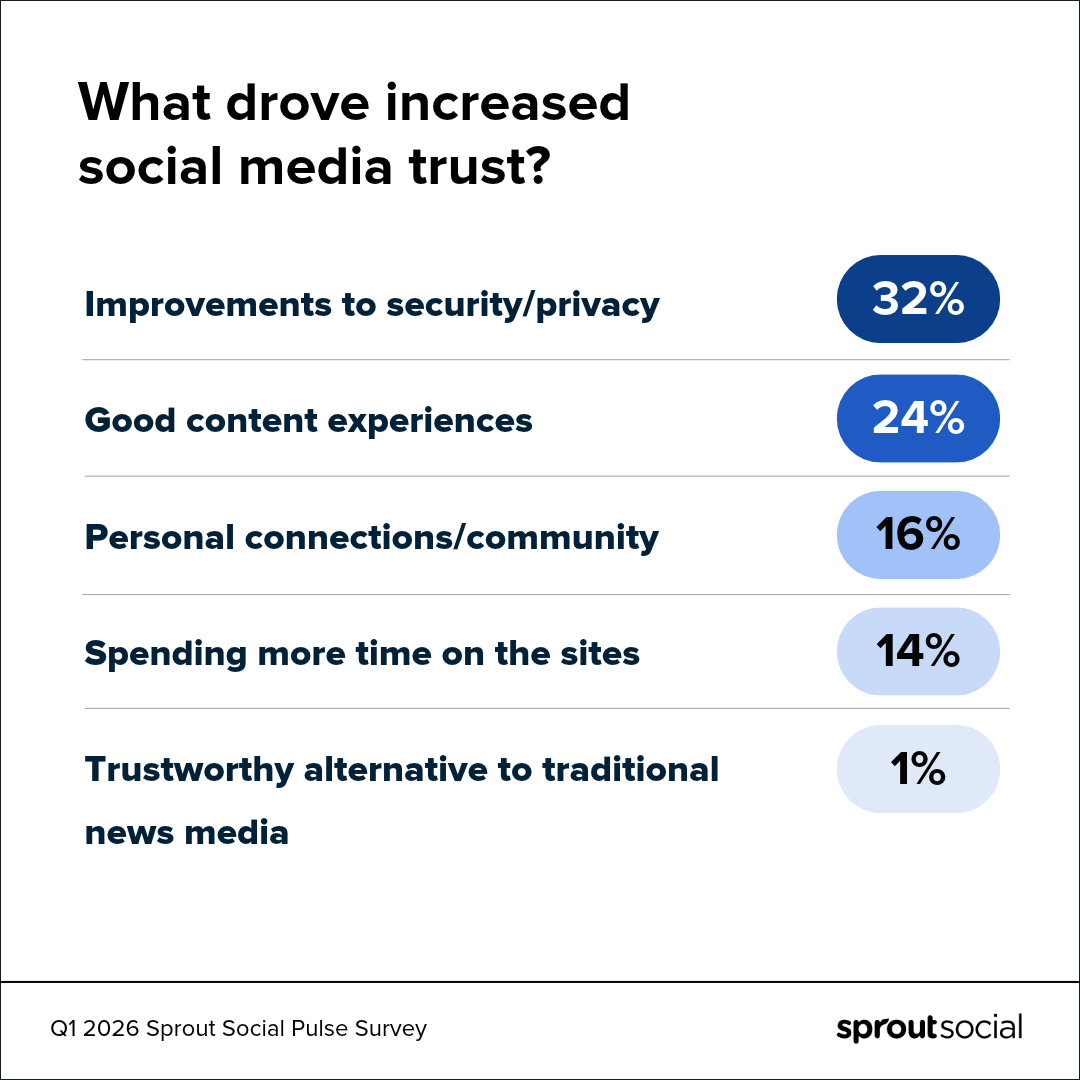
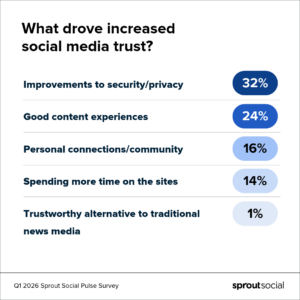
Privacy and security concerns on social media are growing, affecting your brand and audiences. How you secure your accounts and protect customer information on these channels is critical. The Q1 2026 pulse survey found that when users experienced an increase in social media trust, it was most often thanks to improvements in security and privacy protocols.
Work to close any security gaps in your social media approach. A good social media policy combined with security protocols will protect your accounts against hacking, phishing and fraud accounts.
And since social media is a common resource for scammers and criminals, it’s imperative your social media policy includes guidelines that protect your employees and company. Whether it’s defending against phishing scams or ransomware attacks, make sure that everyone in your organization is vigilant about online protection.
Prevent a public relations crisis
Many organizations make the mistake of waiting until they’ve faced a public relations disaster to put a policy in place. Be proactive and implement a strategy in advance to minimize crises and the costs that come with one.
Social media is the number one place consumers first hear of an unfolding brand crisis, according to the Q2 2026 Sprout Social Pulse Survey. Around 64% of consumers surveyed want brands to respond publicly to a crisis on social media instead of via press release or a website announcement, so be sure to lay out a response framework well in advance.
Your social media crisis plan should align with your social media policy. For example, the policy can designate which teams are responsible for handling a PR crisis.
What every social media policy should include
A well-crafted social media policy will provide a variety of benefits, like empowering your staff and protecting your brand. But to relish those benefits, your policy needs to outline clear, comprehensive guidance.
Your essential component checklist includes:
- The purpose of the policy and why it matters
- Who the policy applies to, and when
- Guidelines for employees’ personal account usage
- Company association rules
- Security and privacy guidelines, for the brand and customers
- Legal requirements
- How to engage on social responsibly
- The company’s approach to AI and social media
- Influencer and brand partnership framework
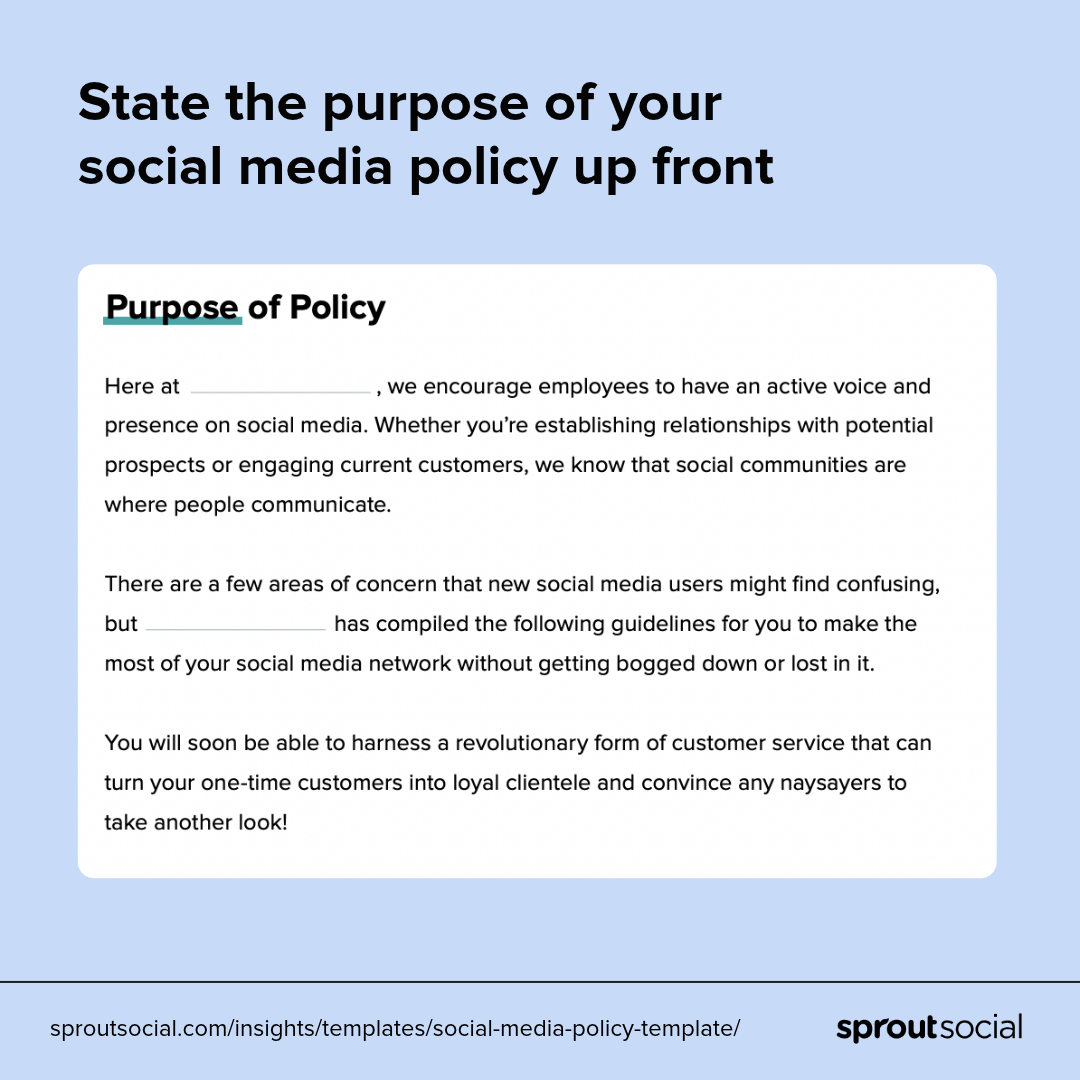
The purpose of the policy
Explain why the organization uses a social media policy. Be transparent and illustrate why your brand needs it. Here’s an example from our social media policy template:
Who the policy applies to
Emphasize how the social media policy applies to everyone from executives and managers to interns and freelancers. An example from our template is below:
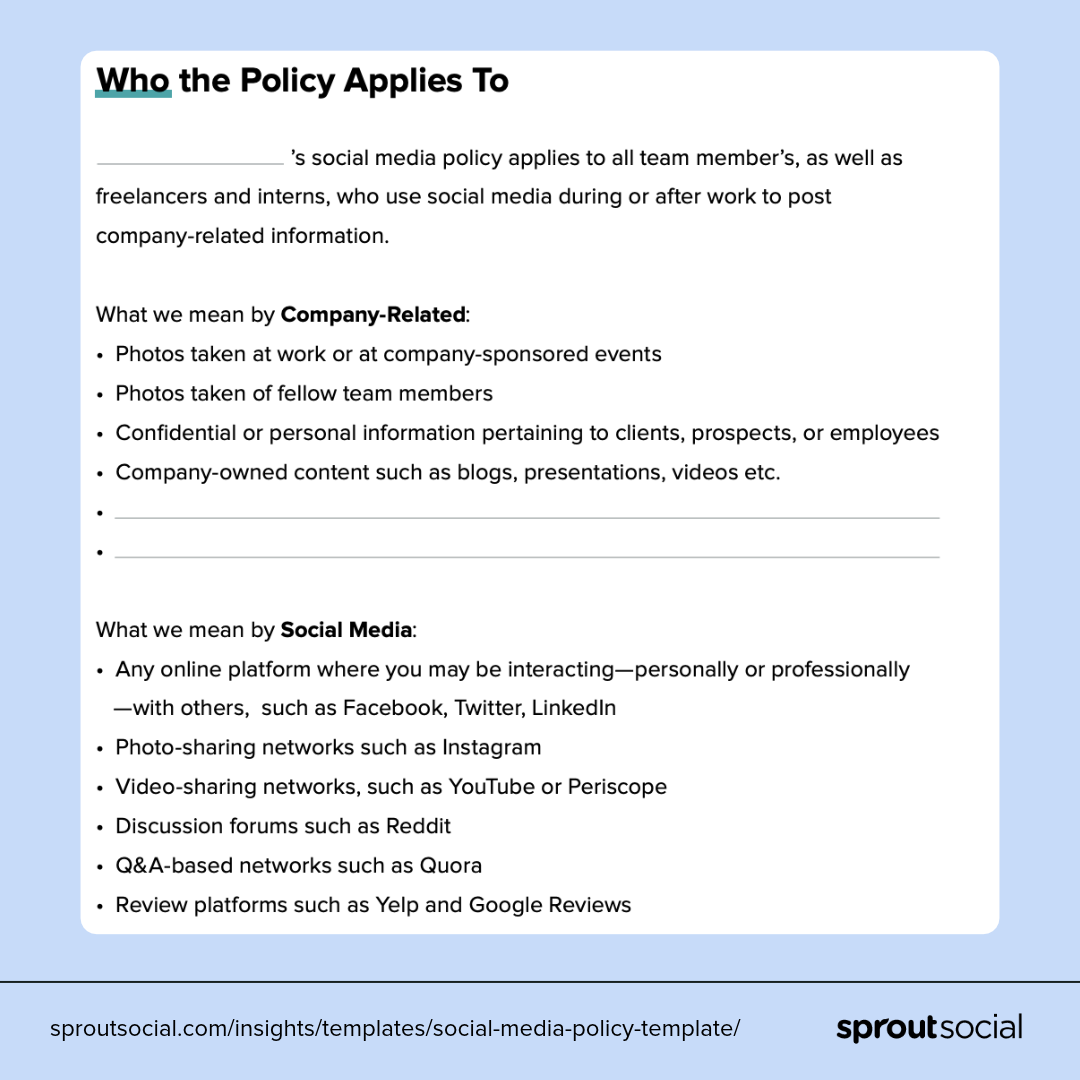
Note how this section also provides the brand’s definitions of company-related information and social media. These clear distinctions ensure everyone within the organization is on the same page.
Personal account guidelines
You can’t control everything your employees do and say on their personal social media accounts. However, it’s important to show them why their behavior on personal profiles affects your company and how they can avoid conflict.
Regardless of whether or not your employees are speaking for you, the world might view them as a reflection of your brand. If your employees are acting questionably online, this raises suspicion about your business too.
Your social media policy will have a list of rules to follow, but the most important thing to remind your employees is that whatever they say on social media, they’re representing the company—even when on their personal accounts.
Outline basic expectations for behavior. For instance, they need to:
- Check their facts
- Respect the law (including copyright law)
- Avoid saying negative things about your brand or other companies
Company association rules
It’s also a good idea to include a disclaimer on personal accounts to remind customers that your employee is an individual, not a spokesperson for your organization. Many social media policies ask team members to state all of their posts are based on their own opinions, like Best Buy:
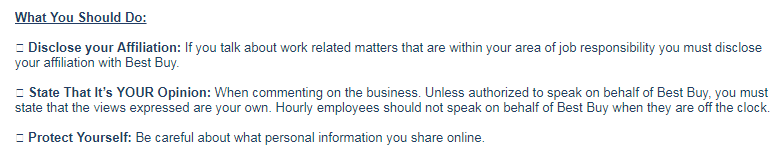
By separating themselves from their employees’ opinions, Best Buy reduces their risk of a PR crisis.
Security and privacy guidelines
Your social media policy should also defend against security risks and privacy issues. Robust social media policies outline the dangers of sharing online and help keep your employees out of trouble.
At a minimum, these guidelines should include details about:
- Sharing proprietary or confidential company information
- Posting defamatory, derogatory or inflammatory content
- Posting information or pictures that imply illegal conduct
- How to create secure passwords, including two-factor authentication for brand and personal social media accounts
- How to keep software updated and devices secure
- How to identify potential social media risks and attacks
- How to respond if a security breach takes place
The safer your employees are with their social media actions, the more secure your business becomes.
Legal guidelines
Your social media policy must provide clear guidelines on how to handle sensitive areas, particularly regarding the law and industry regulations. Legal requirements vary by country and state, so make sure you consult with your legal counsel.
Your policy can cover, but isn’t limited to the following:
- Credit sourcing: What is the source of the information your employee is sharing? Crediting images and other information is crucial.
- Privacy and disclosure procedures: Let your employees know what is considered confidential, such as customer information.
- Disclaimers: Let your staff know what a disclaimer means when they use it online. As the City of Edmonton outlines in their social media guidelines, even if someone states that their opinions are their own, they’ll still be seen as a representative of the city by the public.
- Regulatory challenges: Certain industries like finance, government and healthcare have specific regulatory requirements. Outline any rules that may be associated with your industry.
Responsible engagement
Clarify who can speak on behalf of your company on social media. A small problem could snowball if not handled appropriately. If someone leaves a negative comment about your brand online, make sure your employees know how to respond.
The degree of freedom you give your staff will depend on the nature of your business. If you do allow your team to offer advice to customers, it’s a good idea to train them on the following:
- Brand guidelines: How to talk about your products, services and company.
- Etiquette: How to respond to comments from customers (tone of voice, customer escalation strategies, etc.).
- Confidentiality: Which details should absolutely not be shared on social media.
- Consequences: What will happen if they fail to follow the company’s social media policy.
For some businesses, the best option will be to direct the situation toward the staff trained to manage PR matters and conflict resolution. You may have members of your team responsible for crisis response, message approval, customer service, public relations management and social engagement.

An excellent way to ensure conflicts are always handled properly from the start is to set up pre-approved responses to common issues in a social media management platform like Sprout Social. These responses show your brand is aware of their concern and will direct them to the right person to resolve the problem.
You can even use Sprout’s social listening tools to ensure you’re the first to know when someone says something negative about your brand. The faster you’re aware of a problem, the easier it is to fix it before the fire spreads.
AI guidelines
AI has introduced a host of new considerations for how your brand and employees use social media. This includes who is making content, how they’re using AI to support creation and customer service, and how AI usage is labeled. In 2026 pulse surveys, respondents shared that while they’re open to brand AI usage, it needs to be transparent and carefully considered.
Some 70% of survey respondents were at least somewhat comfortable with AI usage for faster customer service. However, consumers are much more apprehensive about use cases like AI influencers. Nearly half are uncomfortable with AI influencers and another 30% say it depends on the situation.
Labeling AI content gets a mixed response: 23% say it makes them view the brand more positively and another 23% say it makes them view the brand negatively. That’s why it’s critical to ensure your social media policy is clear about where it is (and isn’t) worthwhile to use AI to support content creation. Establish guidelines about how AI can be used in your content and customer service, and what needs final human sign off.
Influencer guidelines
The FTC regulates partnerships and has laid out influencer guidelines your brand will need to adhere to. You’ll need to be crystal clear about whether products or services were given for free, and all influencer content should be marked as ads. Even employee posts that tag or use influencers alongside a brand name must clearly state that they are not associated with paid promos from that brand. The best approach is to keep it simple: make sure all content uses straight forward language, make influencer partnerships obvious and keep employee and paid promotional content separate.
Social media policy examples
If you’re looking for inspiration, many social media policies are publicly available. Here are a few great social media policy examples that are specific and comprehensive:
Nordstrom
Nordstrom’s social media policy is straightforward and prioritizes customer privacy and good transparency practices. It clearly addresses best practices to follow whether an employee is using official channels or personal ones to discuss the brand. Several points cover customer security, including not sharing sensitive information or images of customers.
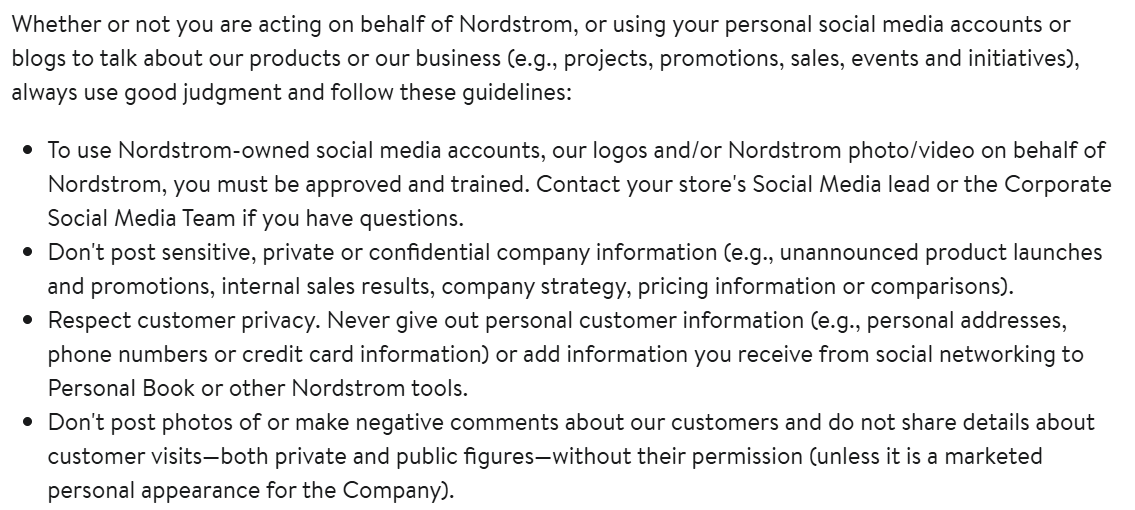
The policy also specifies that anyone posting directly from official accounts needs to be approved and trained, a smart way to keep brand communications aligned.
Nordstrom’s policy is clear that endorsers should be truthful and upfront about what their connection to the brand is, and state any product or compensation they received. The brand defines “endorsers” as anyone with a relationship to the company, including employment, receiving free products or being invited to brand events. The policy refers to the additional “Guidelines for Endorsers” policy for details on sharing their opinions and insights as someone connected to Nordstrom.
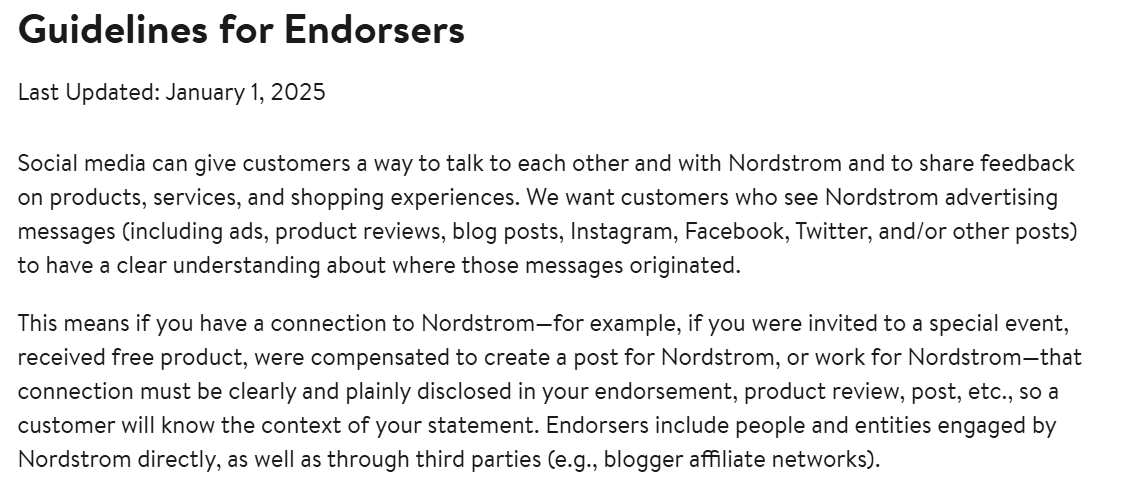
This policy is a good example of building in protections for the brand while encouraging employees to share their real, authentic experiences.
IBM
IBM was ahead of many brands with their Social Computing Guidelines, which date back to 2005. While social media was still a burgeoning idea then, blogging was a well-established activity. IBM set out standards over two decades ago from employees who wanted to blog and share ideas with the world. The company recognized the responsibility that came with engaging with the public in this way, and the potential for employee content to boost or harm their brand.
The brand’s Social Computing Guidelines evolve frequently and are tied directly to their Business Conduct Guidelines. This includes guidance for employees on steps to take if journalists or other interested parties reach out to them on social.
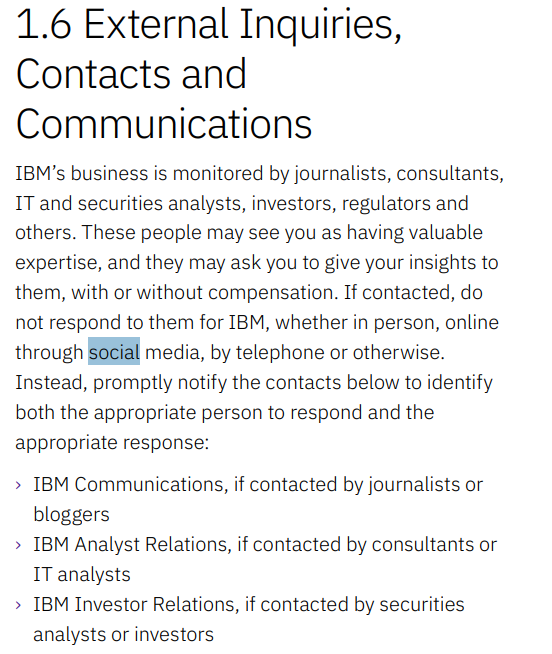
The brand also has policies for employees who wish to speak on behalf of IBM, whether on social or at an industry event, and how to get approved to do so.
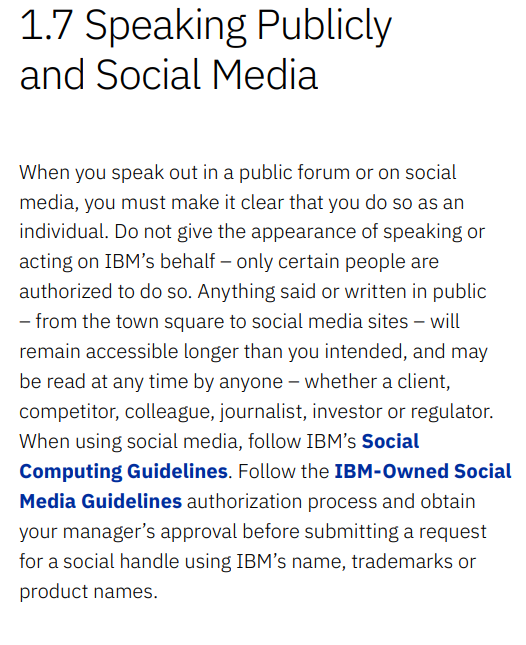
With this policy, IBM lets employees know that while their content can always reflect back on IBM, that doesn’t make every employee an authorized spokesperson. There is a path for employees to pursue if they want to be a more public figure for IBM, but the company keeps those roles limited by default.
Mailchimp
As a writing-centric brand, Mailchimp has extensive tone and voice guidelines to train employees who write all types of content. Their social media policy includes specifics about how to write for social media, noting there’s a delicate balance to strike between authentically connecting with social media users and maintaining the brand image.
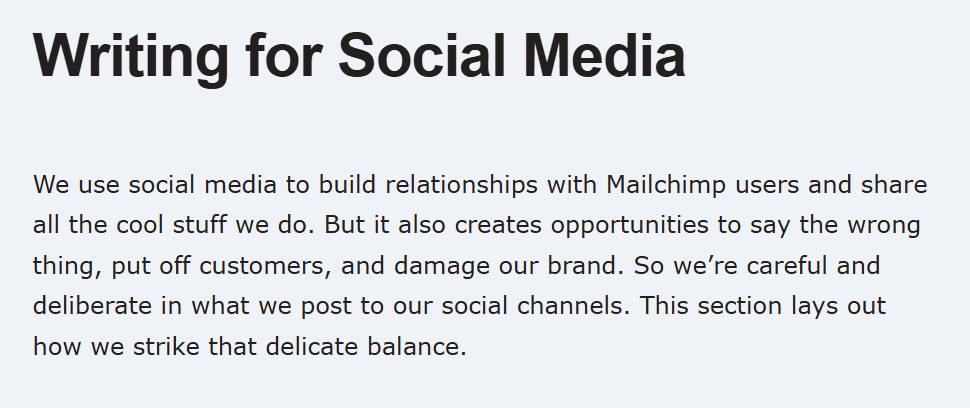
The policy establishes channel ownership with the marketing team to create a clear approval structure for all content. The policy includes guidelines for specific channels, including what type of content to post, and where. The policy is written conversationally, making it easy to parse for employees tasked with crafting social media content.
Set social media guidelines to keep your brand safe
Social media is a powerful tool for your business, but it takes intention to enjoy its benefits. A social media policy will help guide employees across the organization on how your brand should be represented on social.
Your social media policy should consider evolving factors like AI and the changing employee-as-influencer landscape, and build in sensible restrictions for who can post where, how and when. With the right framework, your social media policy is a tool for employee advocacy and strong customer relationships.
Take control of your brand’s social identity by showing employees they have the power to deliver incredible results for your company. Give them the tools they need to best represent the brand and themselves by downloading our social media policy template.
DISCLAIMER
The information provided in this article does not, and is not intended to, constitute formal legal advice; all information, content, points and materials are for general informational purposes. Information on this website may not constitute the most up-to-date legal or other information. Incorporation of any guidelines provided in this article does not guarantee that your legal risk is reduced. Readers of this article should contact their legal team or attorney to obtain advice with respect to any particular legal matter and should refrain from acting on the basis of information on this article without first seeking independent legal advice. Use of, and access to, this article or any of the links or resources contained within the site do not create an attorney-client relationship between the reader, user or browser and any contributors. The views expressed by any contributors to this article are their own and do not reflect the views of Sprout Social. All liability with respect to actions taken or not taken based on the contents of this article are hereby expressly disclaimed.
Social media policy FAQs
What is the difference between a social media policy and social media guidelines?
Social media policy includes rules about how content is created and shared in a brand’s social ecosystem. Social media guidelines are best practices for creating content and posting on specific channels.
How often should a company update its social media policy?
Companies should review social media policies at least quarterly to adjust for changing technology, trends and broader company policies












Post Comment