Unveiling the Hidden Power of Retail Media: Is It Worth the Hype?
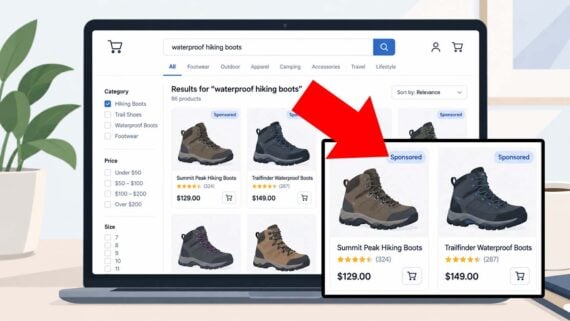
Ever noticed how those “sponsored products” ads sneakily show up just when you’re about to hit the “buy” button? That’s retail media for you—advertising published right inside ecommerce sites, with Amazon Sponsored Products stealing the spotlight. But here’s the kicker: while retail media can spark fresh demand and drive real value for advertisers, it can also just shuffle profits from the seller to the platform itself, leaving merchants wondering if their ad dollars are truly paying off. With global spending soaring past $140 billion in 2024 and projections climbing even higher, it’s clear retail media isn’t just a passing fad. Still, the question lingers—are these ads genuinely boosting sales, or just creating an expensive game of margin musical chairs? Dive in as we unpack the messy, lucrative, and sometimes puzzling world of retail media. LEARN MORE.
Retail media is advertising published by retailers. Amazon Sponsored Products is the best-known example.
Retail media creates value for advertisers when it generates profitable new demand, but it can just as easily shift margin to the underlying ecommerce site publishing the ads.
The retail media market is substantial and growing.
A 2025 Journal of Retailing paper estimated 2024 global retail media spending at more than $140 billion, including $54 billion in the United States. More recently, eMarketer forecasts U.S. retail media ad spend at $69.33 billion in 2026, a 17.9% increase from 2025.
Using Retail Media
Ecommerce companies can participate on either side of the retail media market.
A merchant selling through Amazon, Walmart, or other marketplaces can buy ads to convert more shoppers.
The same merchant can also sell and publish ads on its own site and email list.
For the advertiser, retail media can be useful because the message appears close to the purchase decision. A shopper searching for “waterproof hiking boots” shows a strong purchase intent.
Value Creation
Imagine a brand that spends $1,000 on retail media and generates $5,000 in sales it would not otherwise have received. If those sales produce $1,500 in contribution margin before advertising, the campaign generated $500 in net benefit.
That is value creation.
The economics look different when the sale would have happened anyway.
Imagine a marketplace where a seller historically ranked well organically. The marketplace adds more sponsored placements, competitors bid for them, and the seller must spend $5 on advertising to maintain a $50 sale it used to get without that expense.
- The marketplace earns $5 more.
- The seller earns $5 less.
- The shopper still purchases the same product.
Retail media has generated revenue for the marketplace, but not for the advertiser.
This possibility is more than theoretical. The Journal of Retailing report noted concerns that retail media can erode advertisers’ margins when the attributed sales are not incremental or new.
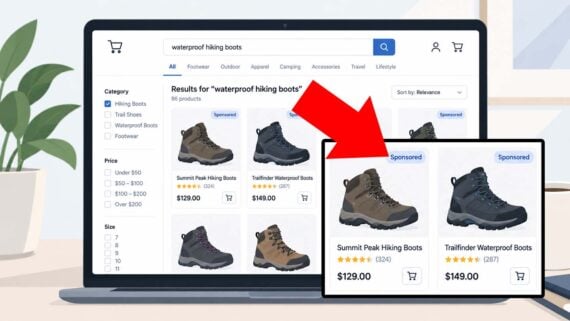
Retail media in the form of sponsored placements can turn an ecommerce storefront into an advertising channel, such as this example for hiking shoes.
Lowers Profit
Moreover, retail media can erode the margins of merchants publishing the ads
Consider a retailer with a category page generating $100,000 in monthly merchandise sales and $30,000 in gross profit.
A supplier agrees to pay $3,000 per month for a prominent advertising placement, seemingly elevating margins to $33,000.
But suppose the sponsored placement displaces the merchant’s own conversions. Gross profit falls from $30,000 to $28,000.
The retailer-publisher collected $3,000 in media revenue but gained only $1,000 overall.
Even worse, if gross profit from product sales falls to $26,000, the $3,000 from retail media lowered overall margin by $1,000.
Advertising revenue increased. Business performance declined.
That risk extends beyond a single product. Too many sponsored products or irrelevant recommendations could make a store harder to shop, weaken customer trust, or reduce conversions over time.
For marketplace advertisers, return on ad spend cannot alone justify the investment. An advertiser generating $8 in sales for every $1 ad may have received those conversions anyway.
The more useful measure is whether the advertising changed the outcome.
To estimate the effect, large advertisers use randomized experiments, marketing mix models, geo-testing, and similar methods. Smaller companies can assess new-customer sales, organic performance, and periods with and without campaigns.
Incremental Value
Thus retail media is not inherently a win or loss.
If it creates profitable new demand for advertisers, it’s a win. If it adds cost to conversions advertisers would have received anyway, it’s a loss.
For retailer-publishers, it adds value only if it produces a higher net margin.
That distinction matters for both sides of retail media.













Post Comment