Unlock the Secret to Tracking ChatGPT Traffic in GA4 Like a Pro
Ever wondered if ChatGPT could be the next goldmine for website traffic — quietly working behind the scenes while Google Analytics barely blinks? It might surprise you that, although ChatGPT doesn’t always flash on the GA4 dashboard due to lower volumes, its traffic tends to out-engage even organic search visitors. Yes, you read that right—ChatGPT visitors stick around longer, click more, and dive deeper than your typical searcher. From my years wrangling SEO rankings and optimizing sites for AI-driven answers, I’ve noticed this intriguing trend first-hand. The catch? We’re still scratching the surface of why this AI-powered traffic performs so well, but I’ve got a couple of hunches rooted in how these tools solve problems and point users toward valuable content. Whether you’re an SEO vet or just curious about the evolving digital traffic landscape, keeping an eye on your AI referrals might be the ace up your sleeve in this game of online visibility. Curious yet? LEARN MORE.
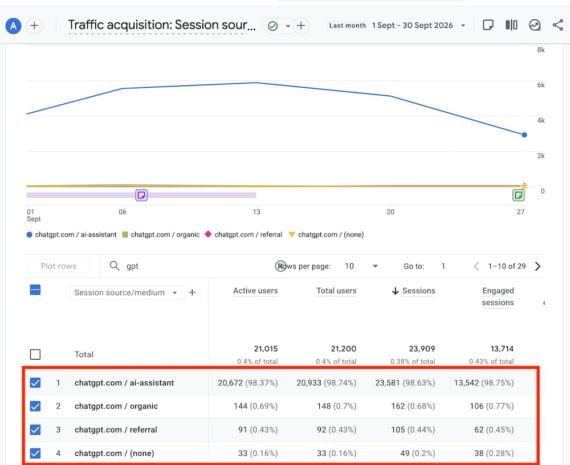
ChatGPT is becoming a valuable traffic source. It may not appear in a Google Analytics 4 overview because the volume is small, but ChatGPT traffic is often the most engaging source, even more than organic search.
I base those observations on my experience optimizing client sites for AI answers.
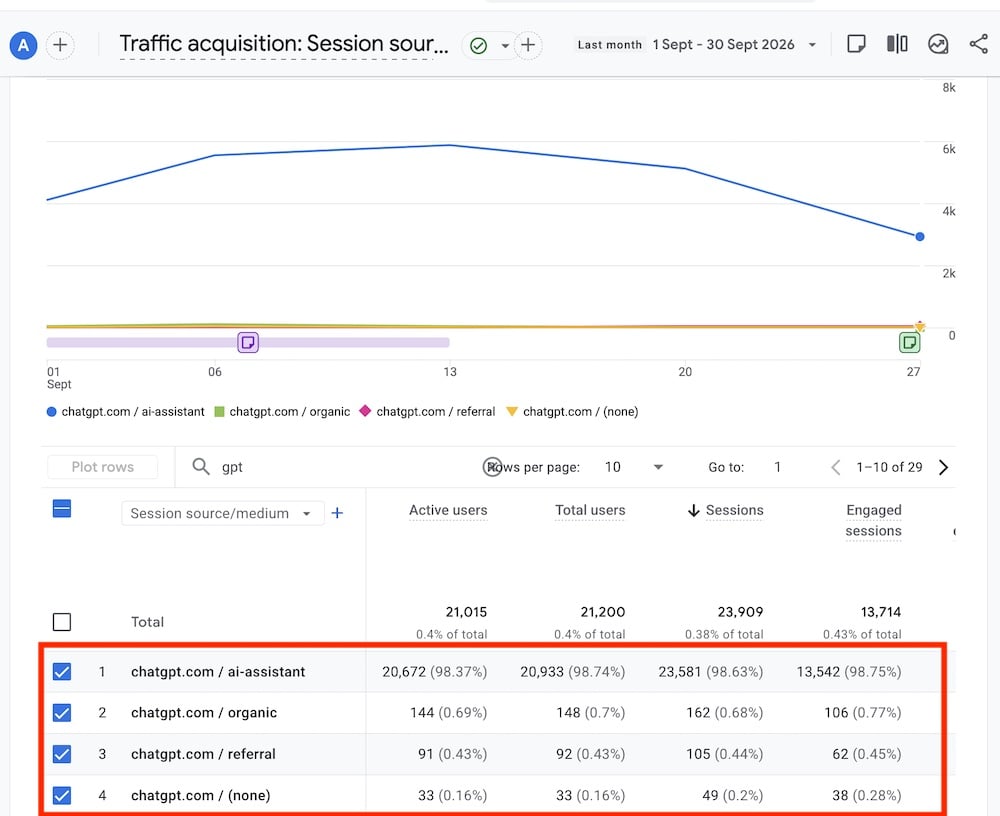
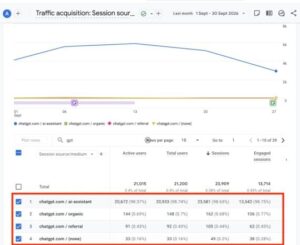
ChatGPT traffic is often the most engaging. Click image to enlarge.
I know of no studies examining why ChatGPT traffic performs well, but I have two theories:
- Like organic search, ChatGPT provides solutions to problems, with occasional links to external sites to learn more.
The trend may change as genAI tools become mainstream. Until then, monitoring AI traffic is essential.
Track ChatGPT Referrals
In Google Analytics 4:
- Go to Acquisition > Traffic acquisition,
- Below the graph in the drop-down, choose “Session source / Medium,”
- In the “Search” field, type “gpt” and click “Enter” to filter session sources.
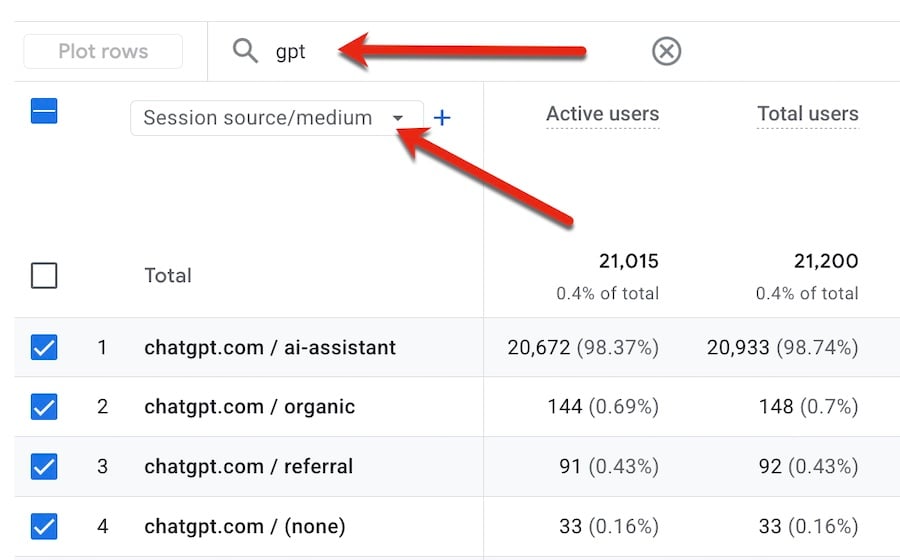
In GA4, go to Acquisition > Traffic acquisition. Click image to enlarge.
Then create custom reports to access the data quickly.
ChatGPT does not disclose actual user prompts, but we can surmise the content by exploring the landing pages of those users. Each page solves a problem. Thus the prompt presumably requested that solution.
Analyze ChatGPT Referrals
In GA4:
- Go to Engagement > Landing Pages,
- Click “Add filter” below “Landing page,”
- Select “Session source / Medium,”
- Select “Contains” and type “gpt”
- Click “Apply”

Build a “gpt” traffic source filter in GA4. Click image to enlarge.
This will filter traffic sources to those containing “gpt” and sort the landing pages by the most clicks from ChatGPT.
The resulting report will help identify pages that ChatGPT cites to solve relevant problems. From there, query ChatGPT to see the context of those citations, as in:
This is my URL: [URL]. What prompts would trigger ChatGPT to cite the page as a solution?
It is also a good idea to investigate these pages in more tools:
- In Search Console, find the “possible” AI Mode prompts that surface the page,
- In Bing Webmaster Tools, identify the grounding queries LLMs use to find that page.
Direct and Unassigned Channels
Google Analytics incorrectly classifies a percentage of ChatGPT traffic as either Direct or Unassigned because ChatGPT often adds a “noreferrer” attribute to external links. The attribute hides the referral for privacy reasons, causing GA4 to misattribute it.
Certainly that’s the case for most of my clients. GA4 assigns their (growing) ChatGPT traffic as Unassigned.
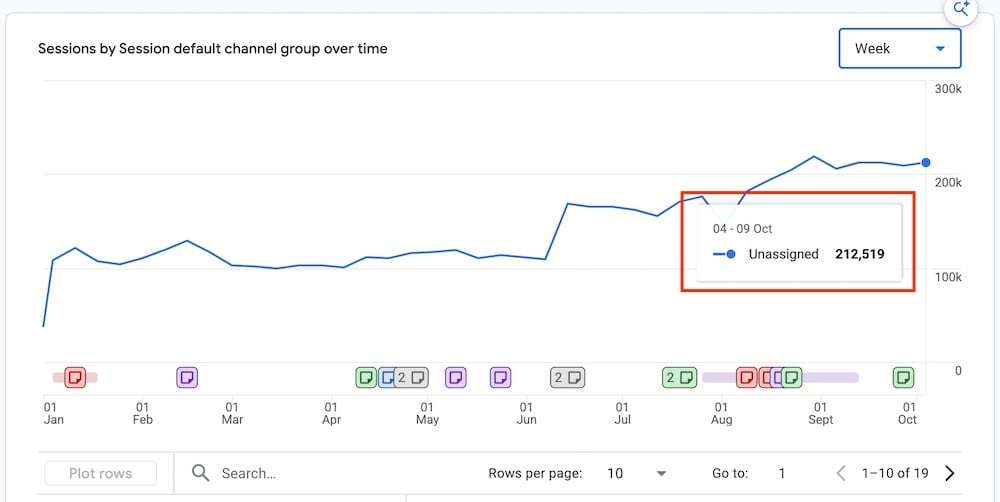
Unassigned traffic in GA4 is growing in this example. Click image to enlarge.










Post Comment