The Secret to Mastering Home Exchange in 2026: What No One Tells You
Ever dreamed of swapping your cramped city flat for a sunlit villa somewhere unforgettable—without shelling out a single dime on accommodation? Sounds like some travel magic, right? Well, that’s the intriguing world of home exchange for you. It’s not just a barter—it’s your ticket to dive headfirst into local life, ditching the usual tourist facade. But how exactly do you pull off such a swap without turning it into a total headache? Buckle up, because this guide unpacks every nugget—from crafting that killer home listing to locking in your dream swap. Ready to turn your travel fancy into a savvy, cost-free adventure? Let’s get into it! LEARN MORE
Picture this: swapping your city apartment for a sun-drenched villa somewhere incredible, all without paying a dime for accommodation. That’s the core idea of a home exchange. It’s a straightforward trade that lets you live like a local instead of just passing through as a tourist. This guide breaks down the entire process, from listing your home to finding the perfect swap.
How to Do a Home Exchange: The Complete Process
Embarking on a home exchange journey involves a few key steps. Whether you’re offering your home or looking for a place to stay, understanding the process from start to finish is crucial.
Step 1: Listing Your Home for Exchange
The first step is to present your home to the world. This is about more than just pictures; it’s about selling a lifestyle.
- Choose a Platform: Your journey begins by selecting a home exchange website. The most popular ones are HomeExchange and Love Home Swap. Most operate on a points-based system, which offers great flexibility. You earn points by hosting someone, then spend those points to stay anywhere else in the network.
- Create a Stunning Profile: Think of your listing as your digital handshake. Use high-quality, bright photos. Clean and tidy up, but let the personality of your home shine through. If you have a great home office, a cozy reading nook, or a beautiful garden, make those the stars of your gallery. For digital nomads, a screenshot of a recent internet speed test is a killer feature. You can even explore what is virtual staging and how it works to enhance your photos.
- Write a Compelling Description: Tell a story. Describe what it’s like to live in your neighborhood. Mention your favorite local coffee shop with reliable Wi-Fi, the best park for a run, or the market with the freshest produce. Be honest about quirks—is the elevator old? Is there street noise? Transparency builds trust and attracts guests who will appreciate your home for what it is. For more on creating a great profile, check out these easy tips to build your personal brand with digital marketing.
- Set Your Availability: Update your calendar to show when your home is available for hosting. This is crucial for getting relevant requests.
Step 2: Finding and Booking a Home as a Traveler
Once your profile is live (or even before), you can start searching for your next destination.
- Use Search Filters: Platforms have powerful search tools. Filter by location, dates, number of bedrooms, and amenities (like “dedicated workspace” or “pet-friendly”). Be specific about your needs.
- Vet Potential Hosts: Don’t just look at the pictures. Read the host’s profile and reviews carefully. Look for verified members with consistently positive feedback. A detailed profile with lots of information is a good sign. Be wary of profiles with few details or no reviews, similar to how you’d watch for red flags on other platforms—you can learn how to spot and avoid popular Airbnb scams.
- Send Personalized Messages: When you find a place you love, don’t send a generic “I want to book” message. Personalize it. Mention something specific you like about their home. Introduce yourself, explain your travel plans, and be clear about who is traveling with you.
- Finalize the Exchange: Once the host accepts, you’ll formalize the swap through the platform. This usually involves confirming dates and any points to be exchanged. This creates a digital record and activates any platform protections.
The Pros and Cons of Home Exchange
Home exchange offers a unique way to travel, but it’s important to weigh the advantages against the potential risks.
Advantages of Home Exchange
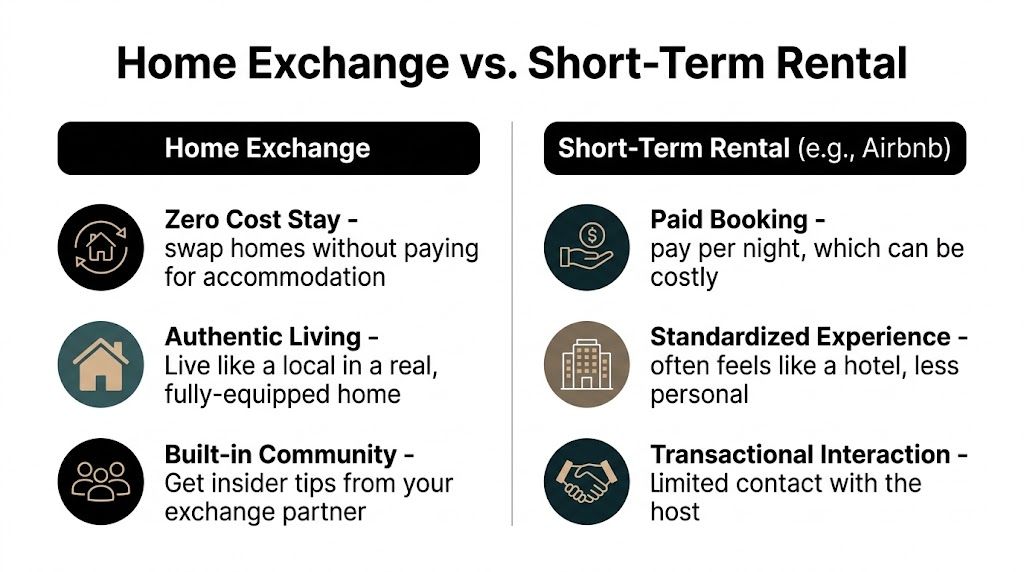
- Massive Cost Savings: The most obvious benefit is eliminating accommodation costs. You only pay the platform’s annual membership fee, freeing up your budget for experiences, food, or longer trips.
- Authentic Local Experience: You’re not in a tourist bubble. You’re in a real home, in a real neighborhood. You’ll shop at local markets, drink at the neighborhood bar, and discover hidden gems your host recommends.
- Spacious and Equipped Homes: You get a whole home, complete with a full kitchen, a living room, and often a dedicated workspace. This is a game-changer compared to a cramped hotel room, especially for “slow travel.”
- Community and Connection: The process is built on mutual trust. You often build a genuine connection with your exchange partner, getting insider tips that transform your trip. It aligns perfectly with what conscious travel is and why it saves our planet.
Risks and How to Mitigate Them
- Risk of Damage or Theft: This is the number one fear.
- Mitigation: Vet your partners thoroughly through reviews and video calls. Use platforms that offer property damage protection (often up to $1,000,000). Secure or remove irreplaceable valuables and personal documents.
- Last-Minute Cancellations: An exchange partner canceling can ruin your travel plans.
- Mitigation: Choose platforms with strong cancellation policies. The best ones will help you find an alternative swap or offer financial compensation for a hotel.
- Mismatched Expectations: Your idea of “clean” might differ from your guest’s.
- Mitigation: Be incredibly clear in your communication. Discuss expectations about cleaning before and after the swap. The pre-swap video call is a great time to align on these details.
- Privacy Concerns: It can feel strange having a stranger in your personal space.
- Mitigation: Remember that the trust is mutual. They are also letting you into their home. Creating a detailed welcome guide and setting clear boundaries can help you feel more in control.

Why Home Exchange Is a Game-Changer for Modern Travelers
The whole idea of house swapping has been around since 1953, but it has exploded into a global phenomenon. The home exchange market is expected to hit USD 6.3 billion by 2035, proving people crave more than a standard hotel. You can get a great overview in this comprehensive home exchange guide.
For digital nomads, it’s not just about saving money; it’s about a deeper, more sustainable way to travel.

The Ideal Setup for Digital Nomads
- Ready-Made Workspace: Most homes come with reliable internet and a proper desk, allowing you to be productive from day one.
- Cost-Free Slow Travel: Removing accommodation costs stretches your budget for weeks or months, letting you truly immerse yourself in a new culture.
- Instant Community: Your exchange partner is your ultimate insider, helping you settle in with tips on everything from the best grocery store to navigating local transport.
A home exchange is so much more than a free place to sleep. It’s an instant connection to a new place. You’re not just another tourist; you’re stepping into someone’s life and becoming a temporary local.
Vetting and Logistics for a Flawless Exchange
Getting the details right is what transforms a good swap into a great one.

Finding and Vetting Your Perfect Exchange Partner
- Read Reviews Religiously: Don’t just skim ratings. Read the comments to understand a person’s standards for cleanliness, communication, and respect for property.
- Trust But Verify: Look for profiles verified by the platform. An incomplete or unverified profile is a red flag.
- Insist on a Video Call: A pre-swap video call is non-negotiable. It builds rapport and lets you “meet” them. Ask for a quick virtual tour of the home to ensure it matches the listing photos. This step turns a stranger into a trusted partner. The sense of community is a massive part of why home exchange works so well, as seen in initiatives like HomeExchange’s “Open Homes,” which fosters genuine relationships. You can learn more about this community-focused approach.
Nailing the Logistics

- Get It in Writing: Use the platform’s messaging system to finalize dates, rules, and expectations. This creates a digital paper trail that acts as your agreement.
- Check Your Insurance: Review your homeowner’s or renter’s policy. Most platforms provide additional protection, but it’s crucial to understand what’s covered. For personal health coverage, our guide on travel health vs. international health insurance for nomads is a must-read.
- Create a Welcome Guide: This is your guest’s bible. Include Wi-Fi info, instructions for appliances, emergency contacts, and your personal recommendations for the neighborhood. A great guide prevents panicked texts and makes your guest feel truly welcome.
- Arrange a Seamless Key Handover: A lockbox is the most convenient option. Alternatively, you can meet in person or leave keys with a trusted neighbor. If you’re traveling with a furry friend, check out this pet friendly vacation guide for extra tips.
Your Top Home Exchange Questions, Answered
Jumping into the world of home exchange can feel like a game-changer for travel, but it’s totally normal to have a few jitters before you hand over your keys. Let’s tackle the big questions that come up all the time so you can swap with complete confidence.
What if I Don’t Own My Home?
This is a big one for those of us who rent. The short answer is yes, you can absolutely do a home exchange. But there’s a crucial first step you cannot skip: you must get written permission from your landlord.
Most rental agreements have clauses about subletting or long-term guests. When you talk to your landlord, don’t call it a rental. Frame it as a “reciprocal house-sitting” arrangement, and make it crystal clear that no money is changing hands. You might be surprised how open they are, especially if it’s a non-simultaneous swap where someone is just watching your place while you’re away. Trust me, skipping this step is a massive risk to your lease.
Are There Tax Implications for a Home Exchange?
For a classic, one-for-one home swap where no cash is involved, you’re usually in the clear. In most countries, including the U.S., this type of exchange generally has no income tax implications. You didn’t earn any money, so there’s nothing to report.
Things can get a little fuzzy with points-based systems, though. In theory, some tax authorities might see the points you “earn” as a form of barter income that could be taxable. The rules here are still evolving and vary wildly from country to country.
Tax laws are a beast and specific to where you live. The smartest thing you can do is have a quick chat with a tax professional in your home country. They’ll give you clear advice for your exact situation.
What Happens if My Partner Cancels?
The thought of a last-minute cancellation, especially after you’ve booked flights, is enough to cause a cold sweat. This is exactly why picking a solid platform with great member support is non-negotiable. The best sites, like HomeExchange, have your back.
If a host bails on you, the platform’s team usually steps in immediately. Their guarantees often include:
- Scrambling to find you an alternative exchange from available listings.
- Offering compensation to cover another place to stay if a new swap isn’t possible (some platforms offer up to $840 USD per week).
On top of that, platforms usually hit the canceling member with penalties, like taking away their GuestPoints or slapping a public cancellation notice on their profile. This gives everyone a very strong reason to stick to their commitments, making last-minute changes pretty rare.
Is It Safe to Let a Stranger Live in My House?
Safety is the number one concern for most people, and that’s completely understandable. But the whole home exchange community is built on layers of trust and verification. This isn’t like finding someone on Craigslist. Platforms use ID verification and public reviews to build a community of real, accountable people.
Your best safety tool, however, is your own gut and due diligence. That vetting process we talked about earlier—combing through profiles, reading every single review, and insisting on a pre-swap video call—is your first and best line of defense.
And remember the core principle here: they are trusting you with their home just as much as you are trusting them with yours. This shared vulnerability creates a level of mutual respect you just don’t get with a hotel or a paid rental. For that extra layer of security, it’s always a good idea to lock away irreplaceable items and personal documents before your guests show up.
Ready to stop paying for accommodation and start living like a local? Remote Tribe is your go-to resource for making the digital nomad lifestyle a reality. Explore our in-depth guides, destination playbooks, and community insights to travel smarter and live better. Join our community at https://remotetribe.life and find your next adventure.