Shopify’s Bold Bet: Is AI About to Revolutionize How You Shop Without Leaving the Chat?

Ever wondered what happens when AI stops just chatting and starts shopping for you? Well, Shopify just flipped the script with their new Universal Commerce Protocol (UCP) — a game-changing open standard cooked up with Google to let AI agents jump right into the action of buying and selling. Imagine your favorite AI assistants like Google’s AI Mode in Search or Microsoft Copilot not just suggesting products but actually closing the deal for you, all while merchants manage the chaos seamlessly from one Shopify dashboard. This isn’t just a tech upgrade; it’s a whole new level of commerce fluidity that could rewrite how we think about selling online — no more tangled integrations, just smart, slick transactions anywhere AI can talk. Curious how this might change the marketing landscape and if your brand’s ready to keep up? LEARN MORE.
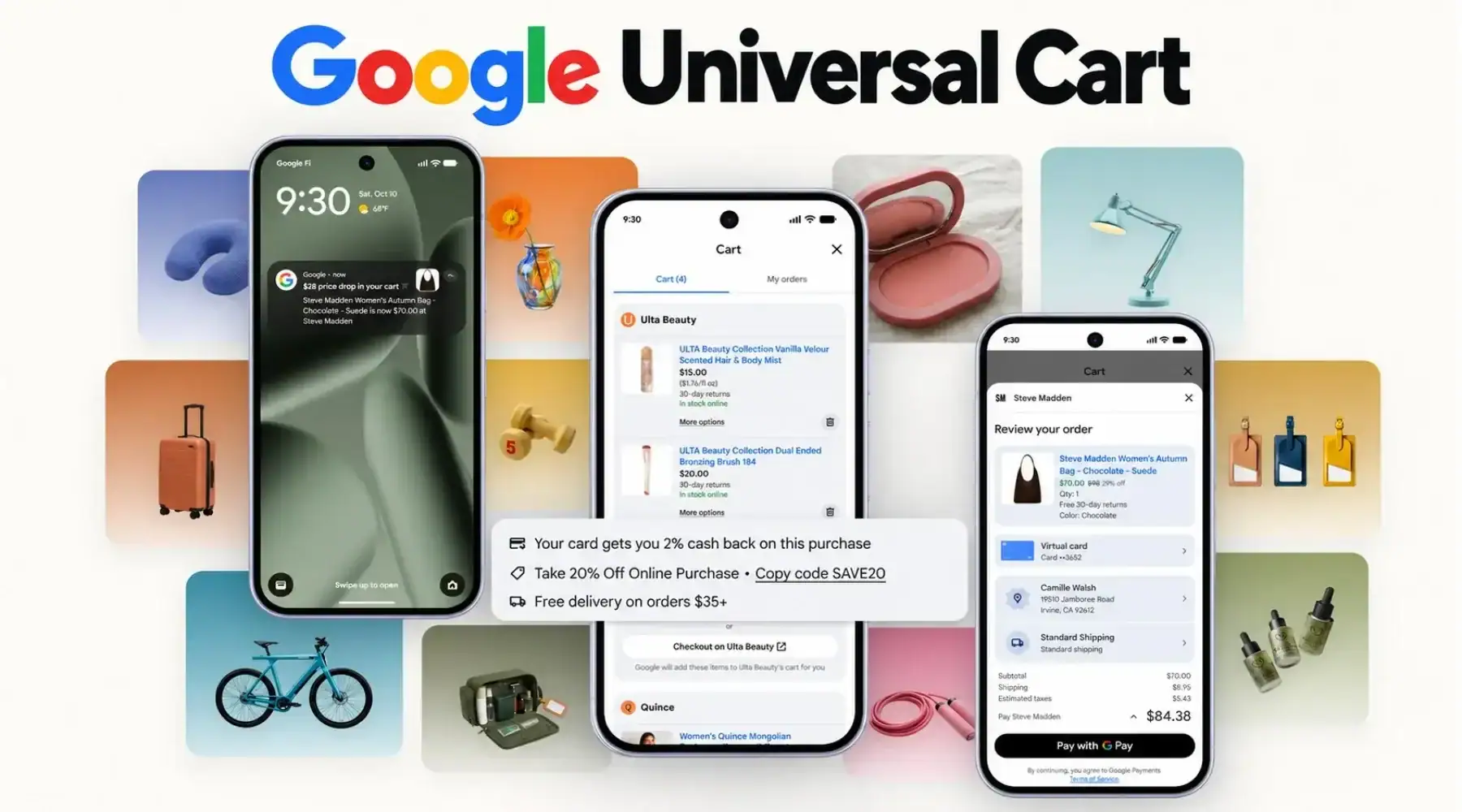
Shopify announced the Universal Commerce Protocol (UCP) yesterday, an open standard co-developed with Google that lets AI agents connect directly to merchants and complete transactions. Alongside the protocol, Shopify is rolling out native commerce experiences across major AI platforms, including Google’s AI Mode in Search, the Gemini app, Microsoft Copilot and ChatGPT — all managed centrally through Shopify’s admin.
The big idea is simple: if consumers are shopping inside AI conversations, merchants need a way to sell there without rebuilding their stack for every new assistant or platform.
UCP is designed to give AI agents a shared, interoperable way to handle real-world commerce. Rather than forcing each retailer to build one-off integrations, the protocol standardizes how agents interact with merchants’ checkout flows, pricing rules, loyalty programs and fulfillment requirements.
According to Shopify, UCP already has backing from more than 20 retailers and platforms. The protocol supports core checkout actions — applying discount codes, selecting subscription terms, confirming final-sale conditions or handling pre-orders — all inside conversational interfaces. It also works with any payment processor, including Shopify Payments.
The goal is flexibility. Whether a purchase happens entirely inside a chat, through an embedded checkout in an app or via a web-based flow, UCP is meant to support it without locking merchants into a single ecosystem or transport method.
Native selling inside Google and Microsoft AI experiences
One of the most immediate outcomes of UCP is native checkout inside Google’s AI Mode in Search and the Gemini app. Shopify merchants will be able to sell directly within those experiences and manage offers, inventory and performance from the Shopify admin.
Shopify merchants will also be eligible for Google’s Direct Offers pilot, which allows select brands to surface exclusive deals inside AI conversations — meeting shoppers at the moment intent is highest, without redirecting them elsewhere.
On the Microsoft side, Shopify is expanding its Copilot integration with Copilot Checkout, an embedded commerce experience that lets users complete purchases in Copilot. The idea is to collapse the path from discovery to transaction into a single conversational flow.
Opening agentic commerce beyond Shopify stores
In a notable shift, Shopify is also opening its Catalog to brands that don’t run a Shopify storefront. Through a new Agentic plan, non-Shopify merchants can list products in Shopify Catalog and use Shopify’s infrastructure to sell across AI channels.
The catalog uses specialized language models to standardize and enrich product data, making it easier for AI systems to surface the right products in response to conversational queries. Merchants set up their data once, and Shopify’s Agentic Storefronts distribute it across platforms like ChatGPT, Microsoft Copilot, Google AI Mode and Gemini.
For Shopify, this move positions the company less as a storefront provider and more as a commerce layer for the AI era.
Why this matters for marketers
For marketers, agentic commerce changes how discovery, persuasion and conversion work. AI assistants don’t browse pages the way humans do. They synthesize information, make recommendations and increasingly take action on the user’s behalf.
That puts pressure on brands to ensure their product data, positioning and offers are structured in ways AI systems can understand and act on. Shopify’s approach aims to simplify this by providing a unified commerce backbone that operates across multiple AI surfaces.
Fuel up with free marketing insights.
MarTech is owned by Semrush. We remain committed to providing high-quality coverage of marketing topics. Unless otherwise noted, this page’s content was written by either an employee or a paid contractor of Semrush Inc.

Related stories
New on MarTech
About the author

Constantine von Hoffman is managing editor of MarTech. A veteran journalist, Con has covered business, finance, marketing and tech for CBSNews.com, Brandweek, CMO, and Inc. He has been city editor of the Boston Herald, news producer at NPR, and has written for Harvard Business Review, Boston Magazine, Sierra, and many other publications. He has also been a professional stand-up comedian, given talks at anime and gaming conventions on everything from My Neighbor Totoro to the history of dice and boardgames, and is author of the magical realist novel John Henry the Revelator. He lives in Boston with his wife, Jennifer, and either too many or too few dogs.