Market Shocks and Surprises: What April 27 – May 1, 2026, Revealed That Could Change Everything
Ever wondered what happens when five central banks throw their hats in the ring during the same week, while WTI crude oil audaciously smashes through the triple-digit ceiling? Well, April 27–May 1 was nothing short of a financial rollercoaster—packed with the Fed’s most fractious vote in over thirty years and a Bank of Japan intervention so swift it wiped out a dollar rally faster than you can say “market mayhem.” It’s like watching a perfectly scripted drama unfold, except with a surprise plot twist that no framework saw coming. And here’s the kicker: while the U.S. kept us on the edge of our seats, it was Japan quietly pulling strings behind the scenes, reminding us all that in the world of forex and futures, nothing is ever quite what it seems. Intrigued yet? LEARN MORE.
Five central bank decisions. WTI breaking triple digits. The Fed’s most divided vote in over three decades. And a confirmed Bank of Japan intervention that erased Wednesday’s dollar rally in roughly the same time it took to build it. The week of April 27–May 1 delivered nearly every scenario condition the framework had modeled — and one it hadn’t.
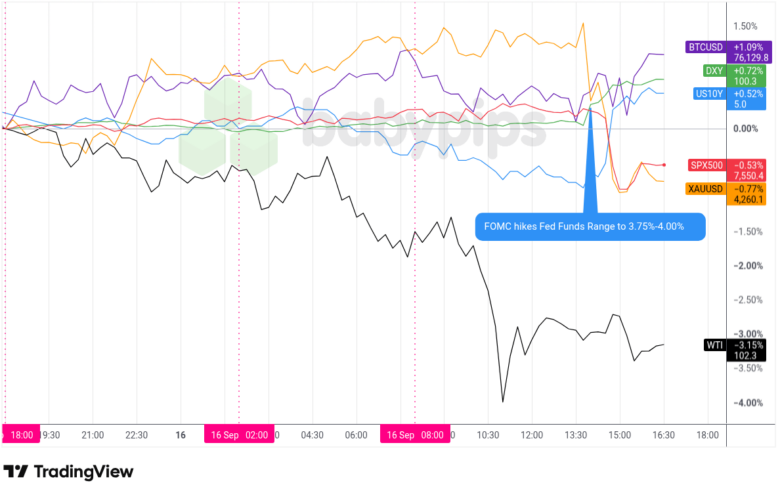
The framework’s WTI spike regime threshold held: the $99.43–$100 level flagged in Sunday’s cheat sheet and reinforced in Tuesday’s update was breached decisively on Wednesday when Trump rejected Iran’s Strait proposal outright and the EIA reported a 6.23-million-barrel draw. The FOMC outcome matched the update’s Scenario A description with precision — an 8-4 vote representing the most hawkish dissent configuration in over thirty years. But the variables that arguably determined the dollar’s late week direction wasn’t just the Fed or U.S. data…it was also Japan.