How AI is Revolutionizing Fraud: The Shocking Rise of Fake Refund Evidence
Ever wondered if AI could turn the tables on online shopping by pulling off a heist right under our noses? Well, buckle up—because fraudsters are now wielding generative AI to cook up fake photos of damaged goods, forged shipping documents, and all sorts of counterfeit evidence to score undeserved ecommerce refunds. In 2025 alone, U.S. retailers handled $849.9 billion in returns, with nearly 9% of those being scams. And guess what? Ecommerce takes the lion’s share of the drama, with return rates soaring to 19.3%, leaving brick-and-mortar stores in the dust. The problem? This tech wizardry makes it crazily easy for crooks to fabricate convincing “proof” without ever touching a product. It’s like giving a master illusionist the keys to your refund process—scary, right? As someone who’s watched the SEO and digital marketing game evolve for decades, I gotta say, the stakes have never been higher. What can businesses do when AI is this crafty? Let’s dive into the new battleground of ecommerce fraud and see who comes out on top—or at least, how we might fight back. LEARN MORE.
Fraudsters can now use generative AI to create fake photographs of product damage, false shipping records, and other forged evidence for ecommerce refund claims, potentially costing billions.
U.S. retailers processed approximately $849.9 billion in merchandise returns in 2025, of which some 9% were fraudulent, according to the National Retail Federation and Happy Returns. Not surprisingly, ecommerce had a much higher overall return rate, at 19.3%, than brick-and-mortar.
Unfortunately, many in the industry are concerned that AI might make ecommerce refund fraud even worse.
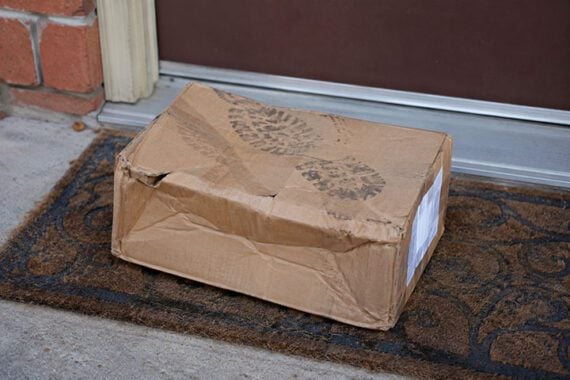
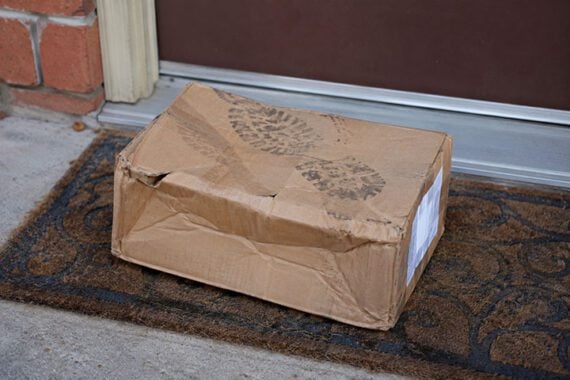
AI image generation enables criminals to create photos, such as this one.
Remote Evidence
Online merchants typically evaluate a refund claim without physically inspecting the merchandise.
A customer service employee might review a photograph, read the shopper’s description, check the delivery information, and approve a refund.
For relatively inexpensive or perishable products, merchants may not require buyers to return the item — something fraudsters count on — because the costs of shipping, handling, and inspection would exceed the merchandise’s value.
This easy-return process depends on a basic assumption: a customer’s photo or description depicts the actual product.
Generative AI breaks that assumption. AI tools can create plausible fake product-damage images that pass online inspections, especially by automated refund systems.
U.S. merchants are experiencing the problem. Modern Retail reported that retailers Bogg Bag and Boll & Branch have each encountered AI-falsified refund proof.
Synthetic Claims
AI-generated refund fraud can involve much more than a single altered product photo.
Overall, crooks can use generative AI to fabricate:
- Cracks, stains, mold, tears, leaks, dents, and missing parts in products,
- Damaged packaging or crushed shipping boxes,
- Product colors or features that supposedly differ from the listing,
- Customer-service chats or messages suggesting that a merchant approved a refund,
- Shipping records, carrier documents, and delivery screenshots,
- Written complaints tailored to a merchant’s return policy,
- Multiple versions of the same claim for use across several stores.
In effect, generative AI can manufacture both the supposed defect or damage and the story around it.

A 10-word prompt can produce a convincing photo of broken glass.
Cheaper Fraud
One of the most disheartening aspects is that this sort of fraud requires minimal effort or expertise.
Refund fraud has heretofore required significant skills in photo editing, composition, and document alteration, not to mention a good working knowledge of how a merchant handles claims. Today’s AI tools can perform much of that work from just a few prompts.
A fraudster can generate several versions of an image, adjust an explanation, and repeat or even automate the process across multiple accounts or merchants. Each additional attempt may cost little in time or money.
It is a new form of scalable deception spanning the transaction, dispute, logistics, and communication stages.
I’ve seen no credible data on the extent of AI-assisted refund fraud in the United States, although a June 2026 academic study (PDF) addresses the problem in China.
Fighting Back
Ecommerce businesses are not defenseless, yet fraud-prevention methods carry their own costs and impacts.
Merchants can review image metadata, compression patterns, lighting, and other signs of editing. Reverse-image searches may expose evidence reused across several claims, while account histories can reveal repeated damage complaints or other suspicious behavior.
Other responses include:
- A second photo angle or a short video,
- Manual reviews of higher-value claims and accounts with unusual refund histories,
- Requiring returned products for selected products or customers,
- Using AI tools to screen submitted images.
These measures have limits. Detection tools can produce false positives and are presumably less reliable as image generators improve.
Every control also has a cost. A fraudster can create a convincing image or complaint in minutes, while the merchant may need customer service staff, warehouse records, carrier data, and a formal appeal to challenge it.
More stringent refund and return policies can also increase return shipping costs, inspection expenses, support costs, and customer frustration. A policy that prevents $30,000 in fraud but costs $100,000 is senseless.
Knowing the problem is half the battle. For now, auditing recent refunds for AI-powered fakes is a good start.