Google Gemini’s New UTM Feature Could Revolutionize How Marketers Track Referrals—Are You Ready?

So Google’s been up to something sneaky again – slipping UTM parameters onto outgoing links from Gemini without a big headline announcement. Now, if you’ve ever scratched your head wondering just how much traffic those shiny new AI chatbots like Gemini are really sending your way, you’re not alone. The frustration is real. See, loads of that referral juice was hiding out in the “direct” bucket of your analytics, making it feel like you’re flying blind. But with this quiet tweak, site owners and SEOs can finally pinpoint those AI-driven clicks with a magnifying glass. Intriguing, right? It’s like Google’s saying, “Here’s a little breadcrumb trail…but catch it if you can.” Still, there’s a twist – it’s unclear exactly when and how these UTMs appear, leaving us marketers eager for more clarity. So, if you’ve been wondering how to get a clearer read on AI traffic and why this move might just shake up your SEO game, you’ll want to dive into this one. LEARN MORE

Google quietly added UTM parameters to outgoing links so that site owners and SEO will be able to more accurately attribute referrals from Gemini. The move comes amid increasing frustration at Google for collapsing the amount of traffic sent by Search because of AI Search and Gemini.
UTM And Referral Attribution
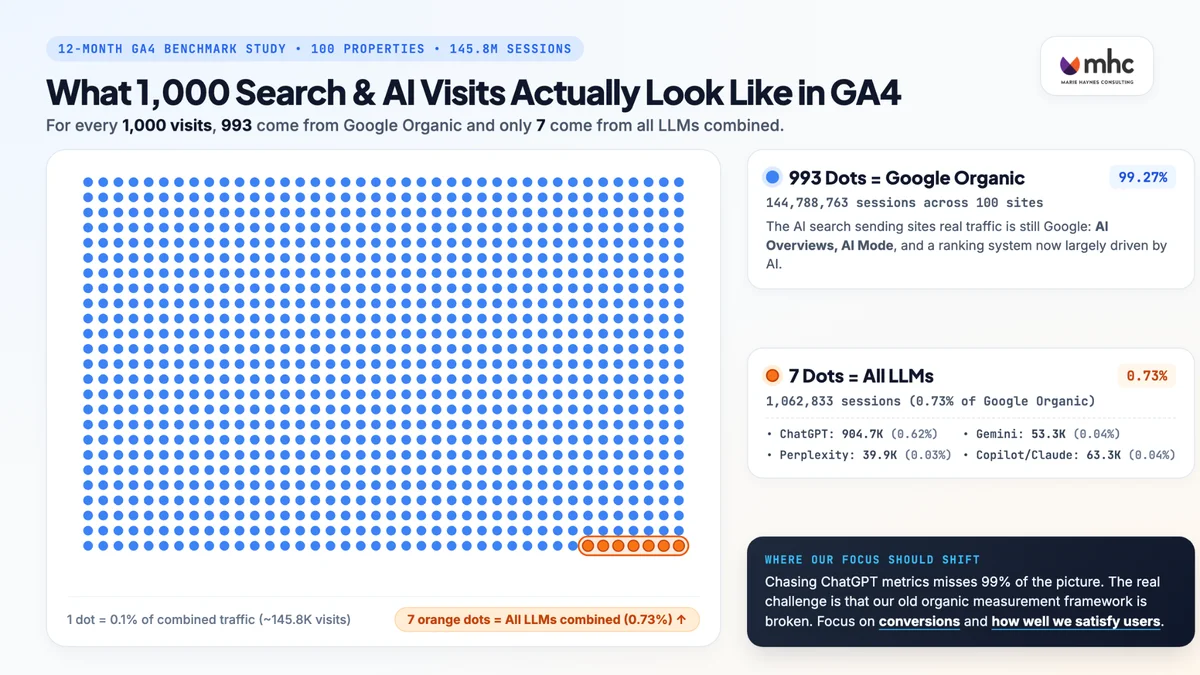
Traffic from AI chatbots like Gemini can show up as “direct” in analytics packages like GA4. Direct is the fallback used when there is no referrer or UTM data to explicitly tie a visit to a referrer.
Google Confirms UTM Is On Gemini Links
Someone on Reddit started a discussion about discovering that Gemini is adding UTMs.
They wrote:
“Google Gemini add UTM to results!
Gemini Start using UTM ! finally , its very new 24hours or so
Like chatgpt UTM”
Google’s Mueller asked a question in response:
“Nice. I see it too. Doesn’t Gemini have a referrer too though? I thought you could already track them.”
Redditor CrawlWarden responded:
“There is a referrer, but it mostly survives on desktop web only, reported pass through from the Gemini mobile app runs around 9 percent and Android assistant invocations strip it entirely, so a large share of that traffic has been landing in Direct instead of GA4’s ai assistant medium. A UTM survives the in app webview and shows up in raw server logs too, which is why this matters more than it looks even though the referrer technically already existed.”
Mueller answered:
“If someone has more information on what happens with the referrer (ideally with something I can reproduce), I’m happy to forward that to the team. It would be great to have these retained (in addition to the UTM-tagging).”
Why Gemini UTM Benefits SEO
The addition of a UTM parameter to outgoing links from Gemini benefits SEOs and site owners because they can now more accurately track how much traffic the Gemini platform is sending, no more guessing.
Better referral attribution also enables the ability to segment and compare AI-referred site visitors in order to more accurately compare referrals across more AI referrers as well as against traditional search. Attribution enables smarter decisions.
With better referral attribution it becomes easier to justify resource allocation to AI channels with real numbers.
Questions Remain
ChatGPT adds UTM parameters to outgoing links but only to links that are in the context of answers that are grounded from web sources, not from information that comes from training data (parametric knowledge).
At this point, Google’s implementation of the UTM parameter is undocumented so it’s unknown under what circumstances UTMs are triggered within Google Gemini. Presumably they may be triggered when Gemini presents answers in a format that directly references a website, but we don’t know for sure until Google documents this new behavior.
Featured Image by Shutterstock/Dooder










Post Comment