Bitcoin’s Frozen Supply and Surging Realized Losses Signal an Unseen Market Shift—What’s Coming Next?

Is Bitcoin’s market quietly morphing into a game of musical chairs — where some players rush to the exits while others freeze in place, paralyzed by indecision? Axel Adler Jr.’s recent deep-dive reveals a fascinating tug-of-war beneath the surface: extreme realized losses hitting nearly $2 billion, yet supply remains stubbornly immobile. It’s like watching a crowd where a few panic sell, but the majority clutch their coins tight, refusing to budge. Could this be the exhaustion phase of a selling spree, or just the calm before the storm? The tricky dance between realized losses and dormant supply suggests we’re caught in a limbo — neither a clear sell-off nor an enthusiastic buy-in. Until the scales tip decisively, market watchers might want to keep their eye on those subtle on-chain signals that hint at where Bitcoin’s next move could land. Ready to unravel what this all means for the Bitcoin rollercoaster? LEARN MORE.

Some weaker participants are exiting the Bitcoin market while the more inert mass of holders remains passive, Adler Jr. observed in his latest analysis.
There is a notable divergence in Bitcoin’s on-chain structure, where realized losses have surged to cycle extremes even as supply activity continues to contract. This points to a potential phase of selling exhaustion.
According to the latest analysis shared by Axel Adler Jr., Bitcoin’s Net Realized Profit/Loss, which tracks the balance between realized gains and losses across all UTXOs, has fallen sharply into negative territory, and losses reached nearly $2 billion during January-February 2026. The metric was last observed at these levels during the 2022-2023 bear market.
Supply Refuses to Move
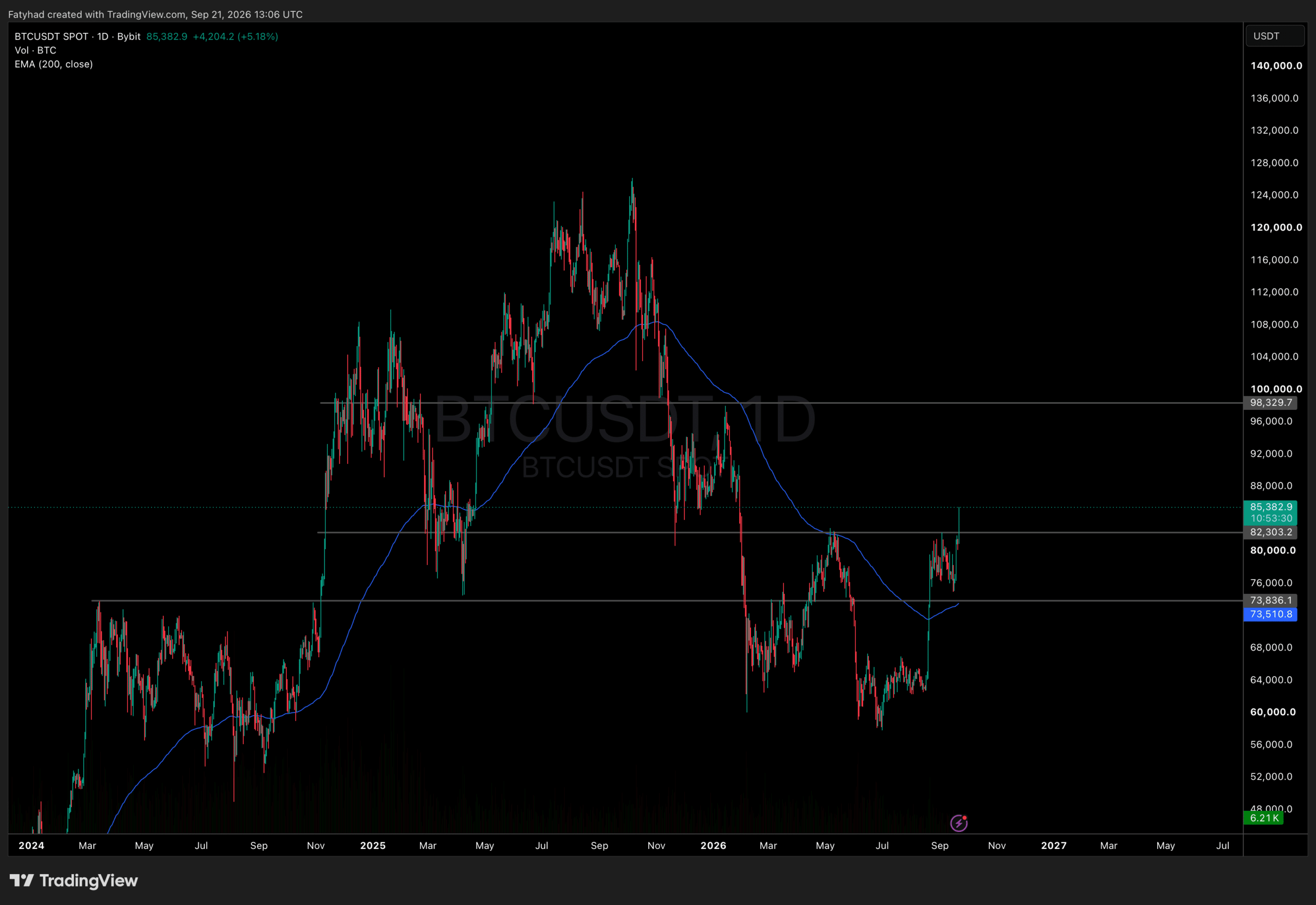
Such a pattern comes after a long period from October 2023 through the end of 2024, when the metric remained consistently positive amid a rally from $30,000 to a peak of $125,000. The current dominance of realized losses, particularly with prices stabilizing in the $65,000-$75,000 range, points to capitulation pressure among weaker holders, which is historically associated with periods of market stress and compression in selling activity.
However, Adler Jr. explained that this alone does not confirm a trend reversal. At the same time, the Supply Active 30D Change metric, which measures changes in the proportion of recently moved coins, has declined below zero. This indicates a contraction in “young” UTXOs and reduced coin movement, and contrasts with prior bullish phases, where sharp upward spikes above 12% in this metric accompanied strong price advances.
The present decline means coins are increasingly dormant and reflects a lack of broad-based distribution despite high realized losses. Adler Jr. went on to add that these factors demonstrate exhaustion in loss-driven selling rather than a confirmed recovery in demand.
The divergence implies that while some market participants are capitulating, a larger share of holders remains inactive. Structurally, this aligns with accumulation or absorption phases, though confirmation requires a steady recovery in the 7-day moving average of Net Realized PnL back into positive territory while supply activity remains subdued.
Key Risks Ahead
More importantly, the primary risk lies in a scenario where supply activity accelerates before PnL recovers, which would indicate renewed distribution rather than organic recovery.
You may also like:
Until such confirmation emerges, the current market regime remains neutral, and conditions suggest compression in selling pressure rather than the onset of a definitive bullish reversal.
Binance Free $600 (CryptoPotato Exclusive): Use this link to register a new account and receive $600 exclusive welcome offer on Binance (full details).
LIMITED OFFER for CryptoPotato readers at Bybit: Use this link to register and open a $500 FREE position on any coin!