Argentina Cracks Down on Crypto: What This New Bill Means for Illegal Gambling Payments

Ever wonder what happens when a country decides to pull the plug on unauthorized online gambling by cutting off the very lifelines—banks, payment firms, and crypto providers—that keep these platforms afloat? Well, Argentina just tossed that question into the arena with a bold new bill aimed at reigning in digital betting chaos. The government’s latest move isn’t just about shutting down access; it’s about tying gambling restrictions directly to the veins of financial infrastructure, including both traditional payment systems and crypto rails. It’s like locking the casino doors by controlling the money flow itself — a clever twist that could shake up how bettors and operators play the game in South America. If you’ve ever been curious about the intersection of regulation, addiction prevention, and the wild world of crypto payments, this new legislation might just be the plot twist you didn’t see coming. LEARN MORE.
Argentina’s government is moving to restrict banks, payment firms and crypto providers from serving unauthorized online gambling platforms as part of a broader crackdown on digital betting.
The government presented a Bill for the Prevention of Gambling and Regulation of Online Gambling to Congress, according to an official notice from the Ministry of Health published on Tuesday.
The bill seeks to address gambling addiction by tightening rules on payments, advertising and access to betting platforms.
The legislation directly ties gambling regulation to financial infrastructure, including payment systems and crypto rails, potentially reshaping how unauthorized betting platforms access payment and crypto rails in Argentina.
Crypto and payments face direct restrictions
A central feature of the bill is its treatment of payment infrastructure, which includes traditional banking systems as well as crypto asset service providers.
According to the ministry’s statement, the bill would empower authorities to block transactions linked to unauthorized gambling platforms.
“It [the bill] establishes that financial entities, providers of payment services or virtual assets (cryptocurrencies) are prohibited from offering their services to unauthorized gambling operators,” the announcement states.
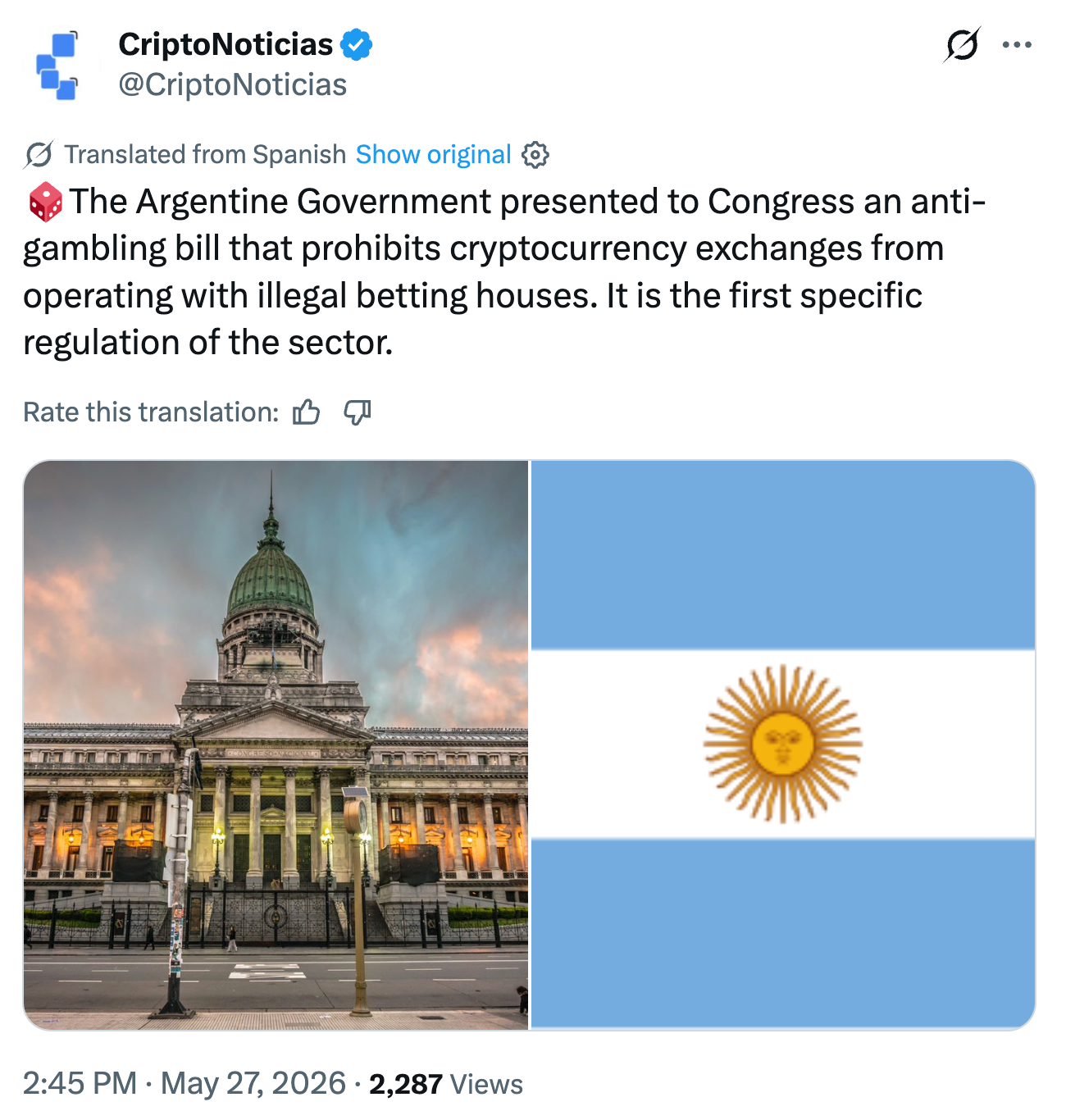
Source: CryptoNoticias
The measure would potentially extend compliance obligations to crypto intermediaries such as exchanges and fiat on-ramps, requiring them to identify and block transfers tied to gambling-related wallets or merchant flows. This could affect how users fund offshore betting platforms that rely on crypto deposits as their primary payment method.
Cointelegraph contacted MoonPay after the company appeared in onboarding materials reviewed by Cointelegraph from a local crypto gambling site, but had not received a response by publication.
A local court previously ordered a nationwide block of Polymarket
The bill would also expand enforcement beyond online betting to any platform facilitating unauthorized betting activity, including a ban on advertising across digital media. Platforms promoting unlicensed operators could face penalties or be required to verify the authorization status of the services they advertise.
The new legislation adds to Argentina’s broader push to curb illicit online betting and tighten oversight of digital gambling activity.
Related: Spanish authorities block Polymarket and Kalshi over gambling laws
Local authorities have already taken action against prediction markets, with Argentina’s national communications and media regulator instructed by a court in March to block access to Polymarket. The case was brought by the Buenos Aires City Lottery, the state-owned entity responsible for regulating gambling in the city.
Restrictions on prediction markets have been increasingly emerging in multiple jurisdictions globally, with major platforms such as Polymarket and Kalshi facing scrutiny over concerns that event-based trading may constitute unlicensed gambling activity.
Magazine: Should users be allowed to bet on war and death in prediction markets?