Unlocking the Secret Power of Sponsored Posts: What Every Marketer Must Know in 2026
Ever scroll through your feed and wonder, “Wait, who’s actually paying for all this stuff I keep seeing?” Welcome to the puzzling and ever-evolving world of sponsored posts—those sneaky little gems that brands shell out big bucks for just to get YOU to stop scrolling and start noticing. They’re everywhere, from Instagram’s glossy “Paid partnership with [brand]” tags to TikTok’s viral Spark Ads and even LinkedIn’s polished Campaign Manager placements. But here’s the kicker: not all sponsored posts are created equal. Some are boosted brand messages, others ride on influencer cred, and some borrow the voice of publishers to craft that perfect story. If you’ve ever thought sponsored content was just a straightforward ad, think again. Behind every “Sponsored” label lies a complex web of strategy, regulations, and metrics—because trust me, likes and comments alone won’t tell you if your investment is paying off. Buckle up as we unravel what makes sponsored posts tick, why they’re worth every penny, and how you can measure their real impact without getting lost in the noise. Ready to decode the paid promotion puzzle? LEARN MORE
Table of Contents
Key takeaways
- Sponsored posts include any social media content a brand pays to promote, either through platform ad tools (a boosted post) or through an influencer partnership.
- Each platform has its own tools and labels for sponsored content, from Instagram’s paid partnership label to TikTok’s Spark Ads and LinkedIn’s Campaign Manager.
- FTC disclosure rules require clear and conspicuous labelling on all paid content. Non-compliance can lead to enforcement action against both the brand and the creator.
- Measuring ROI takes UTM parameters, unique discount codes, and platform analytics. Likes and comments alone won’t tell you whether a campaign paid for itself.
What is a sponsored post?
A sponsored post is any social media post you’ve paid to promote. When you create a sponsored post, you’re spending money to help it reach a wider audience.
“Sponsored post” works as an umbrella term. It covers posts you pay a platform to distribute, posts you pay a creator to publish, and editorial-style branded content produced with a publisher or partner. What they share is money changing hands to get a message in front of people who wouldn’t have seen it organically.
Platforms label these posts so users can tell the difference. Facebook and LinkedIn mark paid placements as “Sponsored” or “Promoted,” Instagram uses a “Paid partnership with [brand]” tag above creator posts, and TikTok adds a disclosure to content flagged with its branded content toggle. In the US, those labels sit alongside Federal Trade Commission rules that require disclosure of any material connection between a brand and a creator.
You can find sponsored posts on every social media platform, including Instagram, TikTok, Facebook, and even LinkedIn.
What are the types of sponsored posts?
There are three main types of sponsored posts, and they differ in who creates the content, where it appears, and how it gets labelled.
1. Promoted or boosted posts
This is the traditional style of paid advertisement. Brands pay to publish native ads on a social platform like Instagram or Facebook. Paid ads use data like location, age, or interests to target specific audiences. Your ad money goes directly to the social media platform.
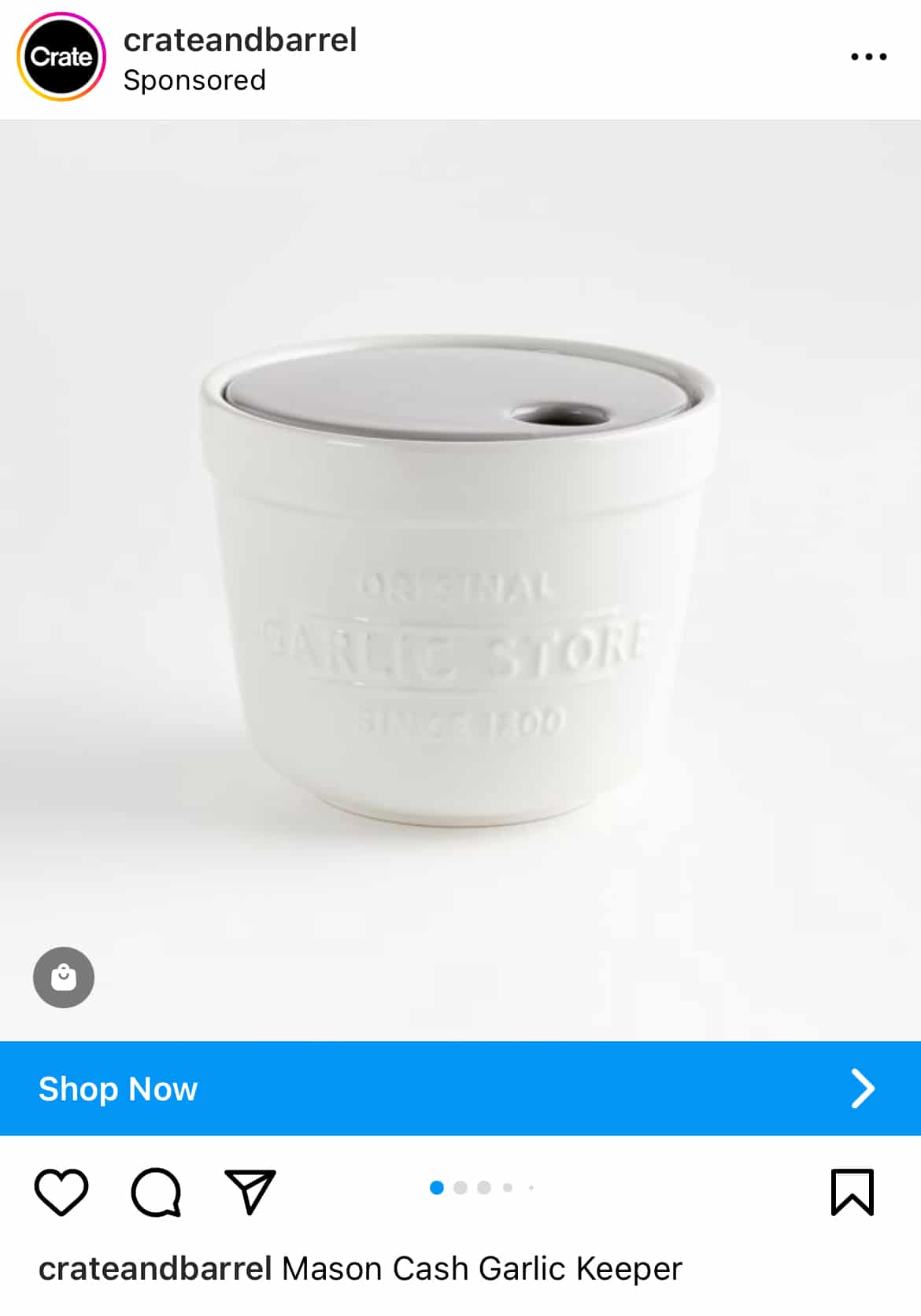
Boosted posts are easy to spot because they have the word “sponsored” or “promoted” underneath the account username. Paid posts often feature a call-to-action button to drive results, such as “Shop Now” or “Download.”
Here are examples of sponsored posts on different platforms:
Instagram sponsored post

Source: @crateandbarrel
Facebook sponsored post

Source: @AmericanTallClothing
LinkedIn sponsored post
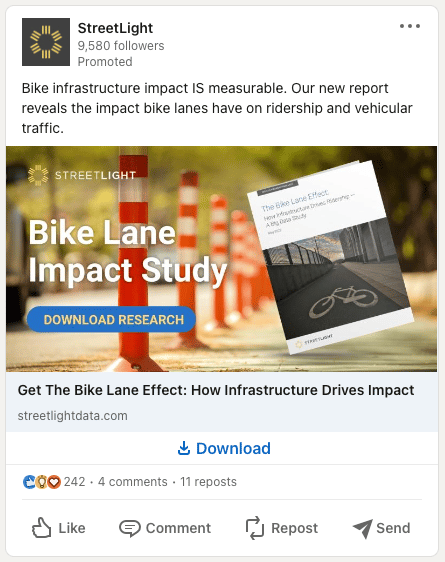
Source: @StreetLight
2. Influencer partnerships
In this type of sponsored post, advertisers pay a specific user, usually an influencer, to promote their brand in a post. These influencers offer access to their audience of engaged followers.
An influencer’s opinions and endorsements carry weight with their followers, so these posts are a great way to generate social proof. Your brand can work with influencers to access a powerful source of “word-of-mouth”-style marketing.
An influencer ad can be tricky to spot because it usually looks like their regular content. To help with transparency, most social media platforms make it mandatory for influencers to label their paid posts.
Here are examples of influencer partnerships on different platforms:
Instagram influencer ad

Source: @angelarosehome
Facebook influencer ad

Source: @theteairawalker
LinkedIn influencer ad

Source: @thatalliemason
3. Branded or sponsored content
Branded content is editorial-style content that a brand funds but doesn’t host on its own channels. Think a sponsored article on a news site, a podcast segment paid for by a sponsor, or a video series produced with a publisher. The brand gets credited as the sponsor, but the publisher’s team usually shapes the creative.
On social, this shows up as content published from a publisher’s or creator’s handle with a branded content tag attached. Meta, TikTok, and LinkedIn all offer tools that let a creator or publisher tag a business partner, which gives the brand access to performance data and the option to put ad spend behind the post.
Branded content works best for awareness and credibility rather than direct response. You’re borrowing the publisher’s editorial authority, so the payoff tends to show up in brand recall and consideration rather than same-day conversions.
Boosted posts vs. influencer partnerships vs. branded content
Type | Who creates it | Where it appears | How it’s labelled | Best for |
|---|---|---|---|---|
Boosted or promoted post | The brand | In-feed, Stories, Reels, or Shorts, served to a targeted audience | “Sponsored” or “Promoted” | Reach, traffic, conversions, and testing creative at scale |
Influencer partnership | The creator, often with brand input | The creator’s own feed, with optional paid amplification | “Paid partnership with [brand]” plus #ad or similar | Social proof, product demos, reaching a new niche audience |
Branded content | A publisher or creator, funded by the brand | The publisher’s or creator’s channels | Branded content tag, “Sponsored by,” or “Presented by” | Awareness, credibility, and long-form storytelling |
Why should brands invest in sponsored posts?
Sponsored posts have a wide reach, and advertisers will spend over $121 billion on US social networks in 2026, with an even bigger impact on your bottom line. The influencer side of that spend alone was estimated at a $32.55 billion global market in 2025, roughly double its estimated value in 2022. This trajectory aligns with the broader shift toward creator-led strategies.
Here are the main reasons brands keep putting money behind sponsored posts:
- Reach a new audience: Working with a creator who isn’t an obvious fit for your category can put your brand in front of people who would never see your ads otherwise. The key is making sure the partnership feels natural, because audiences notice when it’s forced.
- Drive higher engagement: A promoted post might get you views, but views don’t always translate to engagement. Content that looks and sounds organic holds attention longer than a static feed ad, and you get to borrow the trust the creator has already built.
- Create an emotional connection: Consumers want to know how your product helps them live a fuller life, and research shows audiences are fatigued by self-promotional brand content. A creator can use their relationship with their audience to show the benefit rather than just state it.
- Show your product in action: Unboxing and “get ready with me” videos work because they’re infomercials reimagined for social. This content feels like user-generated content while still doing a product demo, which helps new customers picture themselves using what you sell.
- Create buzz: Social media is where a lot of discovery happens, with around 44% of US internet users saying they use social networks to research brands. Giving a creator early access to a launch generates anticipation before the product is even available.
Just remember to use tracking methods that tie buzz to revenue so you can see whether the campaign paid for itself. More on that below.

Source: @thesorrygirls
How do sponsored posts work on each platform?
Every platform sells sponsored placements a little differently, with its own ad manager, creative formats, and disclosure tools. Here’s what to expect on the four platforms most brands start with.
Instagram sponsored posts
On Instagram, a platform now used by 50% of U.S. adults, you can create a sponsored post two ways. The quickest is to boost an existing post: open the post, tap Boost, then pick a goal, audience, budget, and duration. For anything more involved, build the campaign in Meta Ads Manager, where you get full control over objectives, placements, audience targeting, and A/B testing.
If you’re paying a creator instead, ask them to switch on the paid partnership label and tag your business account. That gives you access to the post’s performance data and lets you run the creator’s post as an ad from your own account.
Facebook sponsored posts
“Sponsored” on a Facebook post means a business has paid to show that post to people beyond its own followers. The mechanics are nearly identical to Instagram because both run on Meta’s ad system: boost directly from the post, or build a proper campaign in Meta Business Suite and Ads Manager.
Boosting is worth it when you have a clear, simple goal, like extending the life of a post that’s already performing well organically. If you need precise targeting, multiple ad sets, or conversion tracking, build the campaign in Ads Manager instead. A solid paid and organic playbook helps you decide which approach fits each goal.
LinkedIn sponsored posts
LinkedIn calls its in-feed paid placements Sponsored Content, and they appear with a “Promoted” label under the company name. You set them up in LinkedIn Campaign Manager, either by promoting an existing page post or by creating a new ad from scratch.
Formats include single image, video, carousel, document ads that let people swipe through a PDF in-feed, and thought leader ads that promote a post from an individual employee’s profile. Targeting by job title, seniority, company size, and industry is LinkedIn’s main advantage, and the reason costs per click run higher than on other platforms.
TikTok sponsored posts
TikTok’s version of a boosted post is Spark Ads. You take an existing organic video, either from your own account or from a creator who grants you permission, and put ad spend behind it. Engagement from the ad rolls up to the original post, so likes, comments, and shares accumulate in one place.
You manage all of this in TikTok Ads Manager, alongside standard In-Feed Ads. Creators working with a brand should switch on the branded content toggle, which adds a paid partnership disclosure to the video automatically.
How much do sponsored posts cost?
Sponsored post costs vary widely by platform, objective, audience, and how competitive your category is. Here’s a rough starting point for planning:
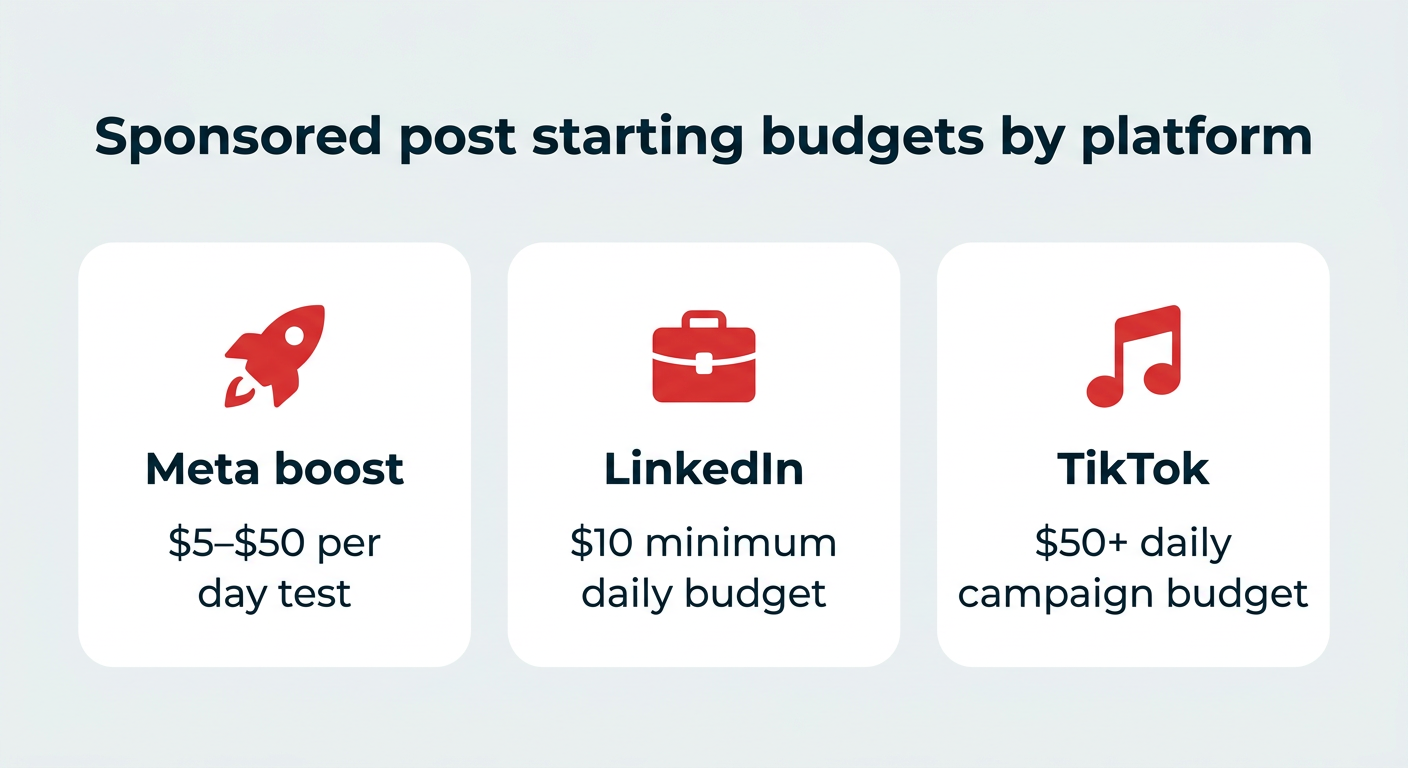
- Boosting posts on Meta platforms: Meta’s boost tool starts at a few dollars a day, so a short test can run on $5 to $50 per day. Average Facebook ad costs for traffic campaigns sit near $0.60 per click across industries, rising to roughly $1.80 per click for lead generation campaigns.
- LinkedIn Sponsored Content: Expect the highest cost per click of the major platforms, driven by professional targeting. LinkedIn sets a minimum daily budget of $10 per campaign.
- TikTok Ads Manager: TikTok requires daily campaign budgets above $50 and daily ad group budgets above $20, so plan for a slightly higher floor than Meta.
- Influencer fees by tier: Rates climb with audience size. Nano creators under 10,000 followers often work for product plus a modest fee, micro creators typically charge in the low hundreds to low thousands per post, and macro and celebrity creators run into five and six figures. Engagement rate, exclusivity, usage rights, and deliverables all move the number.
Treat these as planning ranges, not quotes. The only reliable way to find your real cost per result is to run a small test and measure it. A free social media ROI calculator can help you model the numbers before you commit budget.
What are the disclosure rules for sponsored posts?
In the US, anyone promoting a product in exchange for payment, free product, or any other benefit has to disclose that relationship. The FTC’s Endorsement Guides require disclosures to be clear and conspicuous, which means easy to notice, easy to understand, and placed where people will actually see it before they engage with the content.
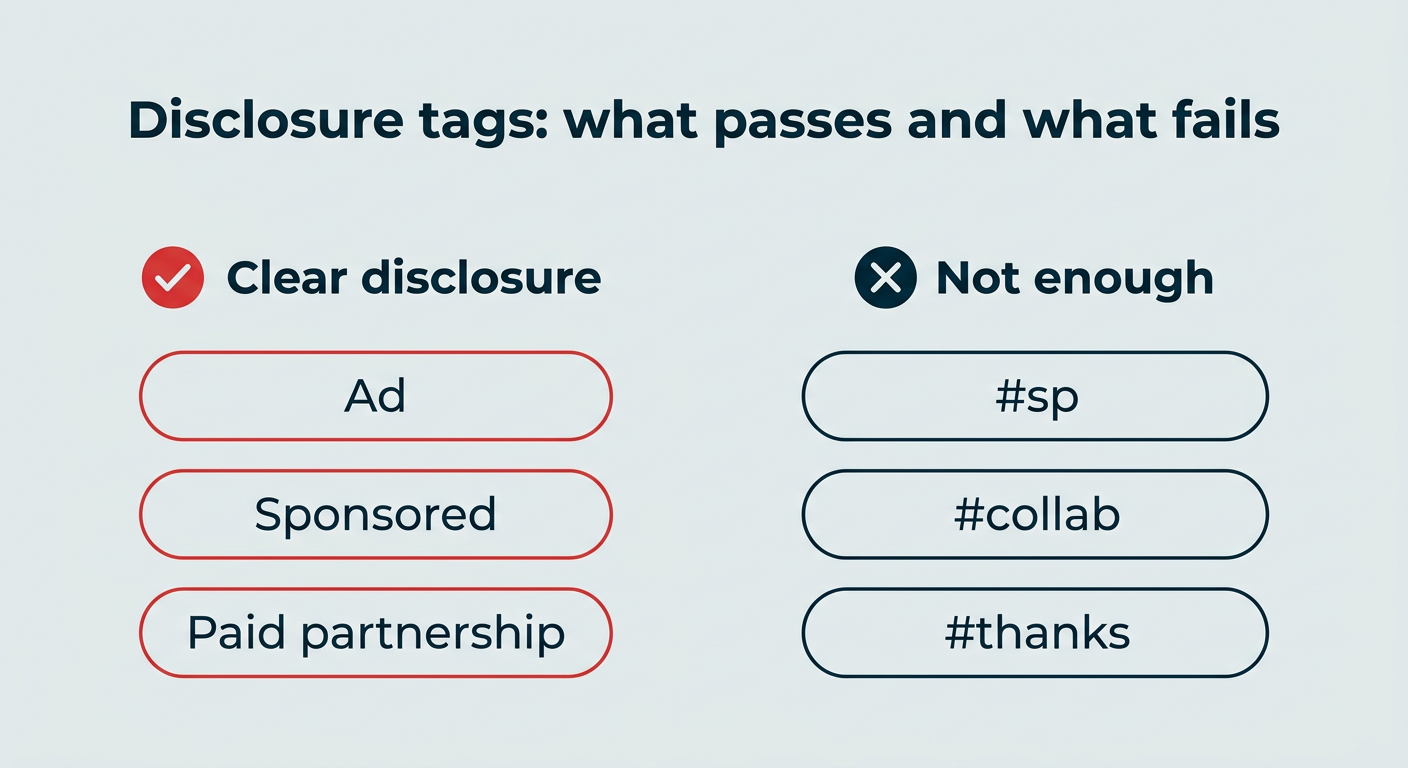
In practice, that means the disclosure goes near the top of a caption rather than buried after a wall of hashtags, and it stays on screen long enough to read in a video. Vague tags like #sp, #collab, or #thanks don’t meet the standard. “Ad,” “Sponsored,” or “Paid partnership with [brand]” do.
The responsibility sits with both parties. The FTC can take action against brands, agencies, and individual creators, and in 2023 it warned almost 700 marketing companies that they could face civil penalties for unsupported claims and improper endorsements. In December 2025, it sent warning letters to 10 more companies under its fake-reviews rule. Platforms can also demote or remove undisclosed paid content.
Use the built-in tools wherever they exist, then add written disclosure on top:
- Instagram: Paid partnership label, which tags the sponsoring brand above the post
- Facebook: Branded content tag, available through Meta Business Suite
- TikTok: Branded content toggle, which adds a paid partnership disclosure to the video
- LinkedIn: Sponsored and Promoted labels applied automatically to Campaign Manager ads, plus a paid partnership setting for creator content
- YouTube: Paid promotion disclosure checkbox in video details
Rules differ outside the US, so check local advertising standards if you run campaigns in multiple markets.
How to measure the success of a sponsored post
It’s tempting to rely on likes and comments to measure success, but these vanity metrics only tell part of the story.
Here are a few techniques you can use to track the effectiveness of your campaign:
Use UTM parameters
UTM parameters are short pieces of tracking code that you can add to links you share anywhere, like in a social media post, for example. They make it easy to tag your content and keep an eye on the ROI of your sponsored posts.
You may want to create individual campaigns for each influencer partner. You can also try nesting their efforts under the same campaign and differentiate their content using the content tag. Whatever you decide, make sure you keep track of it.
Perch, the publishing app inside Hootsuite Social OS, lets you generate UTM links as you build a post. Ow.ly, Hootsuite’s built-in link shortener, also trims the character count on those long UTM-tagged URLs.
Create unique discount codes
Create unique discount codes for each influencer partner to see how their sponsored posts are driving sales. After the campaign ends, review your sales reports to see how often shoppers used the code and what they bought.
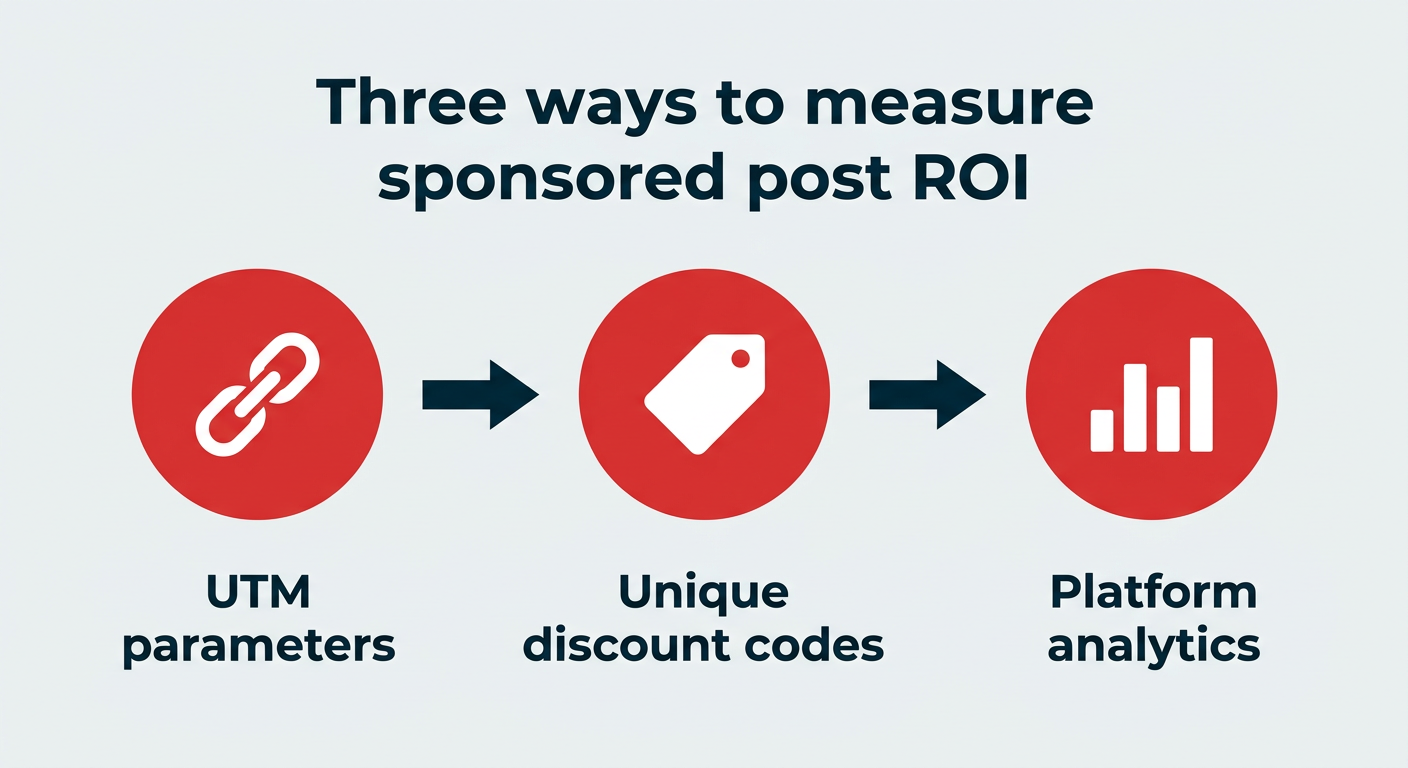
Use platform analytics and Hootsuite
Each social media platform’s business management tool shows you post and account analytics. Facebook and Instagram share Meta Business Suite, while TikTok has its own Business Center. These platforms already centralize your marketing and advertising activities, so use them.
Ask your creator partners for reports too. Influencers can pull reach and engagement data from their own business dashboards, and regular, detailed reporting makes it much easier to see how a campaign is tracking mid-flight.
For a view across every account in one place, connect your profiles to Hootsuite and pull engagement, reach, and conversion data for each sponsored post into a single report.
Meet the Suite
Understand what matters, decide what to do next, and take action across every social workflow — all from one connected suite.

Best practices for sponsored posts in 2026
Most sponsored post problems trace back to the same few decisions. These seven practices cover them.
- Do your research before you pitch. Make a list of creators whose audience and tone dovetail with your business goals. Then check what kind of sponsored content they’re already posting, how often, and whether those posts get genuine engagement rather than silence or complaints.
- Collaborate instead of dictating. Once you’ve found the right partner, work with them on the creative. They know their audience best, so resist the urge to script every line. Our guide to influencer marketing has more on structuring these relationships.
- Prioritize authenticity. Customers notice when a partnership feels forced. If the product doesn’t fit the creator’s world, the post will read as an ad no matter how it’s shot.
- Disclose properly, every time. Use the platform’s paid partnership tool and add written disclosure near the top of the caption. This protects the brand, the creator, and the audience’s trust.
- Set KPIs before the campaign goes live. Decide upfront whether you’re measuring reach, engagement rate, click-through, or revenue. Your broader social strategy should dictate which metrics matter most. Agree on who reports what, and when.
- Negotiate usage rights. If a post performs, you’ll want to run it as an ad or reuse it on your own channels. Sort that out in the contract rather than after the fact.
- Repurpose your top performers. The best-performing sponsored posts are proven creative. Put paid spend behind them, cut them into other formats, and test them against your own content.
If you’re a creator looking to land these deals from the other side, our guide to the art of the brand pitch walks through how to package your audience data and stand out from everyone else chasing the same budget.
What is a sponsored post on social media?
What does “sponsored” mean on a Facebook post?
How much does it cost to sponsor a post on Instagram?
Is boosting a post on Facebook worth it?
What are examples of sponsored content on LinkedIn?
What is the difference between a sponsored post and a boosted post?
How do you disclose a sponsored post?
What is the difference between sponsored content and native advertising?
How do creators get sponsored posts?
Can you run sponsored posts on TikTok?
Save time managing your social media marketing strategy with Hootsuite. Publish and schedule posts, find relevant conversions, measure results, and more â all from one dashboard. Try it free today.








Post Comment