Inside Google’s Secret Playbook: Mastering the Art of Generative AI Search Optimization
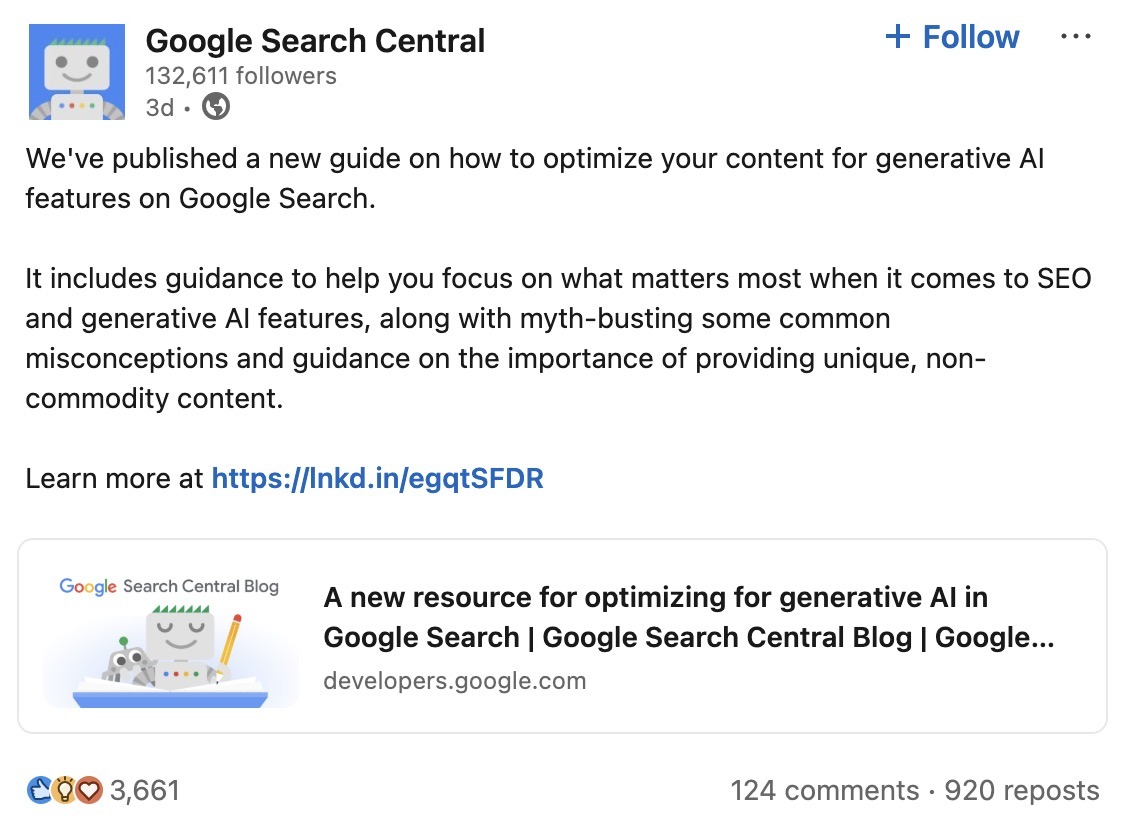
Ever wondered if SEO’s still the secret sauce in the age of generative AI? Well, Google just pulled back the curtain a bit more with their freshly baked official guide, dropped on May 15, 2026. It’s a roadmap for mastering those shiny new generative AI search features — yep, the very stuff turning heads in AI Overviews and AI Mode. Now nestled under the “Generative AI fundamentals” banner in Search Central, this guide isn’t just another vague hint tossed out at conferences or blog posts. Nope — it’s Google spelling it out clearly, laying down the dos and definitely don’ts for staying visible when bots start crafting answers for users. Spoiler alert: the heart of it all? Good old SEO still holds the fort; if your site’s not solid in classic SEO terms, no AI magic will save you from invisibility. Curious what’s a waste of time, what’s mandatory, and where to steer next? Grab your coffee — this intel’s going to shake up how we think about search in the AI era. LEARN MORE.
Google published the official guide on May 15, 2026, specifically addressing how to optimize for generative AI features in Google Search.
The document, titled “Optimizing your website for generative AI features on Google Search,” was announced by John Mueller through the Google Search Central Blog and is now housed under a new “Generative AI fundamentals” navigation section in Search Central documentation.

This is Google’s most explicit, on-record statement yet about what they’re saying works — and what doesn’t — for visibility inside features like AI Overviews and AI Mode.
What the guide covers
Much of the guidance consolidates positions Google has shared at conferences, in blog posts, and in interviews over the past year. It’s organized into five main sections:
- Is SEO still relevant for generative AI search?
- Apply foundational SEO best practices to generative AI search
- Mythbusting generative AI search: what you don’t need to do
- Explore agentic experiences
- Next steps: what to focus on
What’s new is that it’s now documentation, acting as a reference point for marketers who’ve been asking for clarity.
Google’s core message: AI search visibility is still SEO
The guide’s position is clear: SEO still matters for generative AI search. Google states clearly that AI Overviews and AI Mode are not running on completely separate systems.
“The best practices for SEO continue to be relevant because our generative AI features on Google Search are rooted in our core Search ranking and quality systems,” according to the new guide.
Google clarifies that its generative AI features use AI techniques like retrieval-augmented generation and query fan-out “to highlight content from our Search index.”
In other words, if your content isn’t technically sound and high-quality enough to rank in traditional search, it won’t perform in AI-generated answers either.
The mythbusting section: What Google says to stop doing
Google now says SEOs can “ignore” the following tactics for Google Search and its generative AI features:
- llms.txt files: Google’s crawler may discover these files, but they’re treated like any other text file. There is no special treatment or preferred indexing pathway. (Keep in mind that other crawlers may make use of such files.)
- Content chunking: No need to break content into small pieces for AI systems, Google says. Google says its systems can understand multi-topic pages and extract the relevant passage without the author pre-fragmenting the article.
- AI-specific rewriting: AI features can understand synonyms and general meanings, according to Google. Rewriting content to capture every long-tail keyword variation isn’t necessary, the guide says.
- Special schema or Markdown versions of pages: Not required for Google generative AI search inclusion, the new guide says.
Google also noted that seeking inauthentic “mentions” in order to influence what’s being said about your products and services is not likely to be helpful because its generative AI features rely on the same systems and safeguards as the core ranking systems.
“Our core ranking systems focus on high-quality content while other systems block spam; our generative AI features depend on both,” according to the guide.
The agentic experiences section: A signal for what’s next
Google references agent-friendly best practices and emerging standards like Universal Commerce Protocol (UCP) and WebMCP, which enable AI agents to take actions on behalf of users directly from search results.
The section is framed as optional and forward-looking.
“If this is something that’s relevant to your business and you have extra time, check out the available agentic experiences and review the guide to agent-friendly website best practices …” the guide says.
Further reading: Agentic search: How AI agents will decide which brands get found
Why this matters for marketers
It’s important to note that this guide applies only to the Google ecosystem. ChatGPT, Claude, and other AI engines may play by different rules. And Google may not reveal all the details about what works and what doesn’t.
Still, this GEO guide is significant for marketers for two reasons:
First, the infrastructure around AI search is solidifying, and when infrastructure solidifies, accountability follows. Search marketers are increasingly the professionals best positioned to lead this work.
Second, the guide legitimizes the discipline while narrowing what that discipline actually involves. Google frames AEO and GEO as extensions of SEO — not separate channels requiring separate expertise.
How Semrush supports AI search visibility
Google’s guide doesn’t introduce a new playbook. But it validates one that already works. The question is whether your current execution actually holds up. Semrush gives you the data to find out.
Use these tools:
Keyword Magic Tool: Discover the relevant keywords and topics that create the basis for visibility inside AI-generated answers.

AI Visibility Toolkit: See which of your URLs are being cited in AI answers, what prompts are triggering those citations, and how citation frequency trends over time across platforms.

Enterprise AI Optimization: For enterprise teams — track AI mentions and citations, analyze sentiment, benchmark against competitors, identify AI content gaps, and track footprint changes across AI system changes.

Site Audit: Detects whether your firewalls block AI crawlers and diagnose dozens of other technical SEO issues..