AUD Plummets as Inflation Drops to Unexpected 4.2%—What’s Next for the Economy?
So, here’s a twist for you: Australia’s headline inflation just took a bigger dip than anyone really expected in April—thank fuel excise cuts, of all things, for that little surprise. But wait, don’t get too comfy just yet. While the consumer price index slipped from 4.6% to 4.2% year-on-year, underneath the surface, core inflation actually nudged higher, signaling that those pesky price pressures aren’t going quietly. It’s like that one friend who promises to chill out but ends up turning up the volume instead—annoying, right? The government’s fuel excise cut helped cool automotive fuel prices, but with diesel spiking and housing costs climbing, the inflation story in Australia is anything but straightforward. Makes you wonder—can a simple tax tweak really keep inflation at bay, or is this just a temporary pit stop? Dive into the chaos, the numbers, and the market shudders that followed right here. LEARN MORE.
Australia’s headline inflation rate eased more than expected in April, pulled lower by a government-driven cut to fuel excise.
Headline CPI slipped from 4.6% year-on-year to 4.2% versus the 4.4% consensus as the monthly gain came in at 0.4% versus the 0.6% forecast.
Beneath the surface, underlying price pressures actually ticked higher, as the trimmed mean CPI printed a 0.3% increase versus the expected 0.2% uptick.
Key Takeaways
- Headline CPI (annual): +4.2% y/y — down from 4.6% in March 2026
- Monthly CPI: +0.4% in original terms; -0.1% seasonally adjusted
- Trimmed mean (core inflation): +3.4% y/y — up from 3.3% in March 2026; +0.3% m/m
- Goods inflation: +4.7% y/y (down from 5.5%)
- Services inflation: +3.5% y/y (down from 3.6%)
- Largest annual contributors: Housing (+6.3%), Transport (+6.6%), Food & non-alcoholic beverages (+2.8%)
The moderation was largely driven by a government-mandated reduction in the fuel excise rate from 52.6 cents per litre to 20.6 cents per litre, effective 1 April, which caused automotive fuel prices to fall 7.0% over the month, partially reversing a sharp 32.8% surge in March.
Trimmed mean inflation, which is the RBA’s preferred measure of underlying price pressures since it strips out the most volatile components, actually rose to 3.4% annually from 3.3% in March. That reading sits well above the RBA’s 2%–3% target band and suggests that persistent structural inflation is not abating.
Link to official ABS Consumer Price Index (April 2026)
Transport remains the single largest annual contributor at +6.6%, though this is down sharply from 8.9% in March, almost entirely due to the fuel excise cut.
Automotive fuel is still 23.5% higher relative to February, and diesel prices actually rose 14% in April following a 41% surge in March, which suggests that any future unwinding of the excise cut could rapidly reverse the headline benefit.
Housing rose 6.3% annually, the second-largest contributor. Electricity costs surged 22.5% over the year as the expiry of Commonwealth and State Government rebates pushed household energy bills sharply higher. Excluding the rebate base effects, electricity prices rose a more modest 3.1% annually.
Health jumped 4.0% annually, up notably from 3.0% in March, after Private Health Insurance premiums rose on 1 April.
Market Reactions
Australian Dollar vs. Major Currencies: 5-min
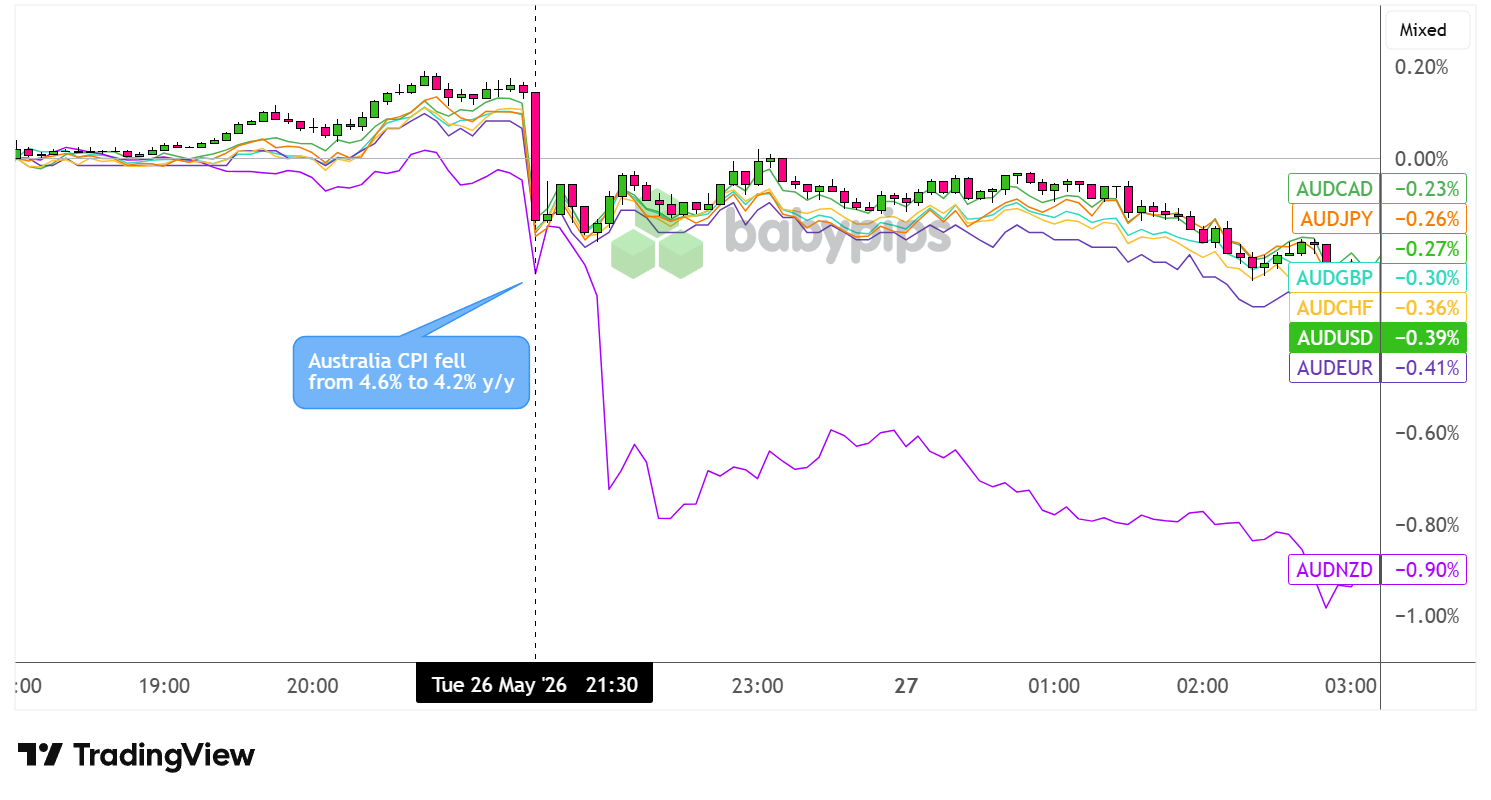
AUD vs. Major Currencies 5-min Forex Chart Faster with TradingView
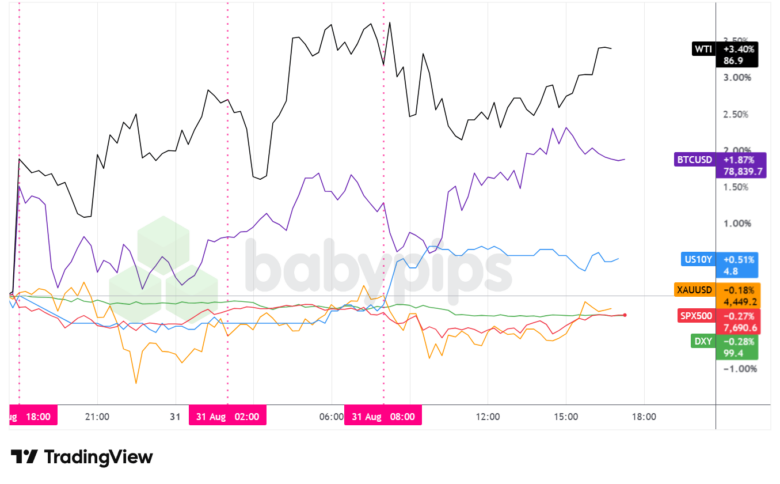
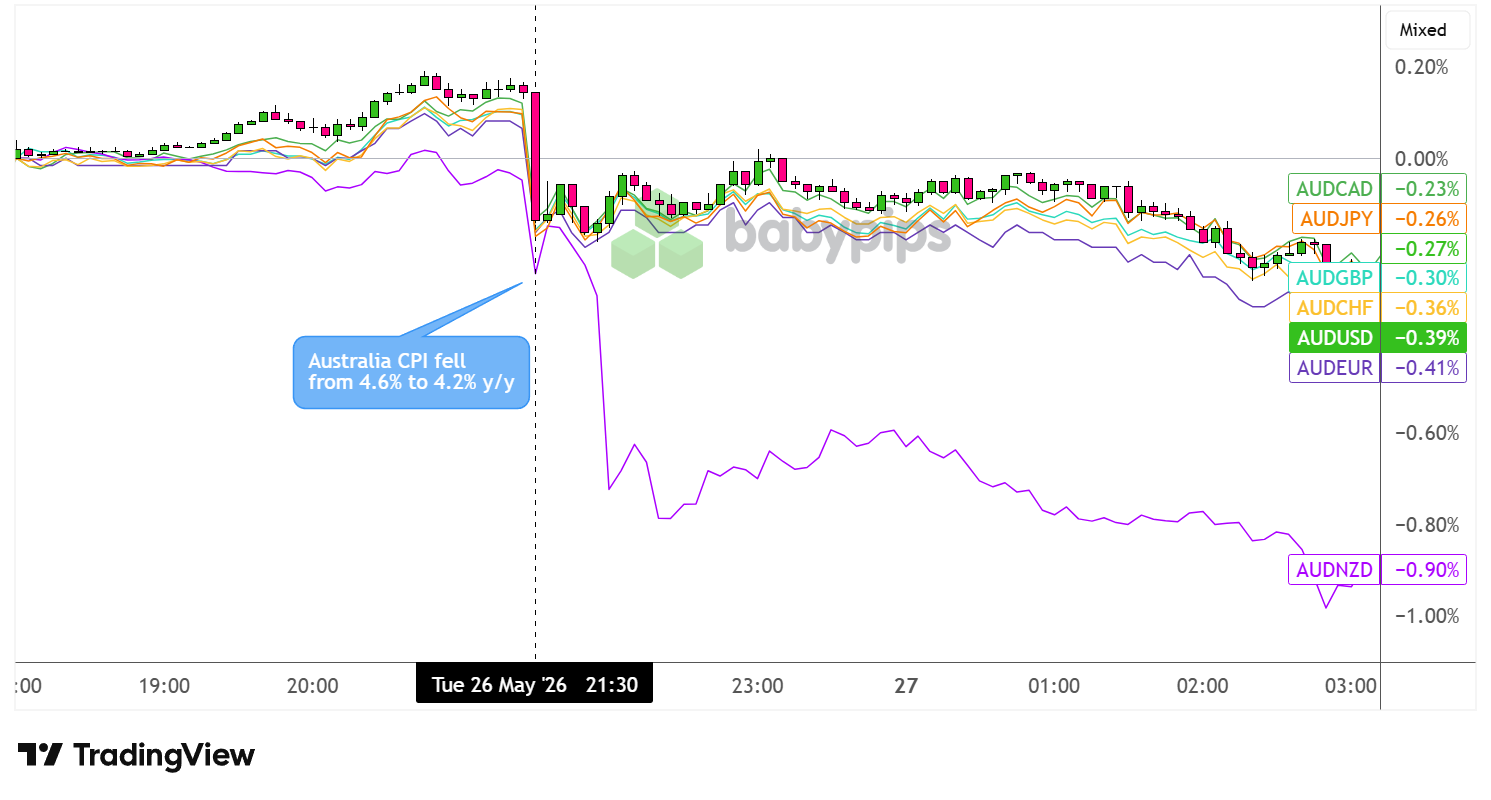
The Australian dollar, which was cruising slightly higher ahead of the CPI release, sold off sharply after the numbers fell short of estimates and complicated the RBA’s policy path. The initial selloff was followed by a steady decline for the remainder of the Asian session, as traders likely repriced expectations for immediate RBA hikes.
AUD chalked up its steepest slide against NZD (-0.90%) in the hours following the report, as the “hawkish hold” RBNZ decision also sparked strong gains for the currency. The Aussie slipped 0.39% against the U.S. dollar while limiting its declines to 0.23% to the Loonie.
The RBA had previously flagged that headline inflation was likely to rise in 2026 as the effect of temporary government rebates unwound.
Australia’s April CPI miss has traders repricing the RBA’s rate path, and if you’re not familiar with how the RBA operates and what drives the Australian dollar, the reaction can be hard to follow. Premium members can read our lesson:
Reading this helps you understand how the RBA sets monetary policy, which economic indicators matter most for AUD, and why a labour market miss like this one can shift rate expectations so quickly.
And if you’re not a Premium subscriber yet, now’s a good time to sign up.
With Babypips Premium, you get full access to School of Pipsology lessons that help you understand not just what the AUD is doing, but the RBA policy dynamics and economic data driving every move.